9月1日,中国首个规范人工客服与智能客服协同机制的国家标准《顾客联络服务 人工与智能客户服务协同要求》正式实施1。该标准明确规定,智能客服应设置清晰醒目的人工服务入口,对支持语音交互的系统应统一提示"转人工"等唤醒词,系统识别后应立即进入转接流程;当用户明确拒绝AI客服时,应自动转人工1。此外,标准还要求在客户等待人工服务期间,应通过语音或文字告知预计排队时长1。
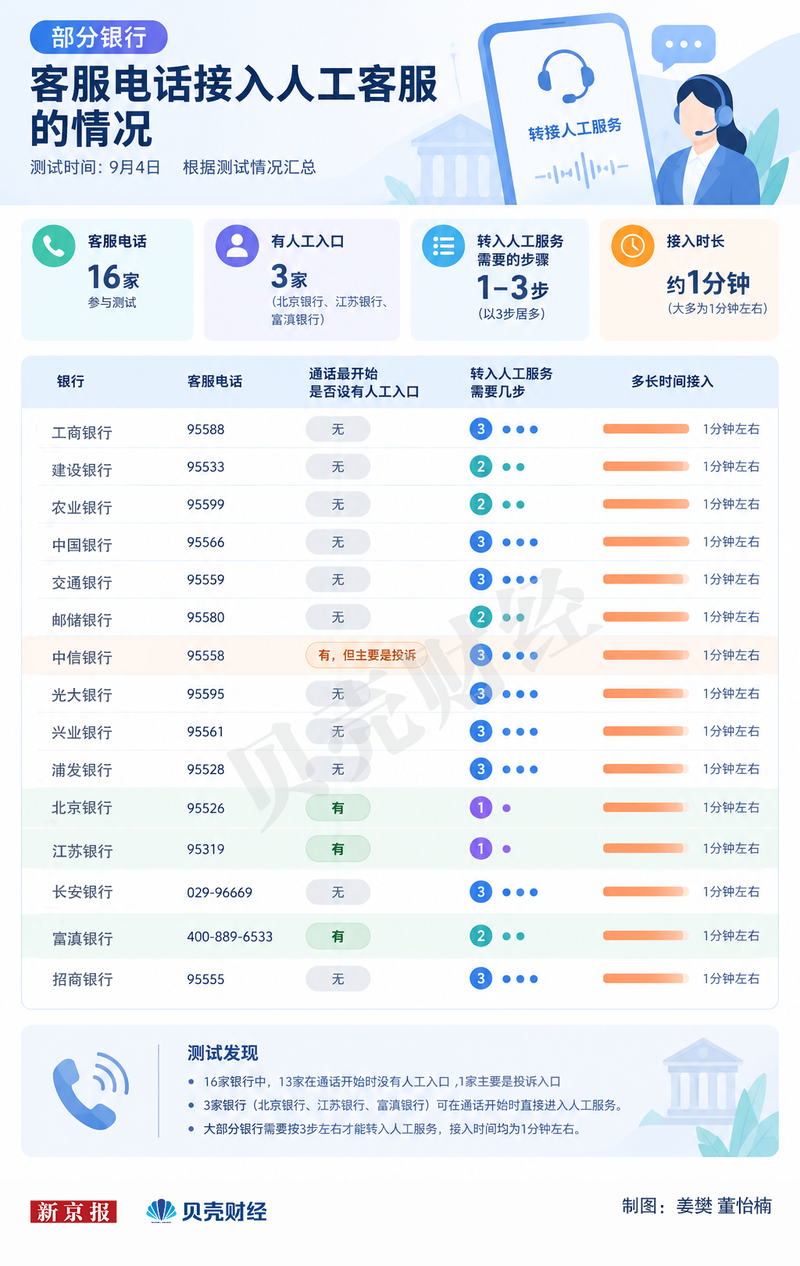
然而,记者在9月4日至9月6日对近30家平台和机构的测试发现,大多数企业仍未充分履行新标准要求1。测试显示,多数银行需消费者说2至3次"人工服务"才能接通,而微信支付、美团、滴滴出行、拼多多等互联网平台则将人工入口隐藏得更深,消费者"转人工"仍需经历多轮对话和复杂流程1。业内人士指出,企业刻意设置这些障碍是为了降低成本、提高效率1。
A national standard governing the coordination between artificial intelligence and human customer service representatives came into force on September 1st in China.1 The standard, titled "Customer Contact Service: Coordination Requirements for Human and Intelligent Customer Services," aims to regulate how companies manage the relationship between automated systems and live agents.1
Despite the new regulations, testing conducted between September 4th and 6th across nearly 30 platforms and institutions revealed widespread non-compliance.1 Most organizations continue to obscure human service access points and erect multiple barriers to reaching live representatives.1 The standard explicitly requires that AI systems provide clear human service entry points, with unified voice prompts such as "transfer to human agent" that should immediately initiate the transfer process.1 Additionally, when customers explicitly refuse AI assistance, the system must automatically transfer them to human agents.1 However, banks typically require customers to repeat "human service" two to three times before connecting,1 while internet platforms including WeChat Pay, Meituan, Didi Chuxing, and Pinduoduo hide their human service entry points even more deeply.1
The standard also mandates that human service entry points be clearly visible and not concealed through multiple layers, and that customers be informed of expected wait times through voice or text during transitions between AI and human agents.1 Industry observers attribute companies' reluctance to facilitate human connections to cost reduction and efficiency enhancement goals.1
评论
还没有评论,欢迎留下第一条。