腾讯研究院发布的产业演化分析报告认为,当前AI大模型及其应用产业处于"分化带"——一个从晚期流动期向早期过渡期移动的过渡阶段1。在这一阶段,产品分层仍保持开放性,但企业能力分化已经启动1。
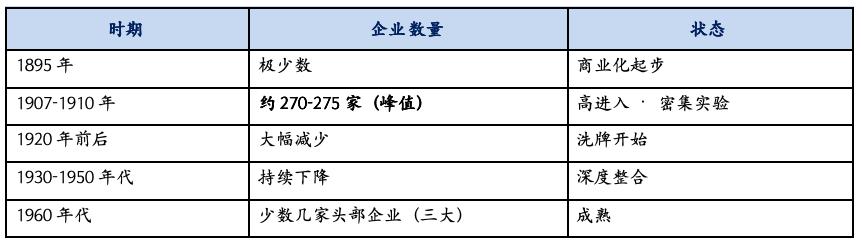
该报告运用Utterback三阶段模型(流动期→过渡期→专门期)和Klepper能力差异复合理论进行分析1。其中,主导设计的出现被视为产业过渡的关键节点1。报告指出,企业间初期微小的能力差异会在竞争中指数级放大,而进入窗口的关闭会早于深度洗牌信号10-15年出现1。主导设计的形成受五个因素驱动:技术可行性、互补资产、规模经济、主导厂商推动和政府监管1。
基于数字时代产业演化速度比制造业快3-5倍的推断1,报告为AI产业提供了分层的时间坐标。协议层主导设计预计在2026-2028年浮现,产品形态层在2027-2029年,通用Agent层在2030-2032年1。同时,进入窗口关闭的时间预计为2026-2030年,其中前沿模型层将最先关闭1。深度洗牌则预计主要发生在2030-2035年,集中在前沿模型层1。
对于企业决策而言,报告认为企业留给自己的战略调整时间仅约2-4年,需在2028年前完成方向判断1。
Tencent Research Institute has released an analysis of the artificial intelligence industry's development trajectory, applying classical frameworks to assess where large language models and their applications currently stand.1 The analysis employs two established industry evolution models—Utterback's three-stage framework and Klepper's theory of capability divergence—to map the sector's progression.1
According to the analysis, the AI industry is currently in a "differentiation zone," representing a transition between the late fluid phase and early transitional phase.1 This stage is characterized by an open product hierarchy alongside the emergence of capability differentiation among enterprises.1 The research identifies five key drivers of dominant design formation: technological feasibility, complementary assets, economies of scale, initiatives by leading manufacturers, and government regulation.1
The timeline projections suggest a compressed acceleration relative to traditional manufacturing sectors.1 Extrapolating from digital-era industry evolution occurring 3 to 5 times faster than automotive manufacturing, the analysis estimates that dominant designs may emerge between 2027 and 2030, with major industry consolidation occurring between 2030 and 2035.1 The window for market entry is expected to close between 2026 and 2030, with the frontier model layer closing earliest.1 Breaking this down by technological layer, protocol-level standardization is projected for 2026 to 2028, product-form standardization for 2027 to 2029, and general-purpose agent standardization for 2030 to 2032.1 The analysis suggests enterprises have approximately 2 to 4 years for strategic adjustment, requiring directional decisions to be finalized by 2028.1
评论
还没有评论,欢迎留下第一条。