英伟达创始人黄仁勋在2024年3月GTC大会上提出的"超节点"概念正在中国市场推广。1超节点通过高速互联将多个GPU、CPU整合为单个物理节点,旨在解决大模型训练中的通信、功耗和复杂度问题。1英伟达的NVL72系列集成了36个Grace CPU和72个Blackwell GPU,1其中单颗B200芯片功耗突破1000瓦,GB200达到2700瓦,1传统风冷散热方案已无法满足需求。
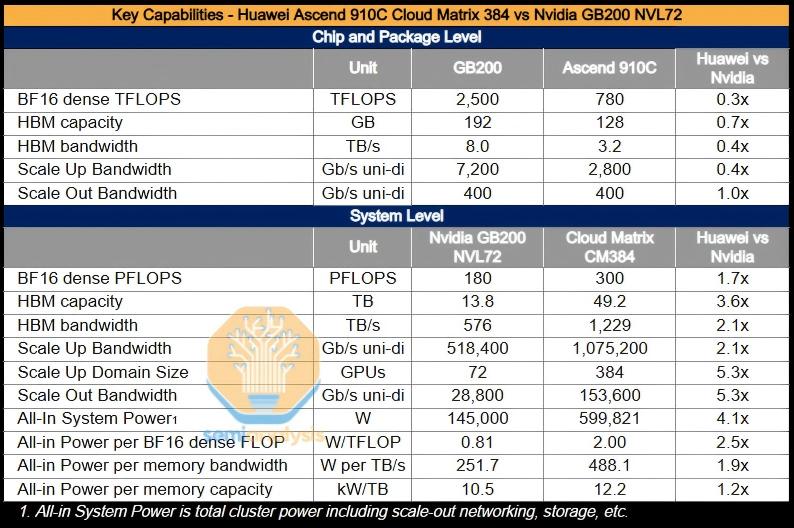
中国的华为、阿里云等主要厂商积极推出超节点方案,形成了国产芯片、大模型和服务器厂商的生态合力。1华为CloudMatrix 384集群在BF16性能上达到NVL72的1.7倍,总内存容量则是其3.6倍。1规模化落地仍面临多重技术挑战,包括互联协议碎片化——行业内存在英伟达NVLink、AMD的UALink、博通的SUE、华为灵衢、海光HSL等多个不兼容协议,1同时供电冷却和晶圆产能也是待解决的问题。1英伟达GB200 NVL72售价约300万美元,1而新一代Vera Rubin NVL72单柜物料成本已攀升至780万美元。1
NVIDIA founder Jensen Huang introduced the "super node" concept at GTC in March 2024, a technological approach designed to address critical challenges in large-scale AI model training 1. The super node architecture integrates multiple GPUs and CPUs through high-speed interconnects into a single physical node, tackling communication latency, power consumption, and operational complexity issues 1. The NVL72 series exemplifies this approach, combining 36 Grace CPUs and 72 Blackwell GPUs within a unified system 1.
Power consumption has emerged as a defining challenge for these systems. Individual B200 chips consume over 1,000 watts, while the GB200 unit reaches 2,700 watts—levels that conventional air cooling systems cannot adequately dissipate 1. In practical deployment scenarios, reliability concerns underscore the stakes: during Meta's Llama 3 training, a cluster of 16,384 H100 GPUs experienced 419 failures over 54 days of pre-training, averaging roughly one failure every three hours 1.
Chinese technology companies have responded actively to this market opportunity. Huawei's CloudMatrix 384 cluster demonstrates competitive performance metrics, delivering BF16 throughput 1.7 times that of NVL72 while providing 3.6 times greater total memory capacity 1. The NVIDIA GB200 NVL72 carries a price tag of approximately $3 million, with costs escalating further for next-generation systems; the Vera Rubin NVL72 cabinet material costs alone reach $7.8 million 1. Fragmentation in interconnection protocols—including NVIDIA's NVLink, AMD's UALink, Broadcom's SUE, Huawei's Lingqu, and Haiguang's HSL—alongside challenges in power delivery, thermal management, and semiconductor production capacity continue to impede scaled deployment 1.
评论
还没有评论,欢迎留下第一条。