氦气作为芯片制造中的关键材料正面临全球供应危机。1电子级氦气需要达到99.9999%(6N级)的纯度要求,价格是普通工业氦的几十倍。1全球氦气供应高度集中,美国、卡塔尔和俄罗斯占据八成以上,其中卡塔尔单独供应全球三分之一。1
今年3月中东冲突导致卡塔尔拉斯拉凡工业城停产,全球氦气供应因此中断三分之一。1受此影响,全球液氦现货价格翻倍上涨,国内管束高纯氦价格在七周内从76元/立方米猛增至251元/立方米。1作为主要进口国,中国对氦气的进口依存度达84.4%,1其中54%来自卡塔尔、44%来自俄罗斯。1卡塔尔受损设施修复需要三到五年时间。1
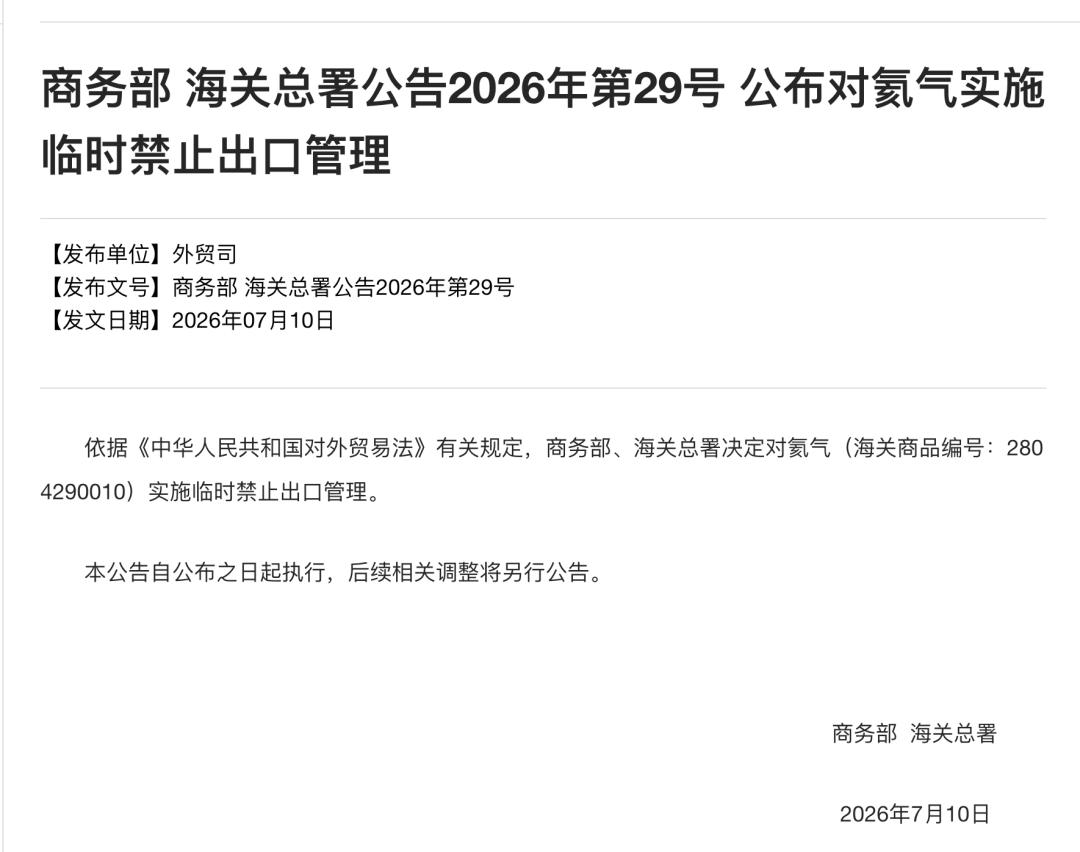
为保障国内供应,中国商务部于7月10日宣布禁止氦气出口。1该禁令将根据国内外供需变化情况进行调整。1同时,中国已在陕西延安实现6N9级超纯氦量产,1宁夏盐池于2020年实现了液化天然气尾气提氦的国产化。1但目前中国超纯氦的自给率不足两成,国产产能仍需进一步提升以应对长期的全球供应压力。1
Helium has emerged as a crucial yet overlooked bottleneck material in chip manufacturing, with prices surging sharply following a disruption to global supplies.1 The semiconductor industry requires ultra-pure helium at 99.9999% purity—known as 6N grade—which commands prices dozens of times higher than industrial-grade helium.1
Global helium supply is heavily concentrated, with the United States, Qatar, and Russia accounting for over 80% of worldwide production, and Qatar alone supplying approximately one-third of the world's total.1 In March 2025, Middle East tensions damaged Qatar's Ras Laffan Industrial City, a major production hub, with repair timelines estimated at three to five years, disrupting roughly one-third of global supplies.1 Spot prices for helium subsequently doubled, with domestic high-purity helium prices in China rising from 76 yuan per cubic meter to 251 yuan within seven weeks.1
Facing supply constraints, China's Ministry of Commerce issued an export ban on helium effective July 10, 2025, citing the need to safeguard domestic supply and noting that restrictions could be adjusted based on evolving global and domestic market conditions.1 China imported 4,913 tons of helium in 2025, with an import dependency rate of 84.4%, sourced primarily from Qatar at 54% and Russia at 44%, while simultaneously exporting approximately 445 tons—a 96% increase year-over-year.1 China has achieved commercial-scale production of 6N9-grade ultra-pure helium in Shaanxi's Yan'an region and established liquefied natural gas tail gas helium extraction capabilities in Ningxia's Yanchi County since 2020, though domestic self-sufficiency remains below 20%.1
评论
还没有评论,欢迎留下第一条。