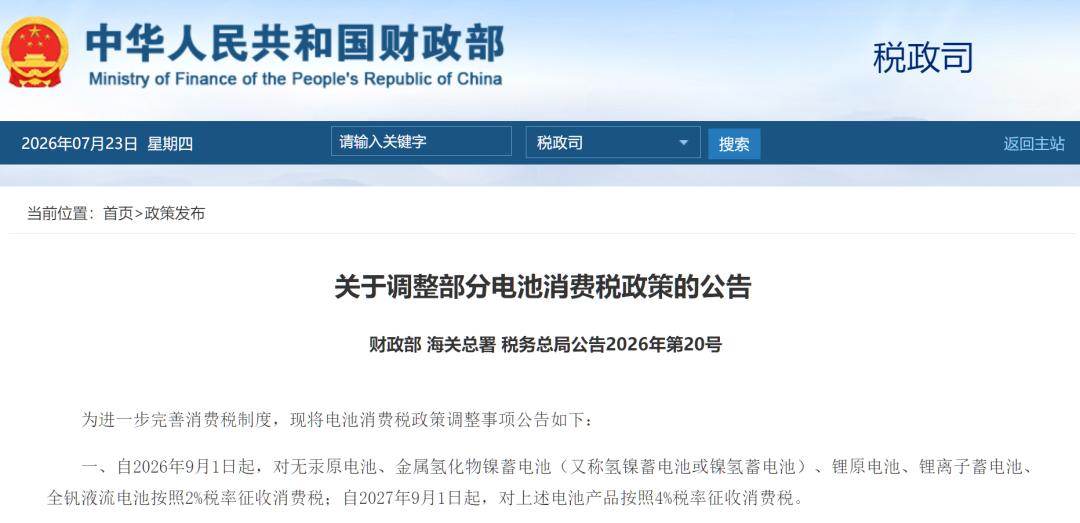
财政部、海关总署、税务总局发布公告,对锂离子蓄电池等5种电池产品征收消费税,自2024年9月起执行2%税率,2025年9月提高至4%1。这一决定打破了相关产品长达15年的消费税豁免期1。
该政策的实施将对国内电池产业格局产生深远影响。宁德时代作为行业龙头,在2015至2025年间累计享受的消费税免税额估计达430至450亿元,去年单年超过105亿元1。然而,中小电池企业将面临更大压力——这类企业毛利率普遍低于5%,4%的消费税足以令其陷入亏损1。与此同时,固态电池等新材料电池产品在2029年前继续获得消费税豁免,出口电池也无需缴纳此税1。
当前全球锂电池名义产能已超过4 TWh,其中中国占80%,达32亿度,但实际市场需求仅为15至15.2亿度1。这一政策有望推动产业整合和中小企业出海,但也可能导致电动汽车价格上升和部分二三线电池厂商被淘汰1。
China's Ministry of Finance, General Administration of Customs, and State Administration of Taxation announced new taxation measures targeting the battery industry, marking a significant policy shift after more than a decade of tax breaks.1 Beginning in September 2024, lithium-ion batteries and four other battery products will be subject to a 2% consumption tax, with the rate scheduled to increase to 4% in September 2025.1
The move carries substantial implications for domestic battery manufacturers. Leading companies like CATL have accumulated an estimated 430 to 450 billion yuan in cumulative consumption tax exemptions over the past decade, with the company alone avoiding over 105 billion yuan in taxes last year.1 However, smaller battery producers face greater pressure—companies with profit margins typically below 5% will likely fall into losses under the 4% tax burden.1 The policy underscores capacity imbalances in the global landscape: China accounts for approximately 80% of world lithium battery nominal production capacity at 32 billion kilowatt-hours, yet actual demand stands at only 15 to 15.2 billion kilowatt-hours.1
The new tax framework includes strategic exemptions designed to support emerging technologies and export competitiveness. Solid-state batteries and other next-generation battery materials will remain exempt from consumption tax through 2029, and exported batteries are not subject to the levy.1
评论
还没有评论,欢迎留下第一条。