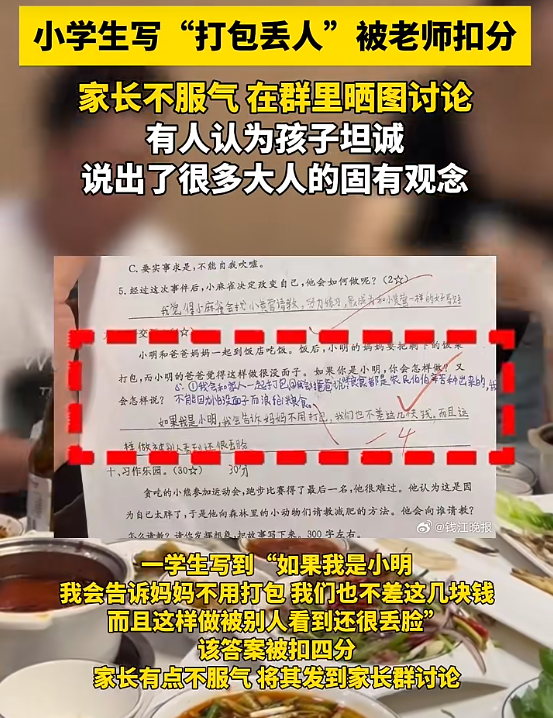
杭州一名三年级学生因在口语交际试题中如实表达“怕丢脸不打包剩菜”的观点而被判错,此事在当地家长群引发热议 1。题目设定的情境是小明和爸妈在饭店吃饭,妈妈想打包剩菜,爸爸觉得没面子,问小明怎么做怎么说 1。该生回答“不用打包,不差这点钱,打包被人看见很丢脸”,随即被老师打叉 1。尽管学生随后进行了订正,但其质疑“实话实说为何不对”的态度折射出当前部分标准化考试与真实价值观培养之间的张力 1。
这道旨在考查得体沟通并树立节约价值观的题目,其初衷在于引导儿童崇尚节约、反对浪费,践行“光盘行动”与传统美德 1。然而,评论指出简单地对不同答案打叉可能挫伤孩子的表达勇气,若强行固化标准答案,易滋生口是心非的应试思维 1。教育者主张,面对此类争议性回答,教师不应仅做试卷纠错,而应顺势追问并展开对话,帮助孩子在辨析中分清是非,理解体面与浪费的真正含义 1。此外,这一争议也凸显了家庭与社会环境在塑造儿童价值观过程中的深远影响 1。
A third-grade Chinese language oral communication question in Hangzhou has sparked intense discussion among parents, focusing on whether taking home leftover food constitutes embarrassment. 1 The scenario depicted a family dining at a restaurant where the mother wished to pack up remaining dishes, but the father felt it was undignified; students were asked how they would respond and what they would say. 1 One student answered that packing was unnecessary because "we don't lack this little money" and doing so in public was shameful, leading the teacher to mark the response as incorrect with a cross. 1 Although the child corrected the answer, they questioned why speaking honestly was penalized, igniting broader concerns about the rigidity of standard answers in educational assessments. 1
The incident underscores a tension between fostering candid expression and instilling values such as frugality and opposition to waste, aligned with initiatives like the "Clean Plate" campaign. 1 Critics argue that simply marking dissenting views wrong may encourage superficial compliance rather than genuine understanding, potentially damaging children's courage to express their true thoughts. 1 Instead of rigid correction, educators are urged to use such moments for dialogue, helping students distinguish between dignity and wastefulness through guided reasoning. 1 This approach emphasizes the role of teachers in facilitating nuanced discussions rather than just grading tests, while also highlighting the influence of family and social environments on shaping children's value systems. 1
评论
还没有评论,欢迎留下第一条。