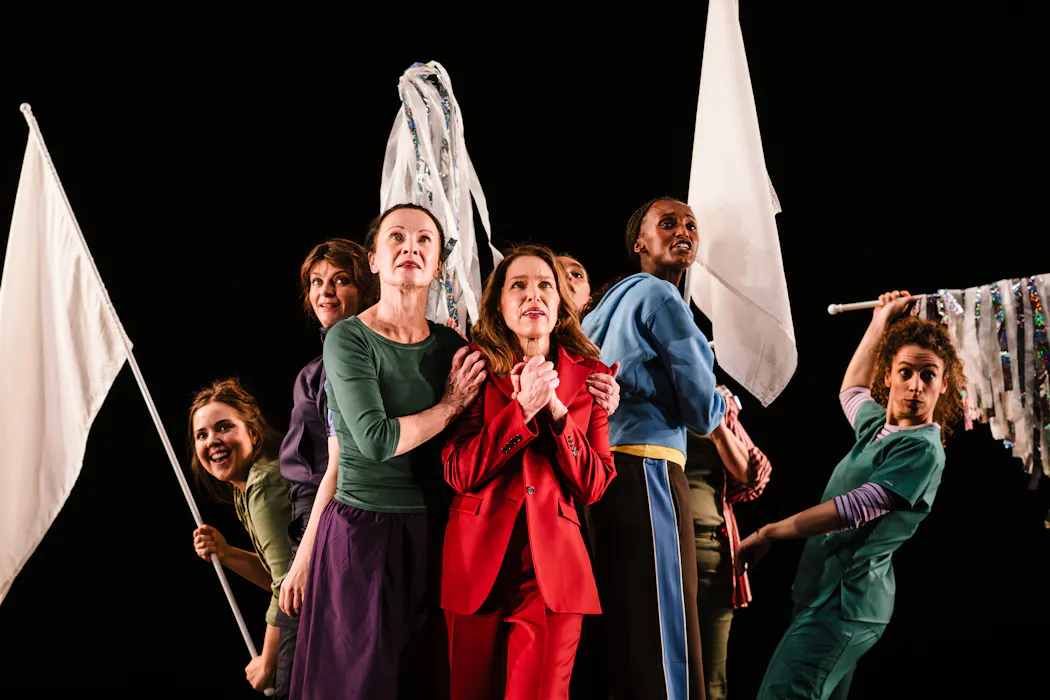
苏西·米勒创作的新剧《强就是新美》在布里斯班艺术节拉开帷幕,这部作品通过舞台艺术庆祝那些为建立澳式足球女子联赛而奋斗的女性1。该剧以澳式足球历史上的三位关键人物为原型,包括首位女性AFL专员Sam Mostyn和首位女性教练Bec Goddard1。导演Sarah Giles运用物理剧场、讽刺手法和集体喜剧等多种舞台手段,呈现这些女性在争取专业足球联赛过程中面临的性别歧视和体制障碍1。
剧中三位主要角色分别由Lucy Bell、Tara Morice和Amber McMahon饰演,她们的角色原型分别改编自律师Alison Newton、发展经理Jane Hooper和教练Bev Heath1。作品以2017年首届AFLW大奖赛为背景,深入展现女性运动员兼顾全职工作和母亲身份的现实挑战1。
该剧将在布里斯班Playhouse剧院上演至9月19日,随后启动全国巡演,包括堪培拉(9月24日至10月3日)、吉隆(10月8日至11日)和悉尼(10月22日至12月5日)的演出安排1。
Playwright Suzie Miller has created a new theatrical work that honors the pioneering women who fought to establish a professional women's Australian football league. The production, titled "Strong is the New Pretty," had its world premiere at the Brisbane Playhouse theatre as the opening work of the Brisbane Festival 1.
The play draws inspiration from three central figures in AFLW history, reimagined as characters within the drama 1. Lucy Bell portrays lawyer Alison Newton, inspired by Sam Mostyn, the first female AFL commissioner; Tara Morice plays development manager Jane Hooper, based on Jan Cooper; and Amber McMahon embodies coach Bev Heath, modeled after Bec Goddard, the league's first female coach 1. Set against the backdrop of the inaugural AFLW Grand Final in 2017, the narrative explores the struggles of female athletes balancing full-time employment and motherhood while pursuing professional football 1. Director Sarah Giles employs physical theatre, satire, and ensemble comedy to illuminate the gender discrimination these women confronted while establishing professional opportunities within a patriarchal system 1.
Following its Brisbane run through September 19, the production will tour nationally to Canberra (September 24 through October 3), Geelong (October 8 through 11), and Sydney (October 22 through December 5) 1.
评论
还没有评论,欢迎留下第一条。