深圳坪山街道和平社区动员100余位居民自主参与,用绘画创作将社区闲置空间和老旧墙体改造成文化阵地1。社区党委未将设计工作外包,而是调动党员、志愿者与居民共同创作,历时一个月完成改造1。陶瓷商户也公益参与创作1。
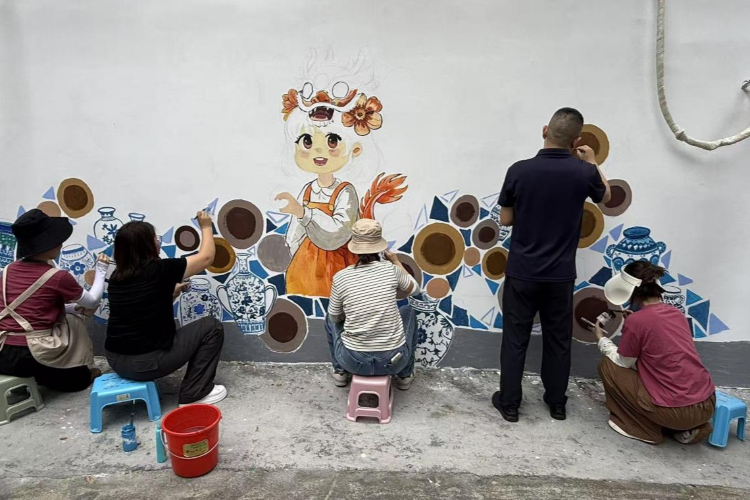
改造内容融合了二十四节气与客家麒麟非遗文化1。党群服务中心小广场装饰了二十四节气画作与18幅自然风光彩绘,每幅画作配对应时令花木——立春体现草木萌发、大暑表现西瓜冰棒、立秋呈现红叶硕果、冬至描绘暖饺1。街巷改造则通过客家麒麟舞墙绘与传统陶瓷纹样呈现本地非遗文化1。
社区工作人员表示,"不少年轻人以前不知道咱们这儿还有麒麟队,如今墙上一画,大家都来打听"1。下一步,社区计划将非遗上墙形式向更多街巷延伸,围绕节气节点开展群众活动1。
More than 100 residents of Heping Community in Shenzhen's Pingshan Subdistrict have participated in a grassroots painting initiative to revitalize abandoned corners and deteriorating walls across their neighborhood.1 Rather than hiring external designers, the community's Party committee mobilized Party members, volunteers, and residents to collaboratively create murals that blend the traditional Twenty-Four Solar Terms with Hakka qilin—a non-intangible cultural heritage—into the local streetscape.1
The month-long transformation centered on two focal areas: the plaza outside the community Party and mass service center and surrounding street walls.1 The plaza now features twenty-four solar term paintings paired with corresponding seasonal flora and fauna, such as sprouting vegetation for the Beginning of Spring, watermelons and popsicles for the Great Heat, red leaves and abundant harvests for the Beginning of Autumn, and warm dumplings for the Winter Solstice.1 The street walls showcase depictions of the traditional qilin lion dance alongside classic ceramic patterns.1 Local ceramic merchants contributed their skills to the creative effort.1
The initiative has already sparked renewed interest in local heritage. A community worker noted that "many young residents previously had no idea our area had a qilin troupe; now that it's painted on the walls, everyone comes asking about it."1 Looking ahead, organizers plan to extend the non-intangible cultural heritage wall format to additional streets and organize community activities centered around seasonal festivals.1
评论
还没有评论,欢迎留下第一条。