在大国竞争加剧的背景下,太平洋岛国面临日益复杂的安全挑战。中国解放军近期在该地区的军事活动引发了地区紧张局势。今年6月,中国解放军在图瓦卢附近水域发射了一枚装有虚拟弹头的远程核武器导弹1。此外,去年中国解放军空军和海军舰队(包括潜艇)在塔斯曼海进行了实弹演习,期间未事先警告澳大利亚或新西兰,舰队穿过巴布亚新几内亚水域并派遣军用无人机进入巴新领空1。中国媒体称这些实弹演习标志着解放军在南太平洋部署"正常化"的开始1。
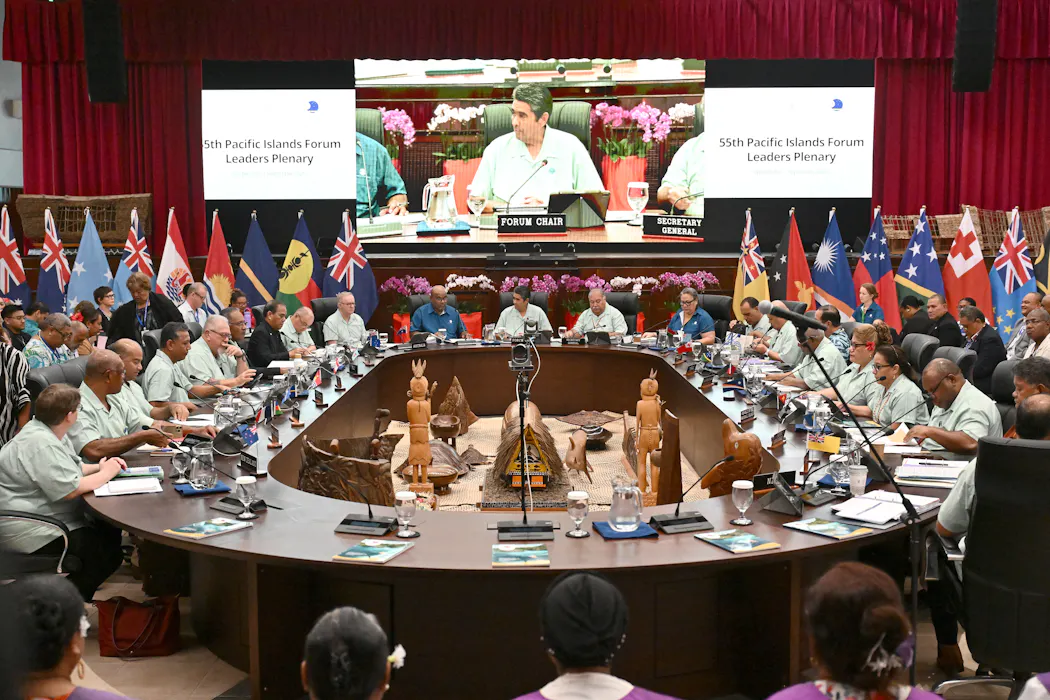
面对这些发展,专家主张太平洋岛国应通过加强地区集体合作来维护自身安全与外交独立性。太平洋岛屿论坛拥有18个成员国,已存在55年1,可成为推进地区安全合作的主要机制。目前,图瓦卢、马绍尔群岛和帕劳三个论坛成员承认中华民国(台湾),其他所有论坛国家与中华人民共和国有外交关系1。所罗门群岛最近提出了区域范围内的安全安排提案1,反映出岛国对加强集体防卫框架的关注。通过加强制度建设与区域合作,而非依赖单一大国,太平洋岛国可以在复杂的地缘政治环境中更好地保护自身利益。
Pacific Island states face mounting security pressures from great power competition in the region and should strengthen their collective defense mechanisms rather than rely on individual major powers, according to analysis of the geopolitical situation.1
The military activities of China's People's Liberation Army have intensified regional tensions. In June of this year, the PLA fired a long-range nuclear-capable missile equipped with a dummy warhead near Tuvalu's waters.1 Additionally, last year the PLA Air Force and Navy fleets, including submarines, conducted live-fire exercises in the Tasman Sea without prior warning to Australia or New Zealand, with vessels transiting through Papua New Guinea waters and military drones entering PNG airspace.1 Chinese state media characterized these exercises as marking the beginning of "normalized" PLA deployments in the South Pacific.1
To address these challenges, Pacific Island nations should leverage regional institutions to maintain their diplomatic independence. The Pacific Islands Forum, which has existed for 55 years, currently comprises 18 member states.1 Of these members, Tuvalu, Marshall Islands, and Palau recognize the Republic of China (Taiwan), while all other forum nations maintain diplomatic relations with the People's Republic of China.1 Solomon Islands has recently proposed regional security arrangements, offering a potential pathway for coordinated regional security cooperation that would protect smaller island states without forcing them into dependence on any single major power.1
评论
还没有评论,欢迎留下第一条。