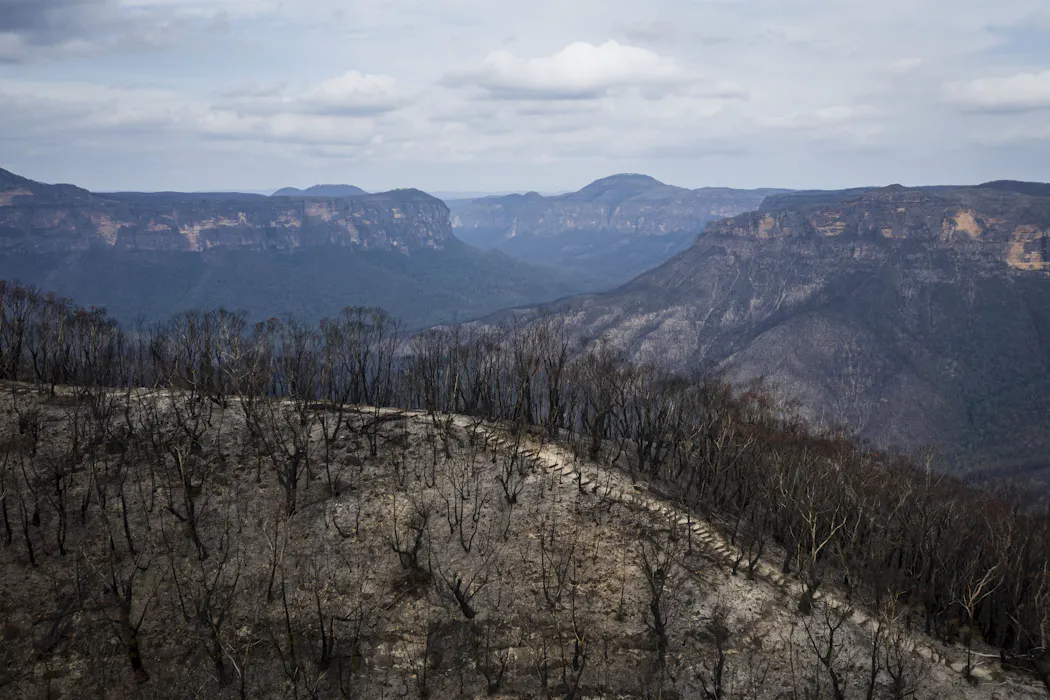
澳大利亚蓝山地区在2019-20年黑夏大火后遭受严重毁坏,其中戈斯珀斯山大火烧毁面积相当于新加坡的七倍,是澳大利亚有记录历史上单点火源最大的火灾1。虽然大火后的三年间该地区降雨高于平均水平,但最新研究表明植被恢复情况参差不齐1。
研究人员通过卫星时间序列图像追踪了大蓝山地区760个森林、荒地和湿地地点的恢复轨迹1。五年后,湿润桉树林已完全恢复,但蓝山雨林(包括coachwood、lilly-pilly和sassafras等树种)无论火烧严重程度如何都未能恢复1。草地林地同样未显示出恢复迹象1。这一结果表明单一恢复指标无法准确反映生态功能是否真正恢复1。
模型预测显示,如果干旱持续,湿润桉树林和淡水湿地的衰退幅度将比其他植物群落大五倍1。淡水湿地的恢复往往需要完全淹没以使物种得以返回1。
Australian researchers tracking vegetation recovery in the Blue Mountains region have found starkly different outcomes across plant communities, despite three years of above-average rainfall following the devastating 2019–20 Black Summer fires.1 A study monitoring 760 forest, grassland, and wetland sites across the greater Blue Mountains area revealed that wet eucalypt forests have fully recovered within five years, while Blue Mountains rainforest species—including coachwood, lilly-pilly, and sassafras—have failed to bounce back regardless of fire severity.1 Grassland woodlands similarly showed no signs of recovery.1
The research, which used satellite time-series imagery to track restoration trajectories, highlights the complexity of ecosystem recovery in fire-affected regions.1 The Gospers Mountain fire, which burned an area seven times larger than Singapore and ranks as the largest single-source fire in Australia's recorded history, exemplifies the scale of the 2019–20 crisis.1 Prior to the fires, the region had experienced three years with rainfall at only half normal levels, creating conditions conducive to megafires.1
Modeling suggests that if drought conditions persist, wet eucalypt forests and freshwater wetlands could decline at rates five times greater than other plant communities.1 Freshwater wetlands often require complete flooding for species to return, adding another layer of complexity to recovery prospects.1 The findings underscore that a single recovery indicator cannot accurately capture whether ecological function has genuinely restored, even as some visible vegetation metrics improve.
评论
还没有评论,欢迎留下第一条。