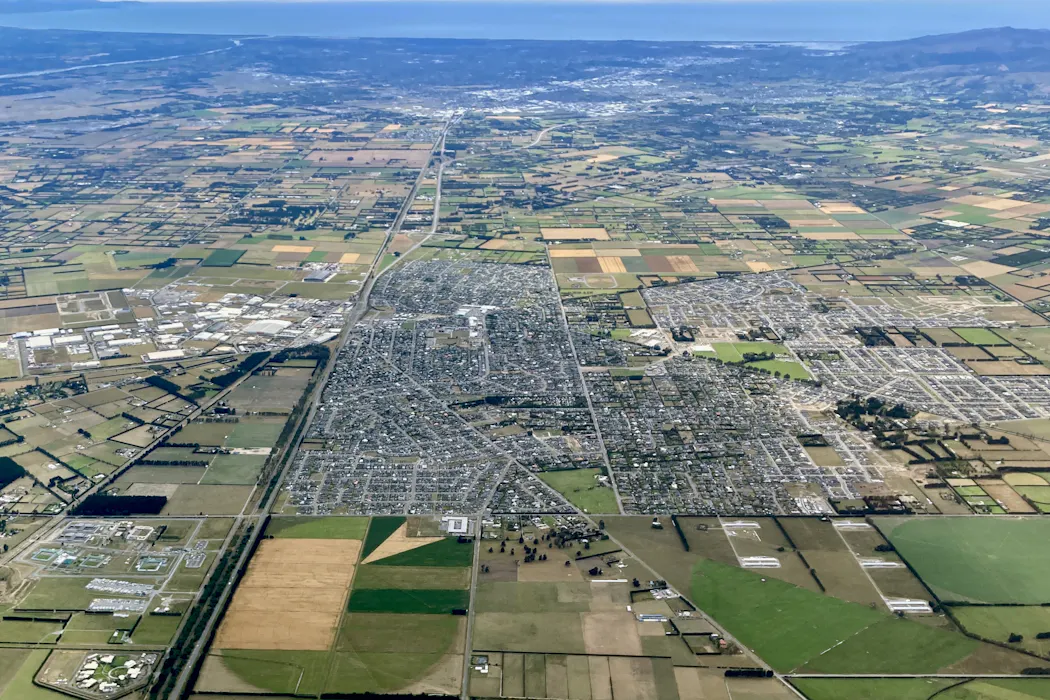
新西兰的Rolleston镇在过去25年间经历了惊人的扩张。从2000年到2025年,该镇人口增长了1246%,年均增长率达11%,相比之下新西兰全国同期增长仅38%,年均增长1%。1目前Rolleston的人口已超过34000人,预计到2050年将达到50000人,成为坎特伯雷地区第二大城区。1
然而,这种快速增长带来的并非原本的规划愿景。该镇如今面临严峻的结构性问题:52.9%的居民在基督城工作,仅32.4%在本地生活和工作。1这反映了该地区严重的就业缺陷和交通依赖。基础设施跟不上人口扩张的步伐,交通拥堵问题日益加剧。
这一现状的根源在于一段被中断的规划历史。1973年11月,新西兰工党政府宣布购买10000英亩土地,计划建设一座容纳50000人的"未来城镇"。1这个项目强调步行、骑行、公共交通、绿地、多样化产业和社区包容性。1但1975年11月,穆尔迪恩领导的国家党上台后取消了这一计划。1此后,Rolleston演变成了一个典型的汽车依赖、住宅蔓延的郊区卫星城,完全背离了原来的设想。
Rolleston has emerged as New Zealand's fastest-growing town, expanding by 1,246 percent between 2000 and 2025, with its population now exceeding 34,000 residents 1. This extraordinary growth rate—averaging 11 percent annually—far outpaces the country's overall expansion of 38 percent during the same period, with a national average of just 1 percent per year 1. The town is projected to reach 50,000 residents by 2050, already ranking as Canterbury's second-largest urban area 1.
However, this rapid development has come at a cost. Today, 52.9 percent of Rolleston's residents commute to nearby Christchurch for work, while only 32.4 percent both live and work locally 1. The town now faces mounting infrastructure pressures, insufficient local employment opportunities, and traffic congestion—challenges rooted in its transformation into a car-dependent suburban satellite city.
The roots of Rolleston's current predicament trace back to abandoned planning ambitions. In November 1973, the Labour government announced plans to purchase 10,000 acres to build a "future town" capable of housing 50,000 people 1. The original vision emphasized walkability, cycling infrastructure, public transportation, green spaces, diverse industries, and community inclusivity 1. Yet when the National Party government led by Muldoon took office in November 1975, it scrapped the entire plan 1. What followed was development shaped by automobile dependency and sprawling residential expansion rather than the integrated, mixed-use urban design that had been originally conceived.
评论
还没有评论,欢迎留下第一条。