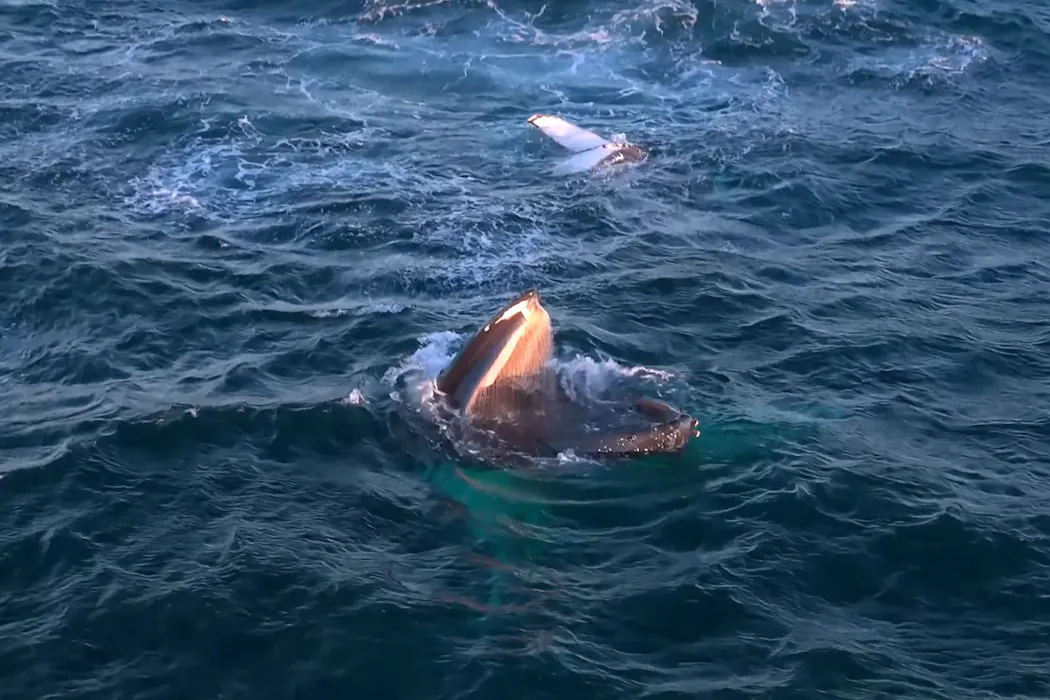
研究人员通过社交媒体和公民科学方法分析了2013至2024年澳大利亚东海岸座头鲸的觅食行为,发现中纬度觅食是座头鲸迁徙中的普遍策略1。相关研究已发表在《海洋哺乳动物科学》期刊,共识别了199个独立觅食事件,涉及约1417只座头鲸1。这些觅食活动主要集中在新南威尔士州南海岸、塔斯马尼亚和维多利亚州沿海,其中新南威尔士州南海岸占所有验证觅食事件的45%,塔斯马尼亚占28%,维多利亚州占12%1。
观察数据显示,觅食数量在8月至10月期间明显增加,与座头鲸的南向迁徙时间相吻合1。研究还记录了16次"超级群体"觅食事件,单次观察到20至150多只座头鲸在同一地区聚集进食1。这些沿海觅食热点由东澳大利亚洋流产生的营养丰富的沿海上升流所驱动1。这些觅食热点与人类活动如商业捕鱼和船只航运高度重叠,研究人员指出需要改进鲸鱼保护管理策略以应对这一挑战1。
Researchers have identified a widespread feeding strategy among humpback whales migrating along Australia's eastern seaboard, using social media videos and citizen science observations to track their behavior. Between 2013 and 2024, scientists documented 199 distinct feeding events involving approximately 1,417 humpback whales, with findings published in the journal Marine Mammal Science.1 The research revealed that mid-latitude feeding represents a common practice during the whales' southbound journey, with feeding hotspots concentrated along the south coast of New South Wales, Tasmania, and Victoria.1
The New South Wales south coast accounted for 45 percent of all verified feeding observations, followed by Tasmania at 28 percent and Victoria at 12 percent.1 Sightings intensified between August and October, coinciding with the whales' southward migration pattern.1 Researchers recorded 16 instances of "superpod" feeding events, where between 20 and 150 or more whales gathered in the same area.1 These coastal feeding zones are driven by nutrient-rich upwelling currents generated by the East Australian Current.1
The study highlights a concerning overlap between whale feeding hotspots and human activities, including commercial fishing and shipping lanes.1 This spatial intersection underscores the need for improved whale protection and management strategies in Australian waters.1
评论
还没有评论,欢迎留下第一条。