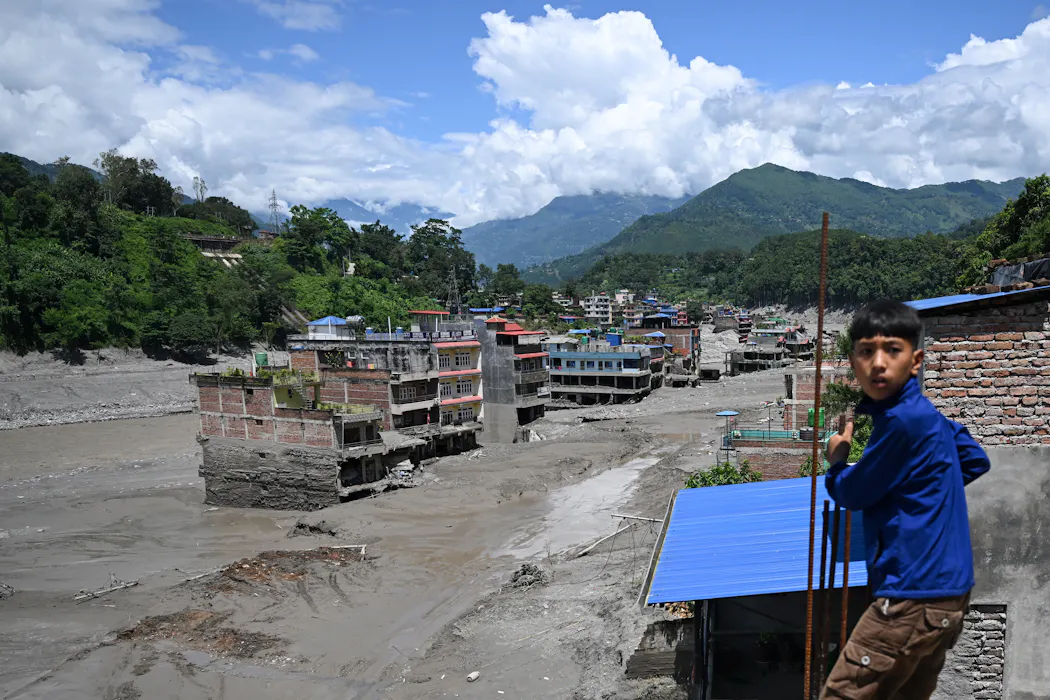
尼泊尔与西藏边界地区周三发生灾难性山洪,由喜马拉雅山脉冰川大规模崩塌引发610。根据不同时间点的报告,伤亡数字持续攀升。国际红十字与红新月运动联合会表示至少93,000人受影响1,失踪人数从初期的1,900人1升至2,478人2,随后进一步增至3,000多人4。尼泊尔灾难管理机构在周六晚间报告675人死亡、2,498人失踪,中国当至少33名英国籍人士5和39名澳大利亚人89失踪。山洪沿特里苏利河及博特科西河系统冲击下游近100公里610,摧毁多个村庄、桥梁和水电站。
救援工作面临多重障碍。约100人被困在被洪水淹没的水电站隧道内,尼泊尔军方已派出两架直升机进行救援2。军方发言人Raja Ram Basnet表示"定位隧道入口困难重重"2。道路和桥梁被冲毁导致许多受灾最严重的地区无法进入1,尼泊尔已请求国际援助进行遗体识别、DNA检测和隧道救援4。恶劣天气暂时阻碍了周六的空中救援行动4。此外,原堰塞湖已自然出流,但在8月29日晚又发现了位于下游2.8公里处的新堰塞湖7,促使前线救灾人员转移至安全地点。吉隆口岸大楼严重受损,连接该口岸的216国道被完全冲毁7。
尼泊尔防洪部门在灾害发生期间向易受灾地区发送了约60万条预警短信89,但对靠近灾源的社区而言警报仍然过晚9。卫星图像显示一大段冰川在海拔约5200米处崩塌,坠落超过1200米11。受灾地区的特里苏利河在一个监测点30分钟内上升9米11。尼泊尔交通部报告19座可通行桥梁和约40公里道路被毁坏11。研究表明,灾害前两天记录到的异常高温可能是冰川崩塌的重要因素10。
A catastrophic glacial collapse triggered massive flash floods across the Nepal-Tibet border on Wednesday, leaving hundreds dead and thousands unaccounted for.610 The disaster began when a glacier in the Langtang region near the Chinese border collapsed at approximately 5,200 meters elevation, sending ice, rock, and snow debris into tributary streams.1011 This initial landslide dammed river channels, and when the resulting barriers burst, they unleashed destructive floodwaters that swept downstream for nearly 100 kilometers along the Bhote Koshi and Trishuli river systems.611
The scale of devastation remains fluid as rescue operations continue. Death tolls vary by source: the International Federation of Red Cross and Red Crescent Societies reported nearly 600 deaths with concerns the figure could rise further,1 while Chinese authorities reported 16 deaths on the Tibetan side alongside 546 missing persons,4 and Nepal's disaster management agency reported 675 deaths and 2,498 missing as of Saturday evening.4 Combined figures place the overall toll at approximately 691 deaths and over 3,000 missing across both countries.4 At least 93,000 people face urgent humanitarian needs,1 and approximately 100 individuals remain trapped in a hydropower station tunnel, with two military helicopters deployed for rescue despite challenges locating tunnel entry points.2 According to military spokesperson Raja Ram Basnet, "Two helicopters have been dispatched but it is challenging because it is tough to even locate the entry points of the tunnel."2 A total of 403 tourists are among the missing, including 341 foreign nationals, with at least 33 British citizens and 39 Australian citizens unaccounted for.5811
Infrastructure destruction is extensive. Entire villages along the river valleys were swept away, with 19 bridges destroyed and approximately 40 kilometers of roadway damaged or washed out.11 The critical 42-kilometer highway connecting Betrawati to the Nepal-China border crossing has been obliterated at multiple points.11 In Tibet's Gyelposhing port area, the border crossing building lies devastated with only its steel frame remaining, and national highway 216 was completely destroyed.7 Rescue and reconstruction efforts have been severely hampered: roads and bridges destroyed by the initial flooding have made access to the hardest-hit regions extremely difficult,1 while bad weather temporarily disrupted aerial rescue operations on Saturday.4
Compounding the crisis, a moat lake formed at the disaster source, initially raising concerns about potential breakthrough flooding.6 This original barrier subsequently stabilized with visible drainage channels,6 but new hazards emerged when a secondary landslide approximately 2.8 kilometers downstream from the original moat lake generated a new barrier on August 29 evening, prompting emergency relocation of rescue personnel to safer positions.7 China's emergency engineering response team assessed the new moat as relatively stable by August 28 evening, with water outflow exceeding inflow and the lake surface receding by nearly one-third compared to the previous day.12
Meteorological conditions intensified the disaster's severity. Research from the British Antarctic Survey detected unusually high ground temperatures recorded two days before the glacier collapse, suggesting abnormal warming may have weakened ice-rock bonds and increased meltwater infiltration into glacial fractures, contributing to structural failure.10 Rescue authorities in Nepal dispatched approximately 600,000 early-warning text messages to vulnerable communities in Rasuwa, Nuwakot, Dhading, and Chitwan districts,89 though for communities closest to the disaster source the alerts came too late—four automated hydrological monitoring stations were swept away in the initial surge.9 Nepal has requested international assistance for body identification, DNA testing, and specialized tunnel rescue operations.4
评论
还没有评论,欢迎留下第一条。