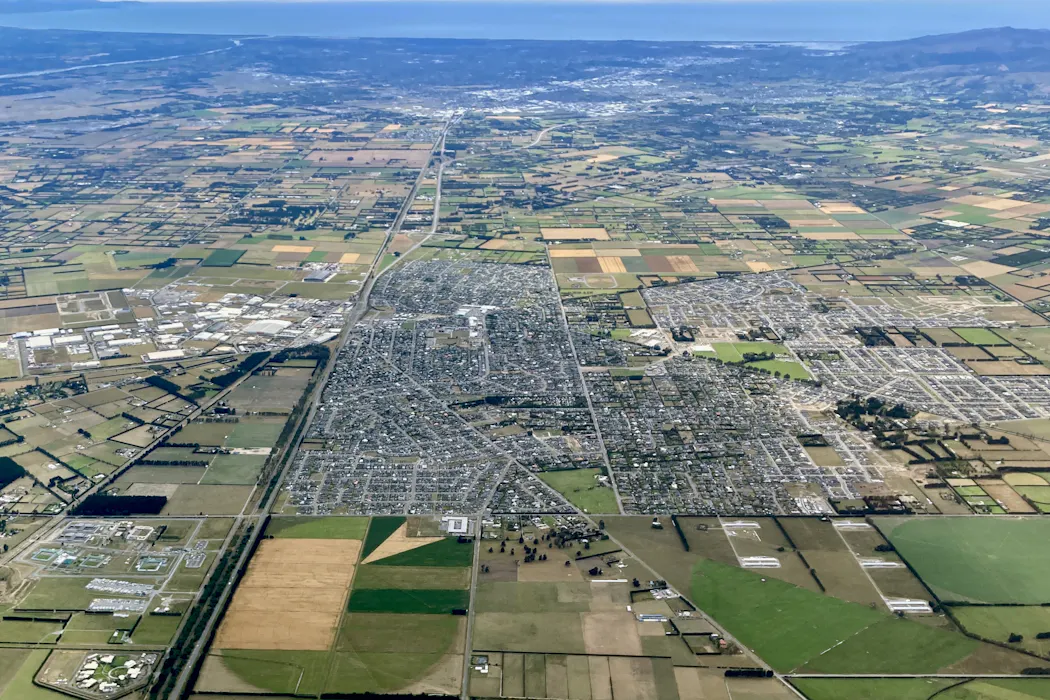
新西兰增长最快的城镇罗尔斯顿(Rolleston)曾于20世纪70年代被规划为自给自足的“未来之城”,但如今已演变为一个依赖汽车且基础设施滞后的基督城卫星城1。1973年11月,Norman Kirk的工党政府宣布购买10,000英亩(4,000公顷)土地用于该镇开发1。然而,Robert Muldoon的国家党政府于1975年11月上台后,废除了罗尔斯顿的原有规划1。此后,该镇的发展转由私人房地产利益主导1。
目前,罗尔斯顿的人口已超过3.4万,预计到2050年将达到5万1。在2000年至2025年间,该镇增长了1,246%,年均增长11%1。2023年人口普查数据显示,52.9%的罗尔斯顿居民通勤到基督城工作1。尽管该镇现已拥有八所学校、两个体育中心和Te Ara Ātea社区文化中心,且南岛最大的超市(拥有500个停车位)也位于该镇,但其仍面临交通拥堵、公共服务不足和绿地开发等争议1。为此,新西兰Selwyn区议会呼吁停止更多绿地住房申请,并移除Fast-Track Approvals Act下的农村住宅开发1。
Rolleston, recognized as New Zealand's fastest-growing town, is currently grappling with lagging infrastructure as the Selwyn District Council urges a halt to further greenfield housing applications under the Fast-Track Approvals Act and the removal of rural residential development 1. The town's population has already exceeded 34,000 and is projected to reach 50,000 by 2050, driven by a 1,246% growth between 2000 and 2025 that averaged an 11% annual increase 1.
The town's current form contrasts with its original 1970s conception as a self-sufficient city of the future 1. In November 1973, Norman Kirk's Labour government announced the acquisition of 10,000 acres (4,000 hectares) of land for development, but this original plan was abolished in November 1975 after Robert Muldoon's National government came to power 1. Left to be shaped by private real estate interests, Rolleston ultimately evolved into a car-dependent satellite city of Christchurch characterized by lagging infrastructure 1.
This historical pivot has resulted in contemporary challenges, including traffic congestion, inadequate public services, and controversies over green space development 1. Data from the 2023 census highlights this dynamic, revealing that 52.9% of Rolleston residents commute to Christchurch for employment 1. Nevertheless, the expanding community features eight schools, two sports centers, the Te Ara Ātea community cultural center, and the South Island's largest supermarket, which has 500 parking spaces 1.
评论
还没有评论,欢迎留下第一条。