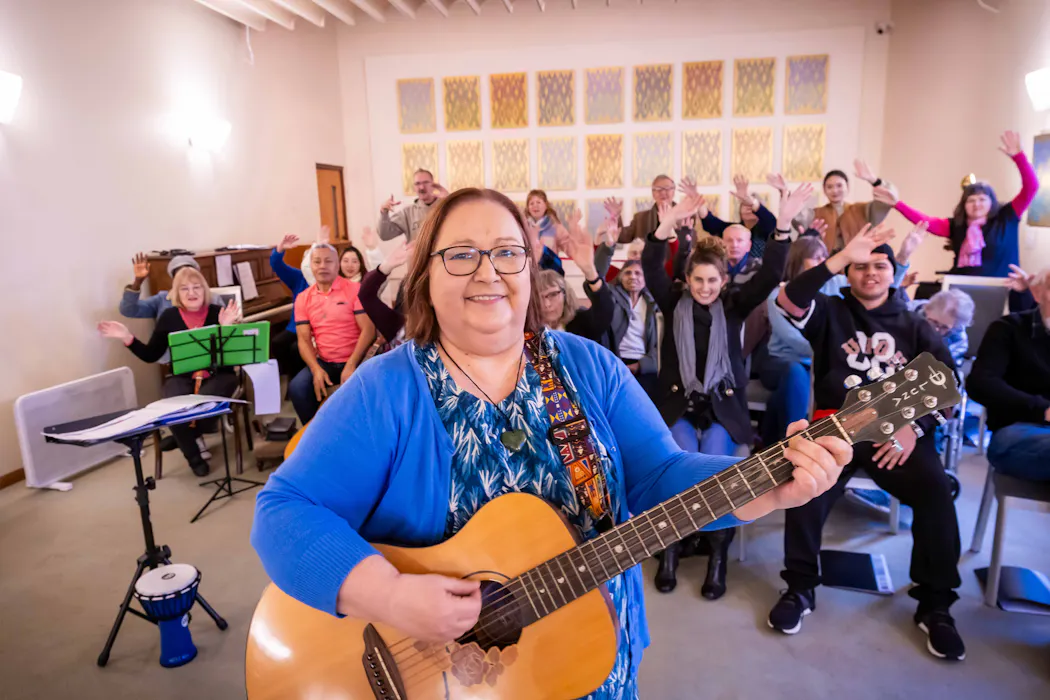
新西兰奥克兰大学脑研究中心近二十年前创立的CeleBRation Choir项目研究发现,参与神经系统疾病合唱团的患者自报生活质量与无沟通障碍的社区合唱成员相当[1]。这一发现表明,合唱对中风幸存者和痴呆症患者的生活改善具有显著效果[1]。
合唱的治疗作用主要通过两个机制发挥效能。从生理层面,合唱可以提高催产素和内啡肽水平,同时降低皮质醇水平[1]。更重要的是,合唱激活与言语相同的脑神经通路,这使许多患者得以改善语言、声音和记忆问题[1]。帕金森病患者通过参与合唱可改善言语清晰度和音量[1],而由中风或脑损伤导致失语症的患者通常能比说话更流畅地唱出喜爱的歌曲[1]。
除生理益处外,合唱还通过情感连接和群体支持的方式减少患者的社交隔离[1]。这一发现具有广泛的公共卫生意义,因为新西兰三分之一的人在其一生中将受到神经系统疾病的影响[1]。
Research from Auckland University's Brain Research Centre demonstrates that participating in choirs designed for people with neurological diseases significantly improves quality of life outcomes comparable to those experienced by community choir members without communication difficulties.[1] The CeleBRation Choir initiative, established by the Brain Research Centre nearly two decades ago, has explored how singing activates the same neural pathways involved in speech, helping participants address language, voice, and memory challenges.[1]
The therapeutic mechanism works through multiple pathways. Singing elevates oxytocin and endorphin levels while reducing cortisol, contributing to both physiological and emotional wellbeing.[1] Individuals with Parkinson's disease experience improved speech clarity and volume through choir participation, while stroke or brain injury survivors with aphasia often find they can sing their favorite songs more fluently than they can speak them.[1] Beyond these direct neurological benefits, choir participation addresses social isolation through emotional connection and group support.[1]
The relevance of such interventions extends broadly across New Zealand's population, as one-third of people will experience a neurological condition at some point in their lives.[1] Research findings from the CeleBRation Choir project, including work documented in the VOCCAL Handbook developed as part of doctoral research, provide evidence supporting choir-based interventions as a complementary therapeutic approach for individuals living with brain conditions.[1]