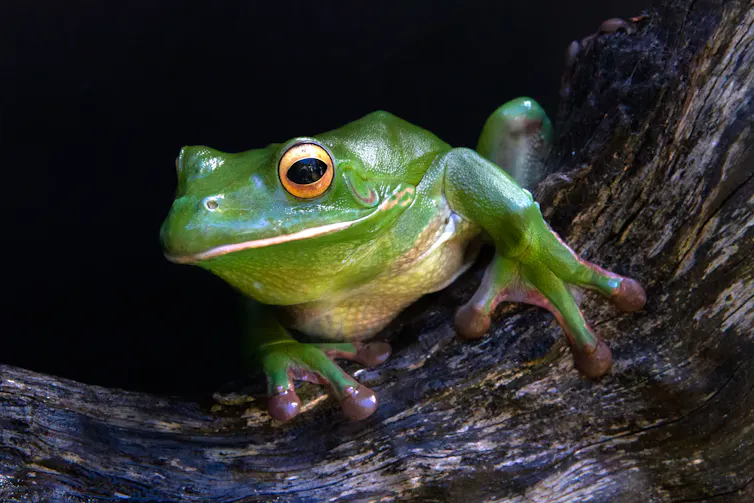
壶菌病是一种威胁两栖动物生存的重大疾病。该病已导致全球90个两栖动物物种灭绝,影响全球受威胁两栖动物的近30%[1]。在澳大利亚,约250种青蛙中有36种正受威胁,该病被认为已导致7种青蛙灭绝[1]。绿金铃蛙在其原有范围内已从超过90%的地区消失[1]。
为应对这一危机,热疗(俗称"青蛙桑拿")被用作有效治疗手段。然而澳大利亚研究团队的新发现表明,这种治疗方法本身也可能带来代价。研究显示,感染和热疗都可能对青蛙的繁殖能力造成负面影响[1]。具体而言,中等感染的青蛙精子浓度更高,但重度感染的青蛙精子运动性降低[1]。更令人担忧的是,接受热疗的青蛙精子浓度大幅下降,在6个月后仍保持异常低水平[1]。这表明保护项目在关注青蛙存活率的同时,还需要重点监测其生殖健康[1]。
A deadly fungal disease called chytrid fungus has driven approximately 90 amphibian species to extinction globally and threatens nearly 30% of the world's threatened amphibians [1]. In Australia, where about 250 frog species exist, 36 are currently at risk, and the disease is believed to have caused the extinction of seven species [1]. Among the most affected is the green and golden bell frog, which has disappeared from over 90% of its former range [1].
While heat therapy—sometimes called a "frog sauna"—has proven effective at treating this fungal infection, new research reveals a troubling trade-off: both the infection itself and the treatment can harm frogs' reproductive capacity [1]. Scientists found that moderately infected frogs showed higher sperm concentration, yet severely infected frogs experienced reduced sperm motility [1]. More concerning, frogs receiving heat therapy experienced a dramatic drop in sperm concentration that remained abnormally low even six months after treatment [1]. These findings suggest that conservation programs must monitor reproductive health in treated frogs, not merely track their survival rates [1].