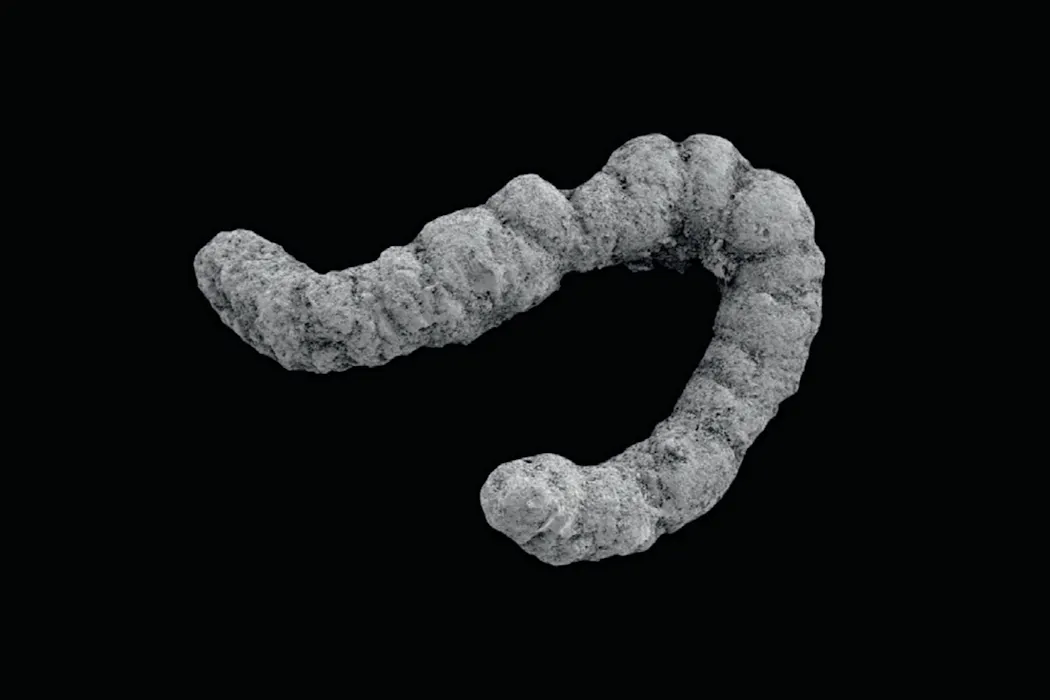
最新研究表明,动物粪便的演化过程可能是地球历史上最重大演化事件的推动力量。[1]研究人员通过分析化石粪便记录发现,在距今约5.4亿年的寒武纪时期,随着动物数量增加和消化系统日趋复杂,动物所产生的粪便大幅增加,这些粪便向海洋中分散有机物质和营养物质,加速了海洋生态系统的发展。[1]
寒武纪大爆发在约1300万到2500万年间内,导致大多数主要动物群体相继出现。[1]研究发现,第一批化石粪便出现在寒武纪初期,其后数量持续增加。[1]在距今约5.6亿年到5亿年间,早期节肢动物进化出专门的前肠和消化腺,使其能够处理更广泛的食物种类,从而产生更多粪便。[1]这些动物粪便颗粒成为现代海洋生物泵的重要组成部分,将有机碳和营养物质从表层水运输到更深的海洋环境,进而促进海洋生物多样性的增长。[1]
Recent research suggests that the evolution of animal waste played a crucial role in triggering the Cambrian Explosion, one of the most significant evolutionary events in Earth's history.[1] The Cambrian Explosion occurred approximately 540 million years ago, with most major animal groups emerging within a span of 13 to 25 million years.[1]
Scientists examining the fossil record of coprolites—fossilized feces—discovered that the first such specimens appeared in the early Cambrian period, with their abundance increasing thereafter.[1] Between approximately 560 million and 500 million years ago, animal digestive systems and fecal output underwent major transformations.[1] Early arthropods evolved specialized foreguts and digestive glands capable of processing a wider range of food sources.[1]
As animal populations grew during the Cambrian era, the increased production of feces dispersed organic matter and nutrients throughout the oceans, accelerating marine ecosystem development.[1] Animal fecal particles represent a vital component of the modern marine biological pump, transporting organic carbon and nutrients from surface waters to deeper ocean environments.[1]