现代高端子品牌Genesis推出新款电动旗舰车型GV90,采用800V E-GMP平台1,与现代Ioniq 9和起亚EV9共享该技术架构1。新车提供四座GV90和高端GV90 Neolum两款版本,以及三排七座版本1。
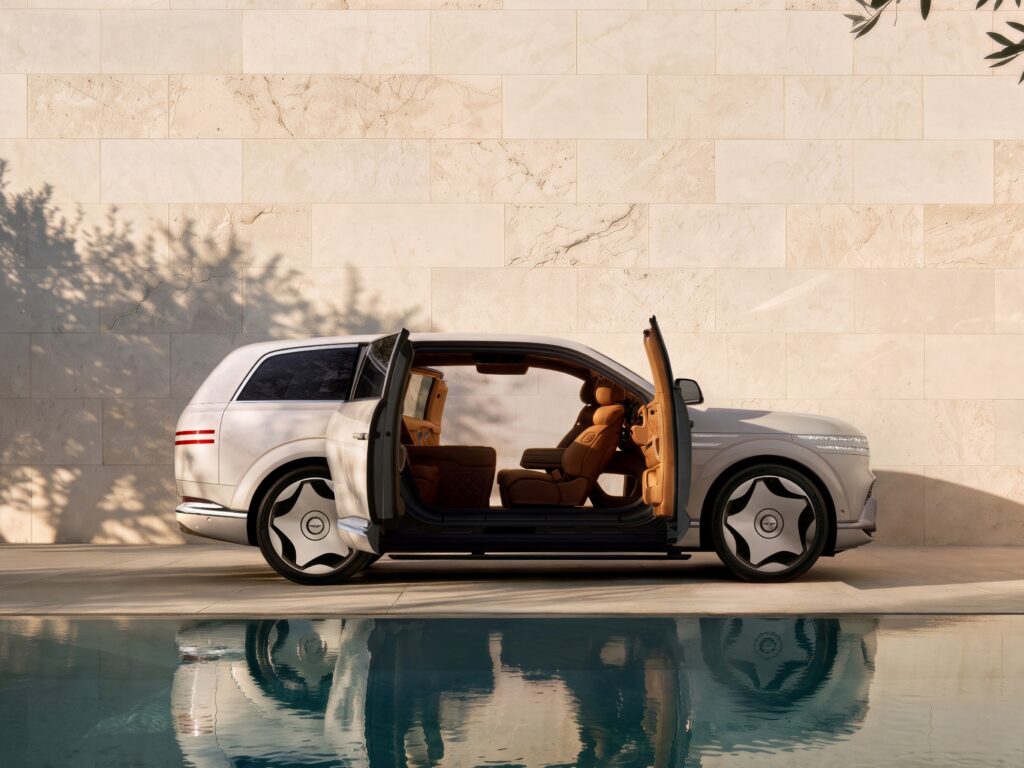
GV90采用无B柱车门设计,Genesis将其命名为Neolum Arch Gate,融合了概念车Neolum的设计理念1。在安全配置方面,新车配备全球首创的翻滚时自动展开的车顶安全气囊,车内共配置12个气囊1。
Hyundai's luxury brand Genesis has unveiled its latest flagship electric vehicle, the GV90, joining the expanding segment of high-end electric SUVs.1 The new model is built on the 800V E-GMP platform, the same architecture shared with Hyundai's Ioniq 9 and Kia's EV9.1
The GV90 comes in multiple configurations to suit different buyer preferences.1 Genesis offers a four-seat variant alongside the premium GV90 Neolum edition, along with a three-row, seven-seat version.1 The design draws inspiration from Genesis's Neolum concept vehicle, incorporating a distinctive pillarless door system that the brand calls the Neolum Arch Gate.1
Safety features are a focal point of the new model's engineering.1 The GV90 includes a globally first-of-its-kind roof airbag that deploys automatically during a rollover, complemented by a total of 12 airbags throughout the vehicle cabin.1
评论
还没有评论,欢迎留下第一条。