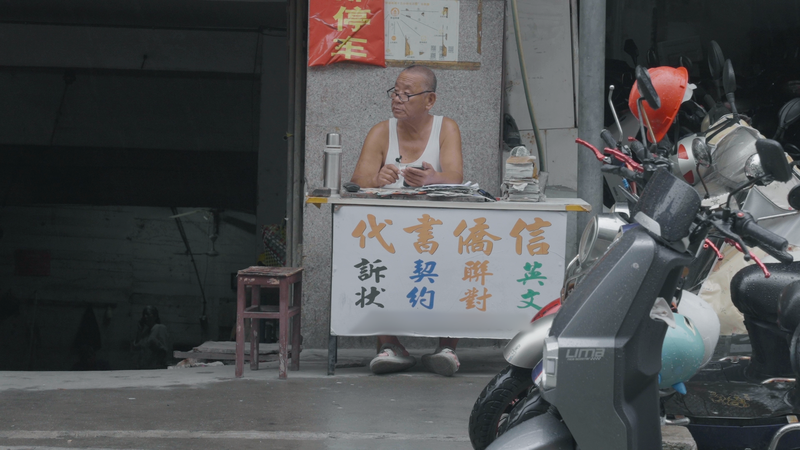
76岁的姜明典在福建泉州石狮守摊近六十年,见证了中国社会从侨信时代到现代法律文书的巨大变迁1。1967年,18岁的他因家庭成分无法继续读书,跟随父亲学写代书信1。当时泉州街头有二十多个代书人1,年轻的姜明典骑自行车下乡挨户写信,中文信收费两毛,英文信一块1。在20世纪六七十年代,他执笔的数万封侨信成为下南洋谋生的番客与故土亲人的情感和经济纽带1。
改革开放后,摊位上的代笔需求逐渐演变1。曾经的离乡思亲之信转变为出国签证、办厂申请、诉状、合同、遗嘱等各类法律和行政文书1。姜明典的父亲写了六十多年,近九十岁时还在替人写信,后于他离世1。这个家族的三代人各自以时代所需的方式帮助普通人表达诉求和维护权益——父辈笔下是乡愁与生计,姜明典本人见证并参与了这一转变,他的大儿子出生于1980年,主修刑法,现为泉州市区律师1,在新时代以专业身份继续这一使命。姜明典平生第一次离开泉州,应邀赴北京参加电影《给阿嬷的情书》的观映礼,该片于今年四月底上映1。
At 76 years old, Jiang Mingdian has operated his humble stall in Stone Lion, Quanzhou, Fujian province for nearly six decades, serving as a silent witness to China's profound social transformation.1 Beginning in 1967 at just 18 years old, when his family background prevented him from continuing his education, Jiang apprenticed under his father to learn the craft of letter-writing, a profession that would define his life.1 During that era, Quanzhou's streets hosted more than twenty scribes, and Jiang traveled by bicycle to villages, composing letters at modest rates—two cents for Chinese correspondence and one yuan for English.1
Throughout the 1960s and 1970s, the tens of thousands of letters Jiang penned became vital threads connecting overseas laborers who had ventured south with their families back home, serving as both emotional support and economic lifelines.1 As China entered the reform and opening-up period, the nature of his work evolved dramatically; his pen shifted from facilitating family correspondence to drafting visa applications, factory permits, legal petitions, contracts, and wills.1 His father, who had devoted more than sixty years to this calling, continued writing letters well into his nineties before passing away.1
The transformation extended to the next generation. Jiang's eldest son, born in 1980 and trained in criminal law, now practices as a lawyer in Quanzhou, representing a shift from informal scribal services to formal legal representation.1 This family legacy—spanning three generations and adapting to each era's needs—reflects how ordinary people have sought assistance in articulating their grievances and protecting their rights.1 Jiang's life story gained wider recognition when he was invited to a Beijing screening of the film "Love Letter to Grandma" in late April, marking the first time he left Quanzhou.1
评论
还没有评论,欢迎留下第一条。