中国航天部门计划于本月晚些时候启动嫦娥七号月球探测任务,将在月球南极永久阴影区开展水冰资源勘探1。此举代表了月球探测从科学探索向资源评估利用阶段的转变1。
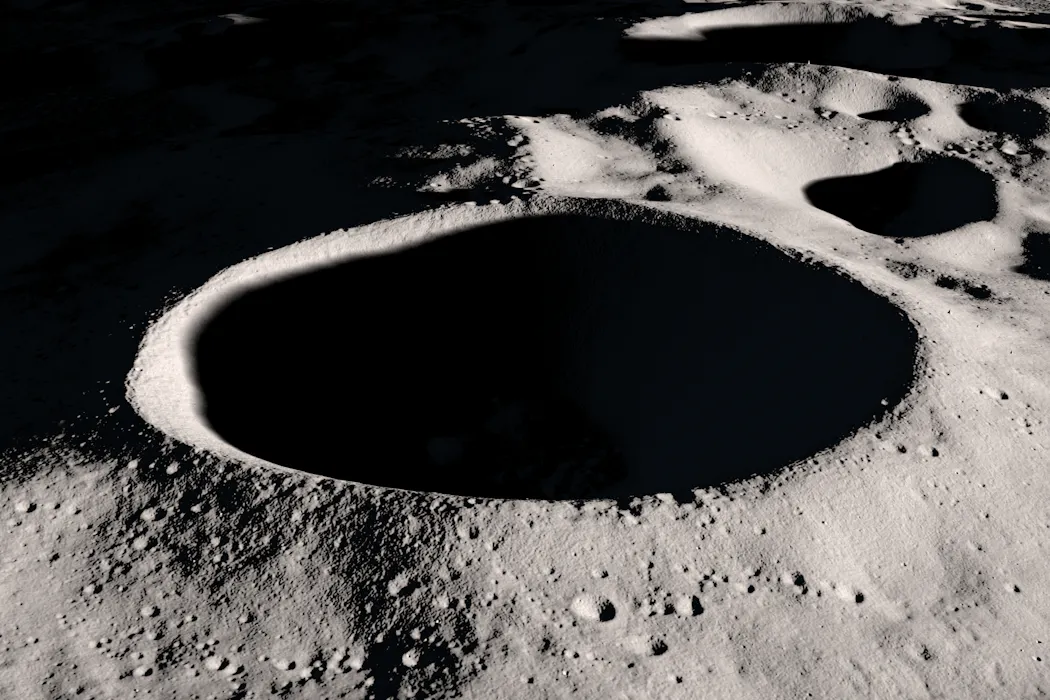
嫦娥七号任务由轨道器、着陆器、漫游车和跳跃器四个部分组成1。其中跳跃器是该任务的创新亮点,可越过破碎地形并进入传统车辆无法到达的深层陨石坑1。着陆地点候选位于月球南极沙克尔顿陨石坑附近的光照山脊1。在永久阴影区,温度低于零下200摄氏度1。已于2024年3月单独发射的鹊桥二号中继卫星将为该任务提供地月通信支持1。
与美国国家航天局的探月策略不同,NASA通过商业月球有效载荷服务计划已签约17次交付合同,携带超过60种仪器1。私营企业直觉机器公司的IM-2任务曾进行过类似的尝试,但该着陆器翻倒且仅运行一天1。此外,中国国家航空航天局与俄罗斯航天局正联合主导国际月球科研站建设,嫦娥八号计划于2028年发射,将演示月球资源的实际利用方式1。
China's space agency is set to initiate the Chang'e-7 lunar mission later this month to explore water ice deposits in the Moon's permanently shadowed regions at the south pole.1 The mission represents a significant shift in lunar exploration strategy, moving beyond basic reconnaissance toward resource assessment and utilization.1
The Chang'e-7 mission comprises four components: an orbiter, lander, rover, and hopper.1 The hopper is specifically engineered to traverse fractured terrain and access deep craters that conventional rovers cannot reach, including areas where temperatures plummet below -200°C.1 Landing site candidates include ridge formations near the Shackleton crater in the lunar south polar region.1 This approach differs markedly from NASA's commercial lunar payload services program, which has contracted 17 delivery missions carrying over 60 scientific instruments to the Moon.1
Support for the Chang'e-7 mission will come from the Queqiao-2 relay satellite, which was launched separately in March 2024 to facilitate Earth-Moon communications.1 Looking further ahead, China plans to launch the Chang'e-8 mission in 2028 to demonstrate practical methods for utilizing lunar resources.1 China's National Space Administration and Russia's space agency jointly lead the construction of an international lunar research station.1 A comparable attempt by private company Intuitive Machines through its IM-2 mission encountered difficulties when the lander overturned and operated for only one day.1
评论
还没有评论,欢迎留下第一条。