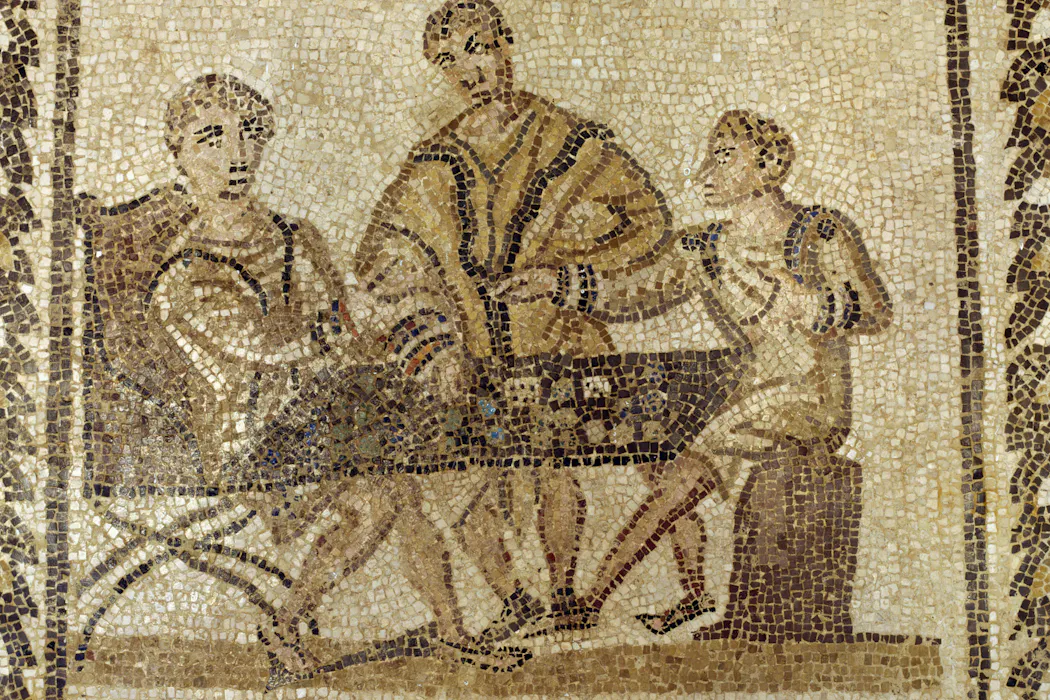
赌博作为一种娱乐活动的历史源远流长,古代希腊和罗马社会早已对其成瘾风险表示担忧。奥古斯都皇帝曾在一次假期中承认赌博输掉了20,000塞斯特菲(约相当于今日150,000澳元)1,而克劳狄斯皇帝(公元41-54年在位)甚至在马车上安装了赌板,以便在旅行途中继续参与赌博1。这些统治者的行为表明,即使身处权力顶端,也无法抗拒赌博的诱惑。腓力二世(前382-336年)在被信任的将军面前赌博时感到尴尬,说明过度沉溺于赌博在当时被视为统治者不得体的表现1。
面对赌博的蔓延,古代社会尝试了多种管制手段。雅典演说家伊索克拉底在公元前四世纪抱怨年轻男子在酒馆浪费青春进行赌博1,反映出当时的社会担忧。罗马法律家朱利叶斯·保罗在公元三世纪初提及三部反赌法——《Leges Titia》《Publicia》和《Cornelia》1。诗人马提亚尔曾描写赌徒被捕后向行政官求情的场景1,表明法律惩罚确实存在。西班牙埃尔维拉教会议会约在公元305-306年间规定,为金钱赌博的基督徒可被逐出圣餐1。尽管采取了这些禁令和处罚措施,赌博活动仍未被有效遏止,这些努力收效甚微,罗马农神节期间人们甚至获得了更大的赌博自由1。
Gambling has long been a persistent social concern, with evidence from ancient Greece and Rome revealing that regulators and moralists struggled just as much as modern societies to curb excessive wagering.1 Despite widespread disapproval and legal restrictions, even the most powerful figures of antiquity indulged in the practice, suggesting that the allure of games of chance has remained remarkably consistent across centuries.
Roman emperors were among the most notorious gamblers of their time. Augustus admitted to losing 20,000 sestertii—equivalent to approximately 150,000 Australian dollars today—during a holiday gambling session.1 Emperor Claudius, who ruled from 41 to 54 CE, went so far as to have a gaming board installed in his carriage so he could continue betting while traveling.1 Philip II, who reigned from 382 to 336 BCE, felt embarrassed about his gambling in front of trusted generals, indicating that excessive enthusiasm for wagering appeared unseemly even among rulers.1
Ancient authorities implemented multiple strategies to combat problem gambling. Athenian orator Isocrates complained in the fourth century BCE that young men were squandering their youth drinking and gambling in taverns.1 Roman lawmakers introduced three specific anti-gambling statutes—the Leges Titia, Publicia, and Cornelia—as documented by jurist Julius Paul in the early third century CE.1 The poet Martial depicted gamblers pleading with magistrates when caught.1 Religious sanctions also played a role: the Council of Elvira, held around 305-306 CE in Spain, decreed that Christians who gambled for money could be excommunicated.1 During Rome's Saturnalia festival, however, gambling restrictions were temporarily relaxed, allowing greater freedom for wagering.1 Yet despite these varied enforcement mechanisms, none proved effective in eliminating the practice.
评论
还没有评论,欢迎留下第一条。