苹果发布2026财年第三财季财报,营收与利润双双刷新纪录,但随后公布的下一季度指引令市场失望。12第三财季总营收达1094.17亿美元,同比增长16%,2净利润297.89亿美元增长27%,12稀释后每股收益2.02美元增长29%。2其中iPhone营收542.52亿美元同比增长21.7%,1创下六月季度历史新高;Mac营收103.52亿美元增长28.7%;2服务业务营收307.39亿美元,增长12%,2未达预期312.2亿美元。2公司全平台付费订阅用户突破15亿,活跃设备超25亿台。14
但公司对第四财季的谨慎态度引发股价暴跌。CFO凯文·帕雷克披露,第四财季营收增长指引仅为9%-11%,1远低于华尔街预期的12.1%。1这一指引下调主要源于供应链压力。CEO蒂姆·库克表示:"供应链根本没有足够的灵活性来满足如此高水平的需求。"2库克进一步指出,内存价格正在指数级上涨,5并预计第四季度内存成本进一步上升。2本季度毛利率达50.1%,其中约2个百分点增长来自关税回扣,4但下季度毛利率预计降至47%-48%。5
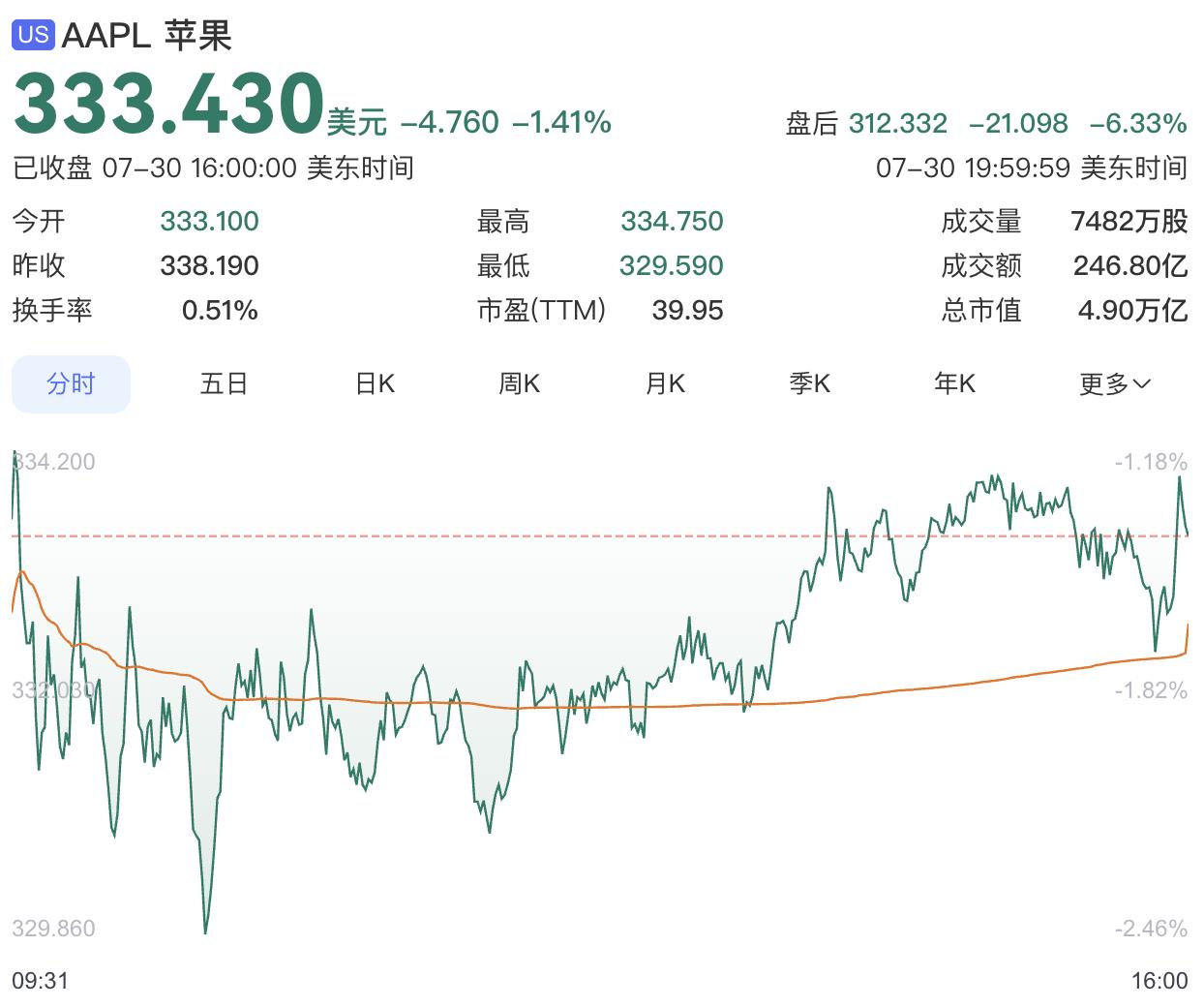
财报发布后,苹果股价在盘后交易时段应声下跌。1这也是库克担任CEO期间发布的最后一份完整财季财报,2他将于9月1日卸任CEO,由硬件工程高级副总裁约翰·特纳斯接棒。2此外,苹果董事会宣布每股派发0.27美元现金股息,将于8月13日完成发放。1
Apple released its fiscal 2026 third-quarter results, posting record-breaking performance across key metrics while simultaneously triggering a sharp market selloff due to cautious outlook for the upcoming period. Total revenue reached $1,094.17 billion, representing a 16 percent year-over-year increase and surpassing analyst consensus of $1,086.5 billion 1. Net income climbed to $297.89 billion with a 27 percent gain 1, while diluted earnings per share reached $2.02, up 29 percent from the prior year 1.
The company's hardware segment drove much of the growth momentum. iPhone revenue hit $542.52 billion, marking a 21.7 percent increase and setting a record for the June quarter 1. Mac sales surged 28.7 percent to $103.52 billion, also reaching a seasonal high 2. The greater China region generated $188.16 billion in revenue, expanding 22.4 percent but falling short of the analyst expectation of $196.7 billion 4. However, services revenue grew only 12 percent to $307.39 billion, disappointing expectations of $312.2 billion 2. The company maintained a gross margin of 50.1 percent, though approximately 2 percentage points derived from tariff refunds 2. Apple's paid subscription base surpassed 1.5 billion users globally 1.
The market's enthusiasm evaporated following management's fourth-quarter guidance. Chief Financial Officer Kevin Pareek projected fourth-quarter revenue growth of 9 to 11 percent, substantially below Wall Street's estimate of approximately 12.1 percent 1. The company also predicted gross margins would decline to 47 to 48 percent, a drop of roughly 1 to 1.5 percentage points 5. Chief Executive Officer Tim Cook attributed the constraint to supply-chain challenges, stating: "We are struggling with the supply chain, and the supply chain has far less flexibility than usual" 2. He further noted that memory chip costs face continued upward pressure, describing the price surge as a "once-in-a-century flood" 5.
Stock price plunged in after-hours trading, falling as much as 8.37 percent and closing the session down 6.33 percent, erasing more than $300 billion in market capitalization 1. The board declared a quarterly cash dividend of $0.27 per share, payable on August 13 1. Cook, who will step down as CEO on September 1 and transition to executive chairman of the board with John Ternus assuming the chief executive role 2, indicated this was his final earnings call as the company's top executive 4.
评论
还没有评论,欢迎留下第一条。