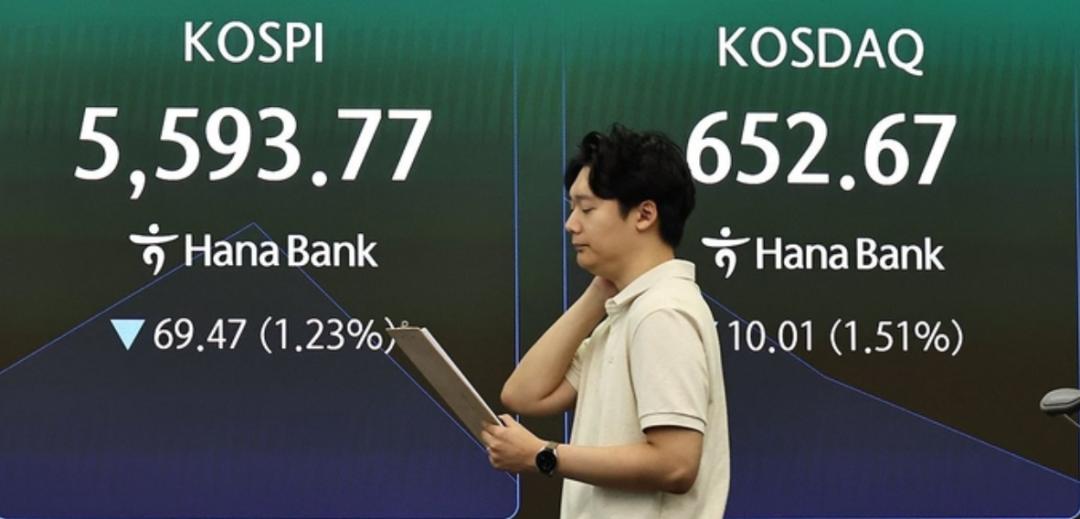
韩国股市在短短41天内经历崩盘式下跌。1KOSPI指数从2026年6月19日的9385.59点跌至7月30日的5593.56点,跌幅达40%。1这波下跌引发了大规模强制清仓,120万个散户账户收到追加保证金通知,其中34万个账户被强制平仓,总规模达2.3万亿韩元。165%的散户出现亏损,两成账户资产近乎腰斩。1
这场股市灾难的背后,是多重因素的交织。政策层面,韩国于2026年4月28日修订《资本市场法施行令》,将ETF单只个股持仓上限从30%上调至100%。1市场结构严重失衡,三星电子和SK海力士在KOSPI中的合计权重从22%飙升至57%-60%。1散户投资热情空前高涨,2026年向本地股市注入约37.7万亿韩元,保证金余额创纪录达36.3万亿韩元,1甚至第一季度18岁以下人群的新开户数量较去年同期激增近10倍。1三大寿险公司退保金额达4.9万亿韩元,老年人赎回养老年金投身股市。1
社会心理因素也驱动了这场集体押注。首尔国立大学经济学教授Jaewon Choi指出:"人们越来越认为,通过传统途径已无法实现社会流动性——只有通过投机性资产才能实现"。16月23日大盘暴跌触发熔断当日,散户逆势净买入59亿美元,创下历史新高,1反映出市场中弥漫的绝望与急切。事后,韩国金融监督院院长承认:"后悔没有在5月阻止杠杆ETF的上市"。1
South Korea's stock market experienced a dramatic crash in mid-2026, wiping out millions of retail investors who had been drawn into the market by policy incentives and widespread social pressure. The KOSPI index plummeted from a historic peak of 9,385.59 points on June 19 to 5,593.56 points by July 30, a devastating 40% decline within just 41 days 1. The collapse triggered a cascading margin call crisis: 1.2 million retail accounts received notices demanding additional collateral, and 340,000 accounts were forcibly liquidated with total losses reaching 23 trillion Korean won 1. Among affected investors, 65% reported losses, with roughly 20% of accounts seeing their assets cut nearly in half 1.
The market had been artificially inflated by a combination of policy interventions and psychological factors. The government relaxed leverage restrictions by raising the single-stock holding limit for ETFs from 30% to 100% on April 28, 2026 1, while also banning short selling. These measures were designed to boost market confidence, yet they concentrated risk dramatically: Samsung Electronics and SK Hynix expanded their combined weighting in the KOSPI from 22% to 57%-60% 1. Retail investors poured approximately 37.7 trillion Korean won into the market in 2026, with margin balances reaching a record 36.3 trillion won 1. Desperation fueled participation—new accounts opened by those under 18 surged nearly tenfold year-over-year in the first quarter, while withdrawals from life insurance and pension products totaled 4.9 trillion won as older investors liquidated retirement savings to enter the stock market 1. On June 23 alone, as the market plunged and circuit breakers were triggered, retail investors paradoxically placed net buy orders worth 5.9 billion dollars, a historic high 1.
Experts and officials later acknowledged the systemic failures underlying the crisis. Seoul National University economist Jaewon Choi observed that "people increasingly believe that social mobility cannot be achieved through traditional means—only through speculative assets" 1. The Financial Supervisory Service director admitted in retrospect that "I regret not stopping the launch of leveraged ETFs in May" 1.
评论
还没有评论,欢迎留下第一条。