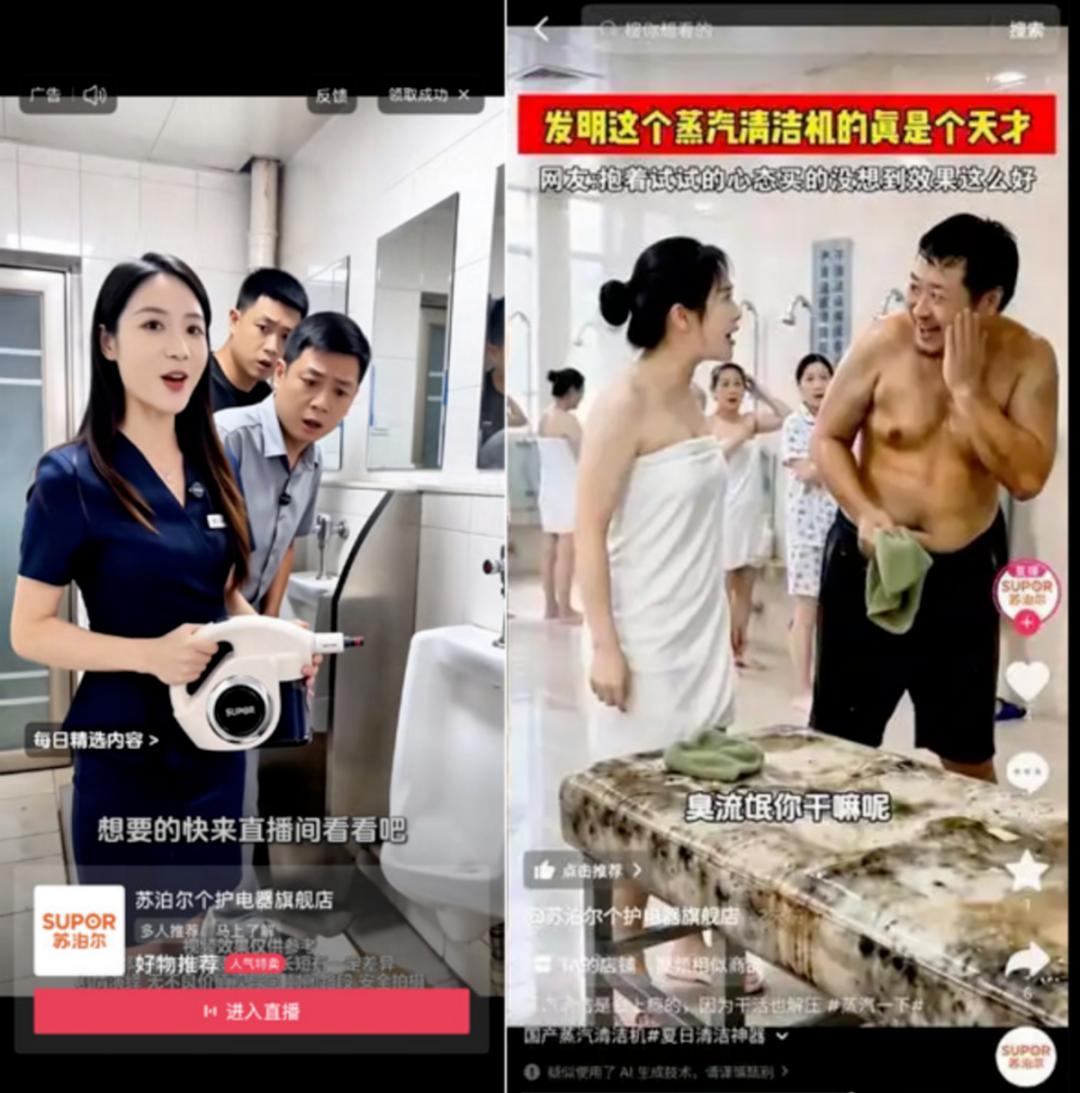
苏泊尔因在抖音发布AI生成的低俗广告陷入舆论风波1。这则视频以两性间进入私密场所的暗示性内容开篇,随后推销蒸汽清洁机产品1。律师李海权指出,该视频涉嫌违反《广告法》第九条,违背公序良俗,即使事后删除也不能规避处罚1。
面对营收增长乏力、利润下滑的压力,苏泊尔的经营策略发生了显著转变1。2025年苏泊尔营业收入227.72亿元,同比仅增长1.54%;归母净利润20.97亿元,同比下滑6.58%1。与此形成对比的是,2025年销售费用大幅增加10.41%,而营收仅增长1.54%,增速为营收增速的7倍,创下2021年以来罕见现象1。其中,广告、促销及赠品费约19.38亿元,较上年增加2.47亿元1。同期研发费用仅4.76亿元,同比增幅仅1.33%,研发人员数量同比减少1.28%1。这反映出公司增长逻辑正从产品驱动向流量驱动转变1。
在这一转变背景下,AI生成的低成本内容成为企业的"捷径"。单条60秒商品视频的制作成本从500-2000元降至5-20元,制作周期从13天压缩至27分钟,成本降幅超过90%1。苏泊尔个护清洁电器板块全年收入33.57亿元,同比增长7.37%,此次低俗广告所属即为该赛道1。
Supor has drawn public criticism after publishing an AI-generated advertisement on Douyin featuring suggestive content that implies entry into private spaces before promoting a steam cleaning machine 1. The video's opening depicts two-gender innuendo regarding access to intimate areas, raising concerns about adherence to advertising standards 1. Attorney Li Haiqu noted that the video allegedly violates Article 9 of the Advertising Law by contradicting public order and morality, and that deletion of the content cannot prevent potential penalties 1.
The controversial marketing push reflects broader challenges facing the kitchenware company. In 2025, Supor reported operating revenue of 227.72 billion yuan, growing only 1.54 percent year-over-year, while net profit attributable to shareholders declined 6.58 percent to 20.97 billion yuan 1. Sales expenses surged 10.41 percent during the same period—a growth rate seven times that of revenue—marking a rare occurrence since 2021 1. Advertising, promotional, and gift expenses reached approximately 19.38 billion yuan, an increase of 2.47 billion yuan from the previous year 1.
The shift in spending priorities underscores a strategic pivot toward volume-driven growth. Research and development investment stalled at 4.76 billion yuan with only a 1.33 percent year-over-year increase, while the number of R&D staff fell 1.28 percent 1. The personal care and cleaning appliances segment—the category targeted by the disputed advertisement—generated 3.357 billion yuan in annual revenue with 7.37 percent growth 1. Notably, the cost of producing a single 60-second AI-generated product video has collapsed from 500–2,000 yuan to just 5–20 yuan, with production time compressed from 13 days to 27 minutes, representing a cost reduction exceeding 90 percent 1.
评论
还没有评论,欢迎留下第一条。