OpenAI近期对ChatGPT进行了功能更新,限制了用户模仿知名作家文风的能力1。斯蒂芬·金、J.K.罗琳、谭恩美、狄更斯、海明威、阿加莎·克里斯蒂等著名作家的创作风格已被系统拒绝执行,许多曾可正常运行的相关提示词现已失效1。
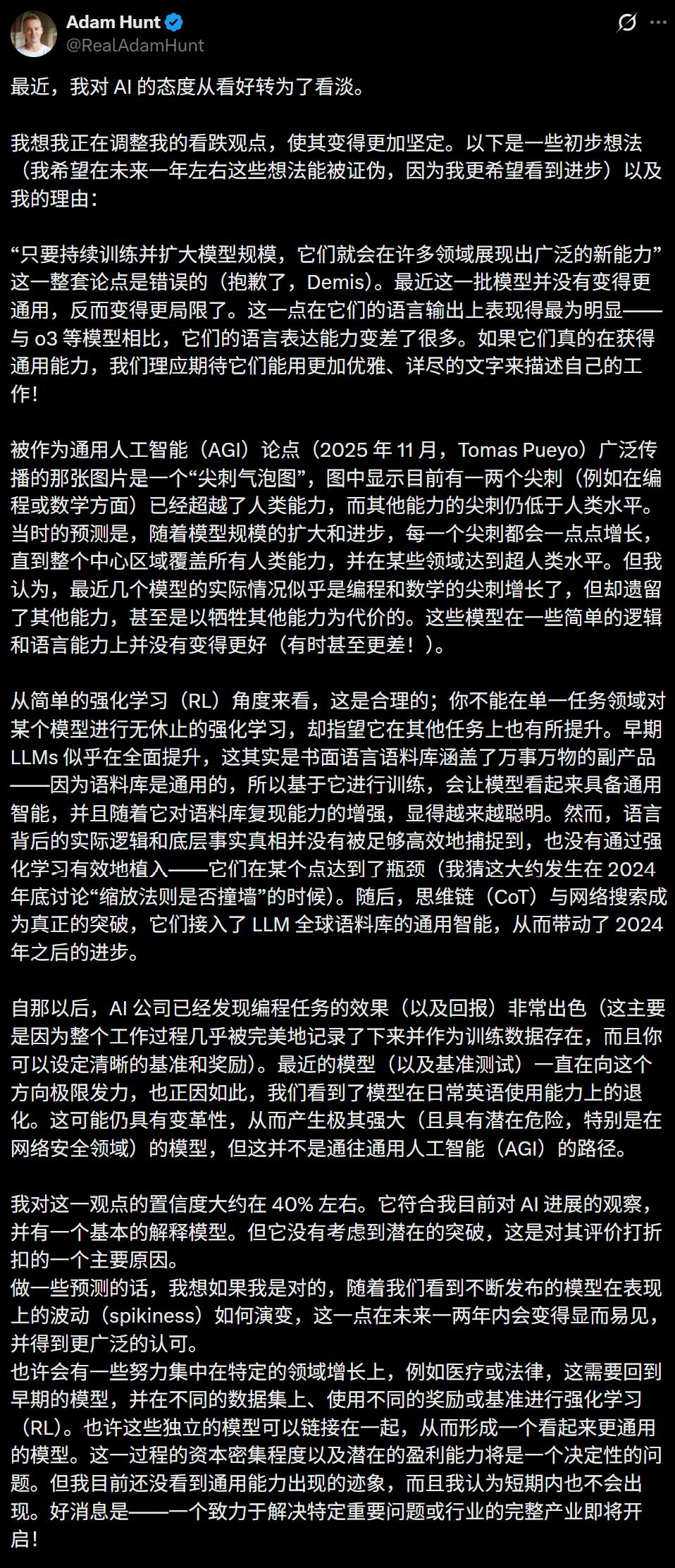
这一改变引发了业界对AI写作发展前景的担忧1。剑桥大学博士后Adam Hunt于7月28日撰文表示,自己对AI发展的前景越来越悲观1。研究人员指出,随着AI模型规模不断扩大,系统在代码和数学领域的能力得到提升,但语言表达能力并未同步增强1。这是因为强化学习训练资源主要集中投入到代码领域,语言表达能力仍然依赖于模型预训练阶段的积累1。业界认为,AI写作的黄金时代已经结束,其功能正在逐步回归到辅助工具的定位1。此次平台规则的改变也导致了围绕特定模型构建的写作流水线失效1。
OpenAI has implemented restrictions on ChatGPT's ability to mimic the writing styles of famous authors, causing workflows previously built around this functionality to fail 1. The platform now rejects prompts that users previously relied on to replicate the distinctive voices of writers including Stephen King, J.K. Rowling, Tan Amy, Charles Dickens, Ernest Hemingway, and Agatha Christie 1.
The update reflects a broader stagnation in AI writing capabilities, according to researchers. While large language models have made significant strides in code generation and mathematical problem-solving, their linguistic expression abilities have not advanced proportionally 1. A Cambridge University postdoctoral researcher, Adam Hunt, expressed increasingly pessimistic views about AI development in a post dated July 28 1, noting that reinforcement learning training efforts have concentrated heavily on code-related tasks, leaving language proficiency to depend primarily on capabilities accumulated during the pre-training phase 1.
The policy shift has repositioned AI writing tools back to their role as supplementary aids rather than autonomous creators 1. The change underscores how platform policy modifications can rapidly dismantle business models and workflows that had been constructed around specific model capabilities 1.
评论
还没有评论,欢迎留下第一条。