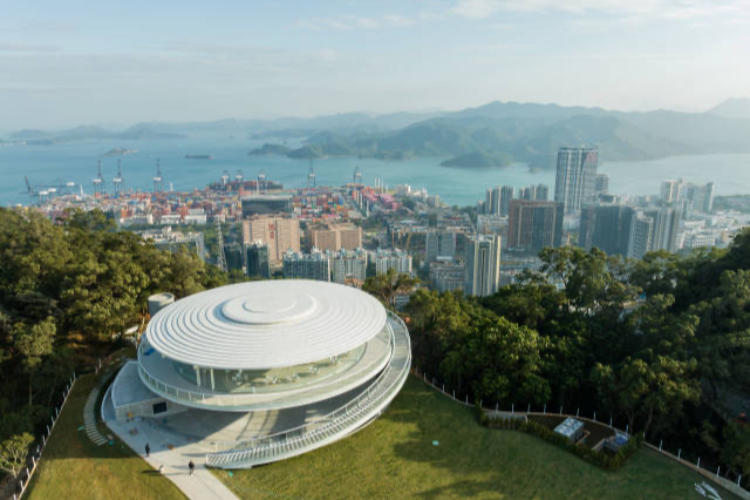
深圳盐田区作为高密度港城,通过构建"一脊二带六廊三群"生态空间格局,将山林保育、水源涵养、河道治理、海岸修复纳入统一生态网络,实现了港口高效运转与生态保护的平衡1。7月27-28日,2026年APEC林业部长级会议在深圳举办,盐田的山海共生发展模式作为高密度滨海城区生态治理的中国样本向全球展示1。
盐田的生态成效显著。三洲田水库水质常年保持地表水Ⅰ类标准,近期成功入选广东省美丽河湖建成清单1;盐田森林覆盖率63.7%,自然保护地面积32.08平方公里1。2025年,盐田PM₂.₅年均浓度14.4微克/立方米,空气优良率达98.4%1。盐田港年集装箱吞吐量超1600万标箱,港口运营与生态保护并行不悖1。
在绿色港口建设方面,盐田港2025年实现岸电100%全覆盖1,完成200台港区燃油车辆新能源置换1。城区新增三千余座充电桩、6.68兆瓦分布式光伏1。公众游憩空间不断完善,已建成69公里半山公园带、19.5公里滨海栈道、257公里城区绿道1,2025年新增特色绿道、步道19.4公里,开放碧道7.2公里1。盐田年均举办近百场自然教育、文体休闲活动,年参与人次超20万1。
Shenzhen's Yangtian District, operating as a high-density port city, has successfully integrated ecological conservation with port logistics through a scientifically designed spatial framework encompassing forest protection, water resource management, river treatment, and coastal restoration 1. The district's mountain-sea symbiosis development model will be showcased globally when Shenzhen hosts the 2026 APEC Ministerial Meeting on Forestry on July 27-28, presenting China's approach to ecological governance in densely developed coastal urban areas 1.
The district has achieved measurable environmental outcomes while maintaining significant port capacity. Yangtian Port processes over 16 million containers annually and attained 100% shore power coverage across port facilities in 2025 1. The district's forest coverage reaches 63.7%, with 32.08 square kilometers designated as natural protection areas 1. Air quality has improved substantially, with PM₂.₅ concentrations averaging 14.4 micrograms per cubic meter in 2025 and an air quality excellence rate of 98.4% 1. The Sanzhouatian Reservoir maintains Grade I surface water standards year-round and was recently recognized in Guangdong Province's Beautiful Rivers and Lakes roster 1.
Infrastructure investments have expanded recreational and mobility options throughout the district. The completed 69-kilometer half-mountain park belt, 19.5-kilometer seaside boardwalk, and 257-kilometer urban greenway network were supplemented by 19.4 kilometers of specialized trails and 7.2 kilometers of waterfront paths opened in 2025 1. Transportation electrification efforts included retrofitting 200 port diesel vehicles to new-energy alternatives and adding over 3,000 urban charging stations, while distributed solar installations generated 6.68 megawatts of capacity 1. Community engagement has intensified, with the district hosting approximately 100 nature education and recreational activities annually, attracting over 200,000 participants 1.
评论
还没有评论,欢迎留下第一条。