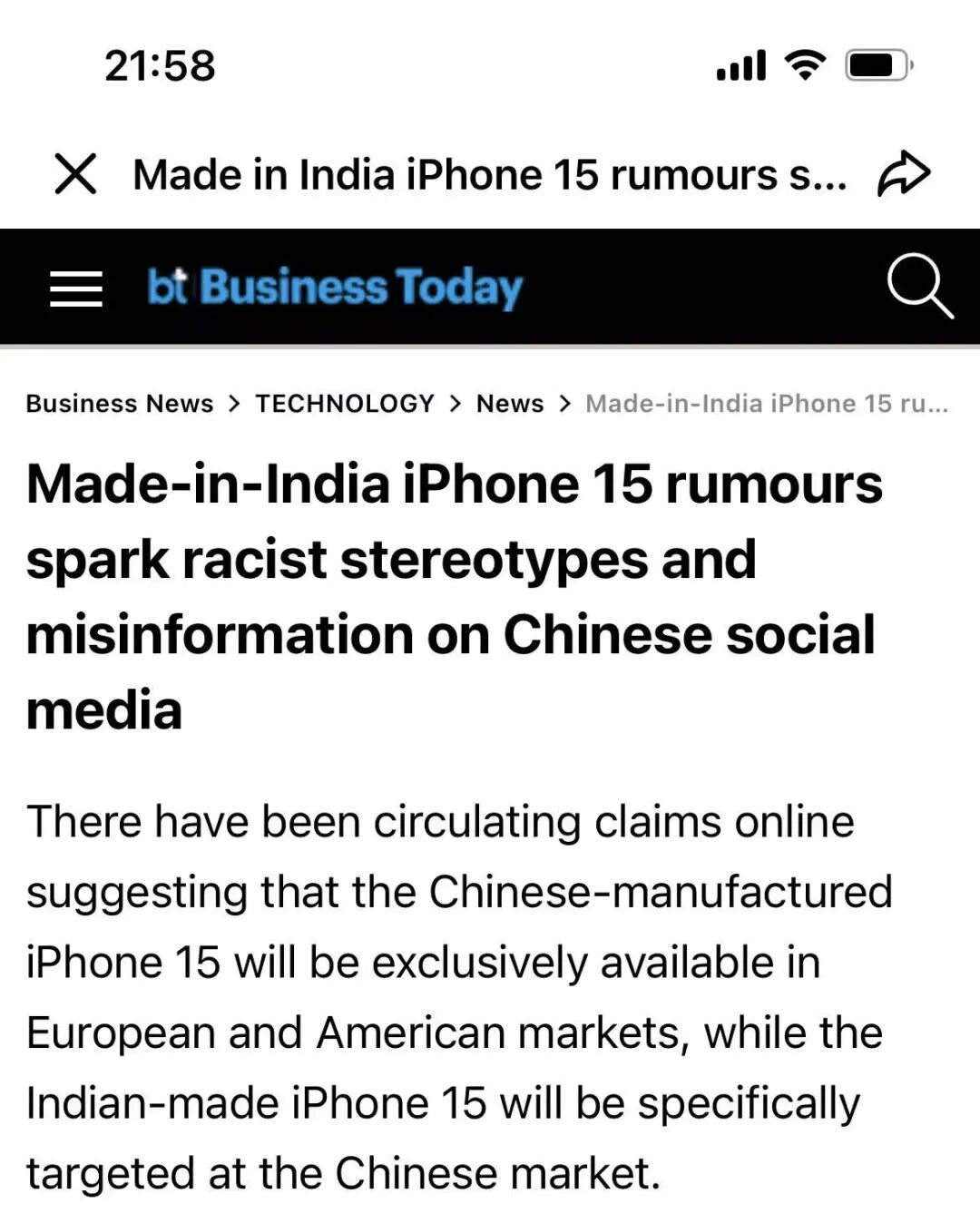
中国消费者在购买iPhone时倾向于选择中国生产的版本,而非印度产品,这一现象引发了印度网络热议1。造成这一差异的核心原因在于生产良率的巨大差距:印度产iPhone的整机良品率目前徘徊在85%-88%区间,远低于中国产线稳定的97%-98%1。除了组装工艺存在问题外,印度电子制造的产业链成熟度也明显滞后1。
印度供应链的脆弱性进一步加剧了消费者的疑虑。美版iPhone中超七成产自印度,全球占比已达25%1。然而,印度产线的一个关键零件短缺就需要停摆数天,而中国产线则可以在方圆百公里内找到所有零部件供应商,出现问题当天即可调货1。印度电子制造的国内增加值仅为23%,每100美元产品中印度本土创造的价值只有23美元,这一数字直观反映了产业链的不完整1。2026年7月,塔塔电子泄露了630GB、超20万份苹果机密文件,包括iPhone 18 Pro主板设计、芯片参数、供应商清单等,此事件进一步打击了消费者对印度制造的信心1。2025-2026财年印度对华进口1316.3亿美元,出口仅194.7亿美元的贸易差距,也映衬出两国供应链实力的悬殊1。
Chinese consumers are increasingly opting for iPhones manufactured in China rather than those produced in India, a trend that has sparked debate in Indian online communities.1 The preference reflects significant quality control disparities between the two manufacturing bases. Indian-produced iPhones achieve a first-pass yield rate of 85%-88%, substantially lower than China's consistent 97%-98% performance.1
Chinese manufacturing facilities benefit from superior supply chain infrastructure that enables rapid problem resolution. Chinese production lines can source all necessary components within a hundred-kilometer radius, allowing same-day parts replacement when problems occur, whereas Indian production lines can face multi-day halts due to single component shortages.1
A significant data breach further undermined confidence in Indian electronics manufacturing when Tata Electronics leaked 630 gigabytes of Apple confidential files in July 2026, including iPhone 18 Pro motherboard designs, chip specifications, and supplier lists.1 These factors underscore China's advantages in manufacturing maturity, quality management, and supply chain security.
India's electronics sector remains structurally dependent on imported components. The domestic value-added content in Indian electronics manufacturing stands at only 23%, meaning that out of every 100 dollars in product value, Indian sources contribute merely 23 dollars.1 This structural constraint reflects India's position as an assembly hub rather than an integrated manufacturing ecosystem, contrasting with China's vertically integrated supply chains that support both quality consistency and operational resilience.
评论
还没有评论,欢迎留下第一条。