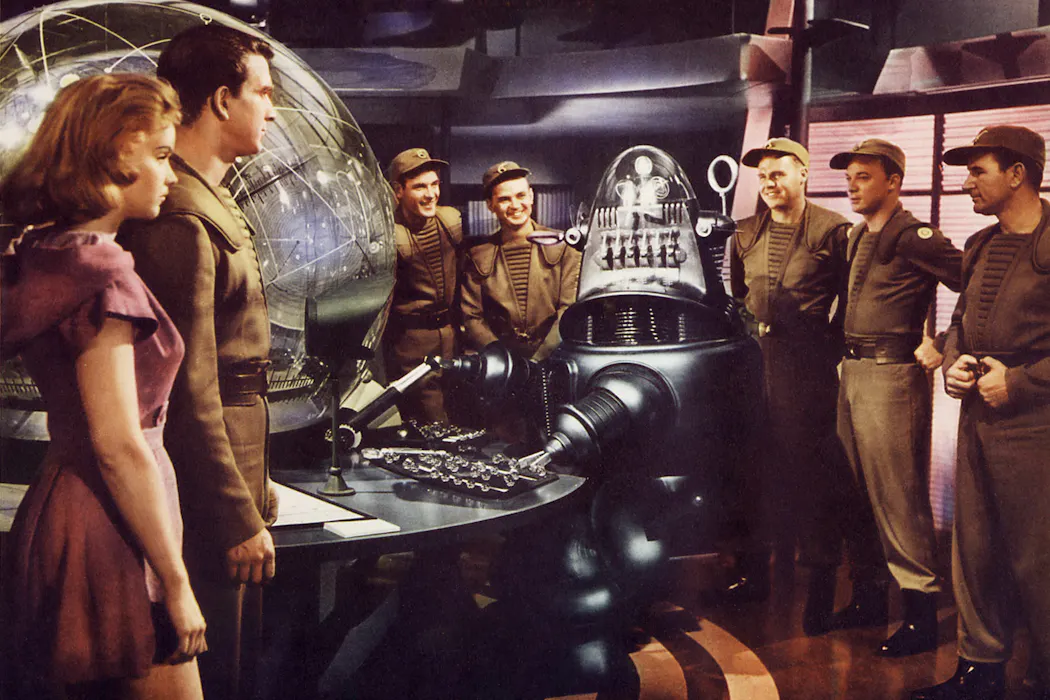
由美高梅制片公司出品、1956年上映的科幻电影《禁忌星球》通过一个外星文明的陨落故事,提出了与当今人工智能发展紧密相关的深刻警示。1电影讲述宇宙飞船登陆一颗星球后发现克雷尔文明已经消亡的情节,其核心寓意在于:这个先进文明因创造了能将思想直接转化为现实的机器而遭到自身潜意识怪物的摧毁。1影片中角色莫比乌斯道出了这一悲剧的本质——"在百万年闪耀的理性之后,他们几乎不可能理解究竟是什么力量正在摧毁他们"。1
这部70年前的影片所揭示的警示并非针对人工智能本身带来的全新风险,而是指向人类欲望被无限放大后的危险性。1当下有声音描绘AI发展将带来"一个充满惊人丰富的时代,任何人都能拥有他们能想到的任何东西",1这种无限可能的愿景与《禁忌星球》中克雷尔文明的悲剧形成了发人深省的对照。1电影的持久价值在于提醒我们,不应将AI发展视为一种不可避免的命运,而应对人类在其中扮演的角色保持清醒认识。1
When Forbidden Planet premiered in 1956, its narrative about a doomed civilization carried implications that resonate powerfully with contemporary artificial intelligence debates.1 The MGM film, featuring Leslie Nielsen and Walter Pidgeon, depicts a spacecraft crew discovering the ruins of the Krell civilization on a distant planet.1 The Krell, despite achieving extraordinary technological advancement, destroyed themselves after constructing a machine capable of transforming thoughts directly into physical reality.1
The film's central cautionary tale centers on humanity's relationship with its own desires amplified through technology. In the movie, the Krell civilization fell victim not to their machine itself, but to manifestations of their own unconscious destructive impulses—what Morbius describes in the film as a power that ultimately overwhelmed "a million years of shining sanity."1 This narrative structure suggests that technological capability without corresponding moral restraint becomes inherently dangerous, a concern that extends directly to contemporary AI development.
The parallel between the Krell's fate and current AI discourse lies not in discovering new risks unique to artificial intelligence, but rather in recognizing how such systems amplify human aspirations and impulses at unprecedented scale.1 Where figures like Elon Musk envision an era of "amazing abundance where anybody can have anything they can think of," the film implicitly warns that such power, divorced from wisdom, becomes catastrophic.1 The message is not that artificial intelligence represents an inevitable destiny, but rather a choice humanity makes about how to structure its own future.1
评论
还没有评论,欢迎留下第一条。