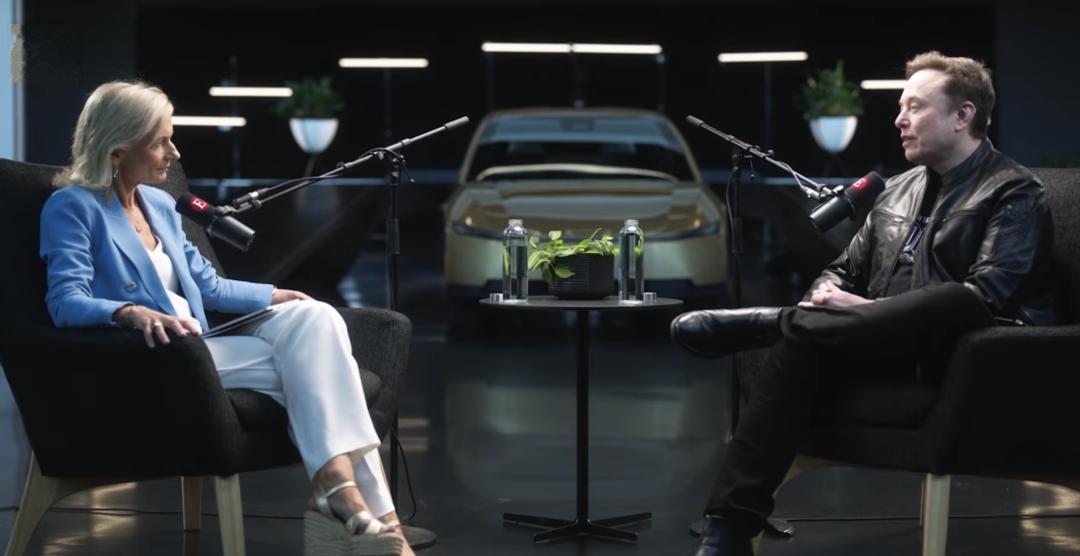
埃隆·马斯克7月23日在得克萨斯州特斯拉超级工厂接受《经济学人》主编专访时表示,人工智能发展前景远超预期1。他预计AI在大约五年后就会超越人类智能的总和,10年后人工智能将远远超过人类智能的总和1。马斯克进一步指出,就软件工程领域而言,人工智能已经比至少99%的人类更胜一筹1。
在谈及中国AI发展前景时,马斯克认为中国企业具备成为领导者的潜力1。他指出,中国AI公司用相对较少的计算能力已取得优异成绩,如果获得充足的计算能力支持,很有可能成为AI领域的领导者1。马斯克还提到,中国的电力产量将是美国的四倍左右,这为AI发展提供了能源基础1。
马斯克在专访中表示,2036年金钱将不再重要,人工智能机器人奇点还有十年才会到来1。
Elon Musk sat down with the editor of The Economist on July 23 at Tesla's Gigafactory in Texas to discuss the trajectory of artificial intelligence development 1. He painted an ambitious timeline for AI advancement, projecting that artificial intelligence could surpass human intelligence within approximately five years, and predicting that AI will far exceed the sum of total human intelligence within a decade 1.
Musk extended his forecasts beyond AI capabilities to broader societal implications 1. He stated that by 2036, money will no longer matter, and suggested that work could become optional as AI advances 1. On the current state of AI in specific domains, Musk asserted that artificial intelligence already outperforms at least 90 percent of humans in software engineering, with performance reaching beyond 99 percent in some areas 1.
Regarding China's position in the global AI race, Musk expressed optimism about the country's potential 1. He noted that Chinese AI companies have achieved remarkable results with relatively limited computational resources, and argued that if they gain access to substantial computing power, they would likely become leaders in the field 1. Musk also highlighted China's energy advantage, estimating that the country's electricity production will be approximately four times that of the United States 1. In his broader prognostication, Musk suggested that an AI robot singularity lies about a decade away 1.
评论
还没有评论,欢迎留下第一条。