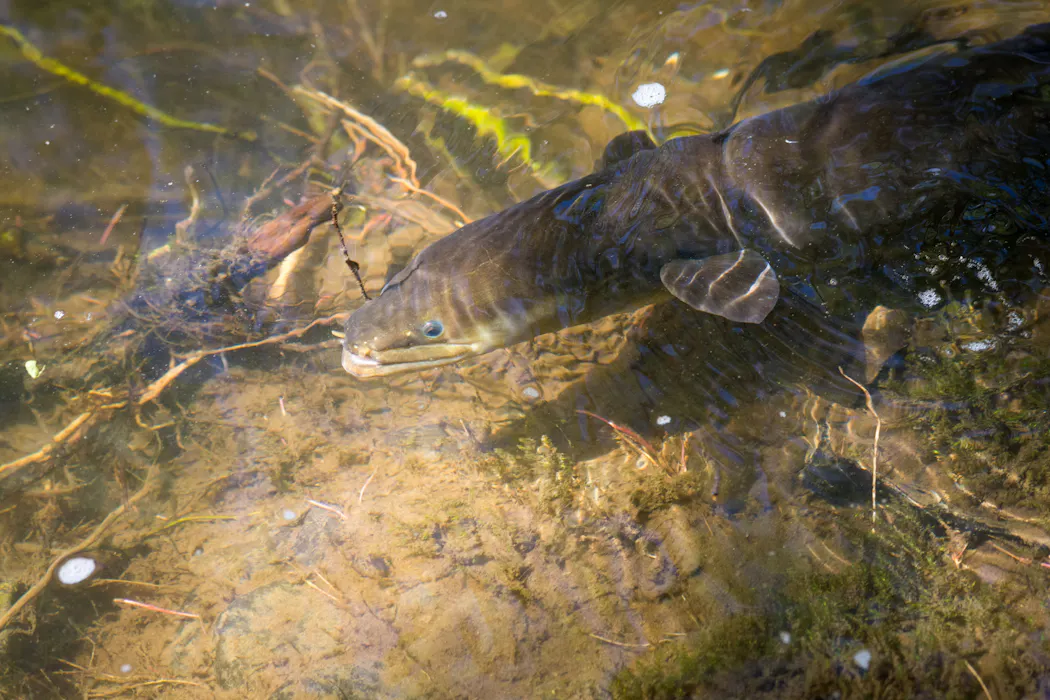
新西兰科研人员在Waituna Lagoon湿地的研究表明,湿地生态系统对濒危长鳍鳗鱼种群的恢复至关重要。1研究发现,当湖泊与海洋连通、导致银鱼(īnanga)大量洄游上溯时,上游Waituna Creek溪流中的鳗鱼生长速度明显加快,种群数量也显著增加。1具体数据显示,该溪流每年每公里的鳗鱼生物量是保护区内溪流平均水平的近十倍,且开放年份的溪流鳗鱼生长速度明显快于关闭年份。1
这项研究揭示了湿地作为食物源对相连生态系统物种的重要支撑作用。1研究指出,一条四公斤重的长鳍鳗鱼可产卵约八百万粒,而体重仅为其一半的雌鳗仅产卵约二百万粒,说明充分的营养摄入对鳗鱼生殖能力的重大影响。1新西兰已失去约90%的湿地,这一时期恰好与许多本地淡水鱼类种群急剧下降相吻合。1为扭转这一局面,Jobs for Nature项目已完成6000多公顷湿地修复工作。1
New Zealand researchers studying Waituna Lagoon have demonstrated that wetlands play an essential role in supporting endangered native eel populations through food availability.1 The research, conducted in the Waituna Creek area in southern New Zealand, examined how connectivity between freshwater streams and coastal waters influences eel growth and reproduction.1
The findings reveal a direct correlation between seasonal food availability and eel population dynamics. When the lagoon opens to the sea, allowing silver fish (īnanga) to migrate upstream in large numbers, eels in the connected creek grow significantly faster and their populations expand noticeably.1 In Waituna Creek specifically, eel biomass reaches nearly ten times the average levels found in protected waterways per kilometer of stream annually.1 The growth differential is stark: eels in open years demonstrate substantially faster development compared to those in years when the lagoon remains closed.1
The research underscores the broader conservation imperative for New Zealand's wetlands. A single four-kilogram long-finned eel can produce approximately eight million eggs, compared to just two million from a female eel weighing half that mass.1 This reproductive capacity depends on adequate nutrition, making the wetland food web vital to species recovery. The urgency is heightened by historical loss: New Zealand has destroyed roughly 90 percent of its original wetlands, a period coinciding precisely with sharp declines in many native freshwater fish populations.1 However, restoration efforts are advancing—the Jobs for Nature program has already completed restoration work across more than 6,000 hectares of wetland.1
评论
还没有评论,欢迎留下第一条。