澳大利亚海域近期观测到异常的海洋生物现象。西澳大利亚在6月下旬记录到的鲸鱼目击数量较正常水平下降了60%1,与此同时,罕见的信天翁和海燕大量现身于澳大利亚东海岸,这些物种通常在距离该地数千公里的南大洋进行觅食活动1。
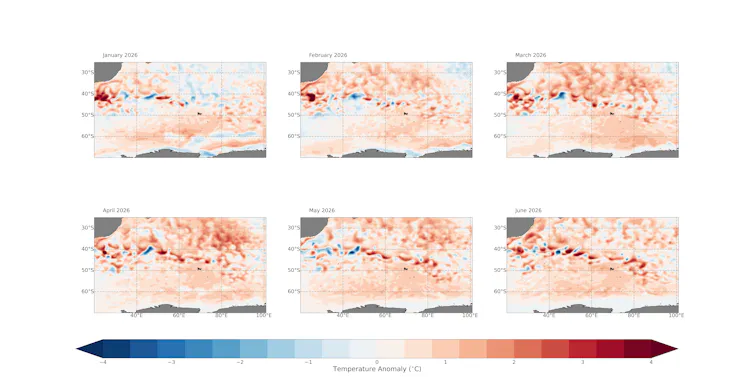
科学家将这些异常现象与影响该地区的持续海洋热浪关联在一起1。这场海洋热浪自2月起作用于赫德岛和麦当劳群岛周围水域,自4月以来进一步延伸至南塔斯曼海,导致水温比正常值升高2至6摄氏度1。专家认为,水温的上升可能改变了洋流、天气条件和饵料供应的分布格局,从而影响海洋生物的迁徙和觅食行为1。
历史事例表明大规模海洋热浪事件对生物多样性造成的潜在影响。在2014至2016年北太平洋的"Blob"现象期间,至少240个物种在其正常活动范围外被发现1。在南大洋地区,南极毛皮海豹种群在2007至2022年间下降约150万只,该物种近期已被列为濒危物种1。
A sustained marine heatwave affecting the Southern Ocean has triggered dramatic shifts in wildlife behavior along Australia's coasts. Whale sightings in southwestern Australia have plummeted by 60% from normal levels as of late June, while rare seabirds including albatrosses and petrels have appeared in unusually large numbers along Australia's eastern coastline, thousands of kilometers away from their typical Southern Ocean feeding grounds.1
Scientists attribute these anomalies to a persistent oceanic heatwave that has dominated waters around Heard Island and the McDonald Islands since February, subsequently extending toward the Antarctic ice shelf and the southern Tasman Sea from April onward.1 The warming has elevated water temperatures by 2–6°C above normal ranges,1 disrupting ocean currents, weather patterns, and food supply availability in ways that alter marine species' migration and foraging behaviors.1 Historical precedent suggests such disruptions can have far-reaching consequences: during the 2014–2016 "Blob" event in the North Pacific, at least 240 species were documented outside their normal geographic ranges.1 In the Southern Ocean itself, Antarctic fur seal populations declined by approximately 1.5 million individuals between 2007 and 2022, leading to the species' recent classification as endangered.1
评论
还没有评论,欢迎留下第一条。