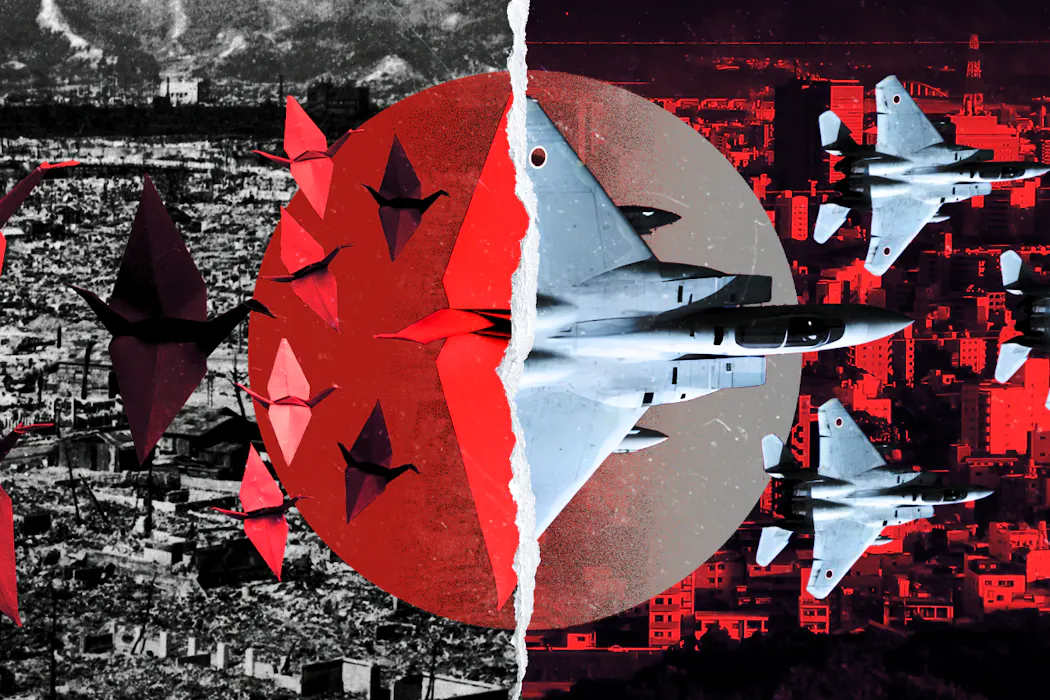
日本首相高市早苗领导的保守政府正推动一系列重大政策转变,包括修改宪法第九条、增加防卫支出和放松武器出口限制,以应对来自中国和朝鲜的威胁1。这一举措标志着日本战后80年和平主义传统的重要转折。高市早苗曾在3月访问白宫时向特朗普表示,日本因宪法限制无法向霍尔木兹海峡派遣部队1。中国指责高市政府追求"鲁莽军国主义"1。
日本的防卫政策调整经历了数十年的演变过程。制定于1947年的宪法第九条放弃了战争权,规定日本不维持用于解决国际争端的军事力量1。1954年比基尼环礁氢弹试验引发日本反核运动兴起1,而1959至1960年间的日美安保条约修改则触发了日本现代历史上最大规模的和平民主示威1。其后,日本逐步突破和平主义框架:1992年日本通过立法允许自卫队首次参加联合国维和行动,在柬埔寨部署1;2014年安倍内阁改变对集体自卫权的宪法解释1;2015年国会通过安保法案包,大幅扩展了自卫队的权限1。如今,政府的宪法修改提议引发国内舆论分裂,数千日本人走上街头示威反对修宪1。
Japan's conservative government, led by Prime Minister Takaichi Takayama, is pursuing a significant departure from the nation's postwar pacifist tradition by advancing constitutional reforms and expanding military capabilities to counter regional threats.1 During a March visit to the White House, Takayama informed President Trump that constitutional restrictions prevented Japan from deploying troops to the Strait of Hormuz.1 The government now backs increased defense spending, relaxed weapons export restrictions, and amendments to Article 9 of the 1947 Constitution, which renounces war and prohibits maintaining military forces for resolving international disputes.1
This policy shift has sparked considerable domestic controversy. Thousands of Japanese citizens have protested against the constitutional amendments.1 Beijing has accused the Takayama administration of pursuing "reckless militarism," while the Prime Minister has referenced the prospect of defending Taiwan.1 The evolution reflects decades of incremental changes to Japan's defense posture: a 1954 hydrogen bomb test at Bikini Atoll catalyzed an anti-nuclear movement,1 and the 1959-60 revision of the U.S.-Japan Security Treaty triggered the largest peace and democracy demonstrations in modern Japanese history.1 Japan first engaged in United Nations peacekeeping operations in Cambodia in 1992 following legislation that permitted such participation.1 More recently, the Abe cabinet reinterpreted constitutional restrictions on collective self-defense in 2014,1 followed by parliamentary passage of a sweeping security legislation package in 2015 that substantially expanded the Self-Defense Forces' authority.1
评论
还没有评论,欢迎留下第一条。