在AI基础设施投入规模跨越千亿美元门槛之际,投资者的评估重心正从企业投入力度转向其财务可持续性和现金回报能力1。各科技巨头最新财报揭示了这一转变带来的市场分化。
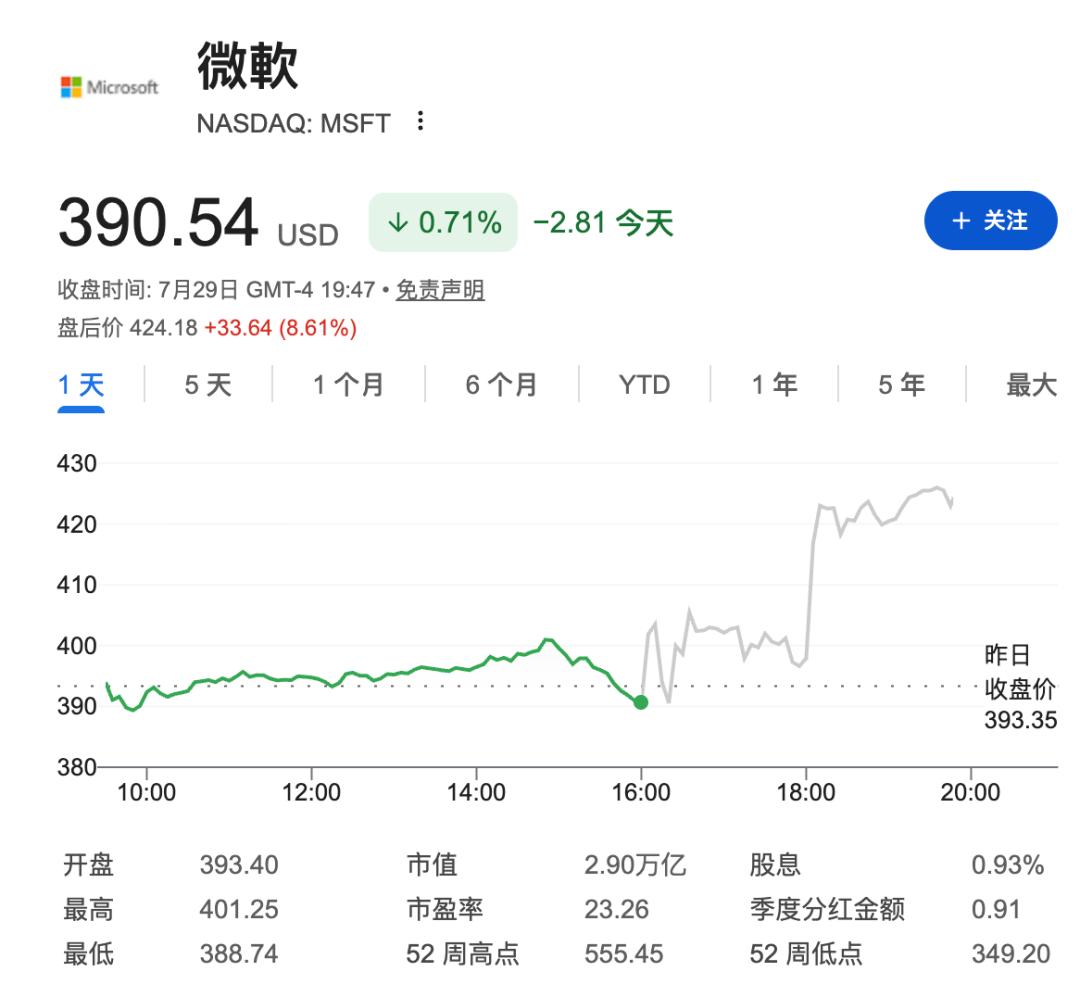
微软凭借Azure业务持续高速增长获得投资者认可,二季度自由现金流达196亿美元,虽同比下降23%,但财报发布后股价盘后上涨超4%1。相比之下,其他企业因自由现金流恶化而遭市场惩罚。Meta二季度自由现金流跌至7.84亿美元,同比下滑91%,却继续维持1300亿—1450亿美元的年度资本开支计划,随后股价盘后一度下跌约8%—10%1。Alphabet二季度自由现金流转为负值,流出59亿美元,同时将2026年资本开支指引提高至1950亿—2050亿美元1。
特斯拉和Oracle的情况更为严峻。特斯拉二季度资本开支达58亿美元,自由现金流转为-11亿美元,为两年多来首次季度负值,引发股价单日下跌14.52%,市值缩水约2145亿美元1。Oracle 2026财年云基础设施收入达181亿美元,同比增长77%,但资本开支高达556亿美元,导致自由现金流转为负237亿美元1。
这些数据表明,科技行业的AI竞争已从规模扩张竞争转向资本回报竞争,市场奖励的是能够提供清晰、可信回报路径的企业1。
As artificial intelligence infrastructure investments have scaled into the hundreds of billions of dollars, investor focus has shifted from the magnitude of capital expenditure to financial sustainability and cash generation capacity.1 Recent earnings reports have revealed a stark divergence among tech giants, with Microsoft gaining market approval while Meta, Alphabet, Oracle, and Tesla faced stock price pressure due to sharply declining or negative free cash flow.1
Meta's second-quarter free cash flow plummeted to $784 million, a 91% year-over-year decline, even as the company maintained its $130–145 billion annual capital expenditure guidance.1 The stock fell as much as 8–10% after hours following the earnings release.1 Similarly, Alphabet's second-quarter free cash flow turned negative at negative $5.9 billion, prompting the company to raise its 2026 capital expenditure guidance to $195–205 billion.1 Oracle faced even more severe pressure, with capital expenditure hitting $55.6 billion and free cash flow turning negative at $23.7 billion for fiscal year 2026, even as cloud infrastructure revenue reached $18.1 billion with 77% year-over-year growth.1
In contrast, Microsoft's second-quarter free cash flow reached $19.6 billion, down 23% year-over-year, but the company's stock rose more than 4% after hours, buoyed by continued strong growth in its Azure business.1 Tesla also faced market punishment, reporting its first quarterly negative free cash flow in over two years at negative $1.1 billion in the second quarter, driven by $5.8 billion in capital expenditure, with the stock declining 14.52% in a single day and losing approximately $214.5 billion in market value.1 The divergence underscores a fundamental shift: the AI infrastructure competition has evolved from a scale race into a battle for capital returns, with the market rewarding companies that can demonstrate a clear and credible path to profitability.1
评论
还没有评论,欢迎留下第一条。