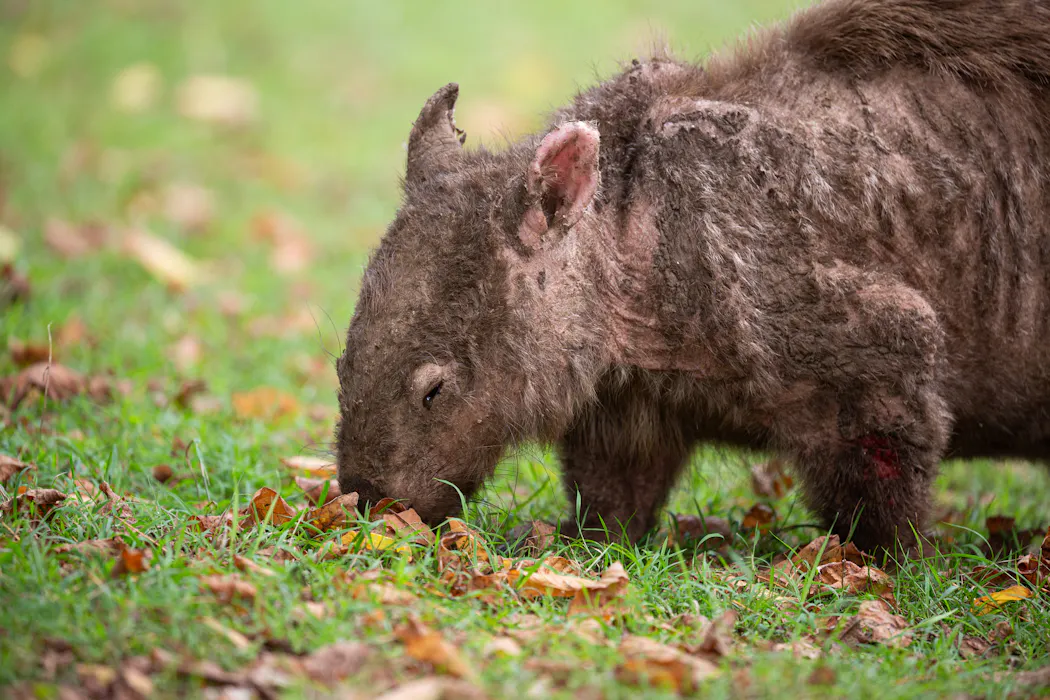
疥癣病是一种由Sarcoptes scabiei螨虫引起的严重皮肤病,可感染148个哺乳动物物种1。澳大利亚袋熊因这一疾病遭受严重威胁,其中约70%的种群受到影响1。
研究人员对过去30年的诊断方法进行了系统分析,涉及228项研究和全球25个国家的案例1。分析结果显示,非侵入性视觉观察和侵入性皮肤刮取是最常用的两种诊断手段,其中视觉观察在141项研究中被采用作为诊断工具1。皮肤刮取作为第二常见的诊断方法,相比单独依赖视觉观察具有更高的准确性1。
专家建议在疥癣病的防治工作中采用综合诊断策略,将聚光灯和摄像机陷阱等非侵入性方法与侵入性实验室技术相结合1,以实现更有效的疾病监测和防控。
Scabies, a severe skin disease caused by the microscopic mite Sarcoptes scabiei, poses a significant threat to animal populations worldwide, affecting 148 mammal species including Australia's iconic wombat 1. The disease has impacted approximately 70% of Australia's bare-nosed wombat populations 1.
Researchers analyzing diagnostic practices over the past three decades reviewed 228 studies to determine the most effective detection methods 1. Visual observation emerged as the most frequently employed diagnostic tool, utilized in 141 of the reviewed studies and applied across 25 countries including Australia, Spain, and the United States 1. Skin scraping, an invasive laboratory technique, ranked as the second most common diagnostic approach and proved more accurate than visual observation alone 1.
To improve disease monitoring and prevention efforts, researchers recommend combining non-invasive methods—such as spotlight observation and camera traps—with invasive laboratory techniques for comprehensive diagnosis 1.
评论
还没有评论,欢迎留下第一条。