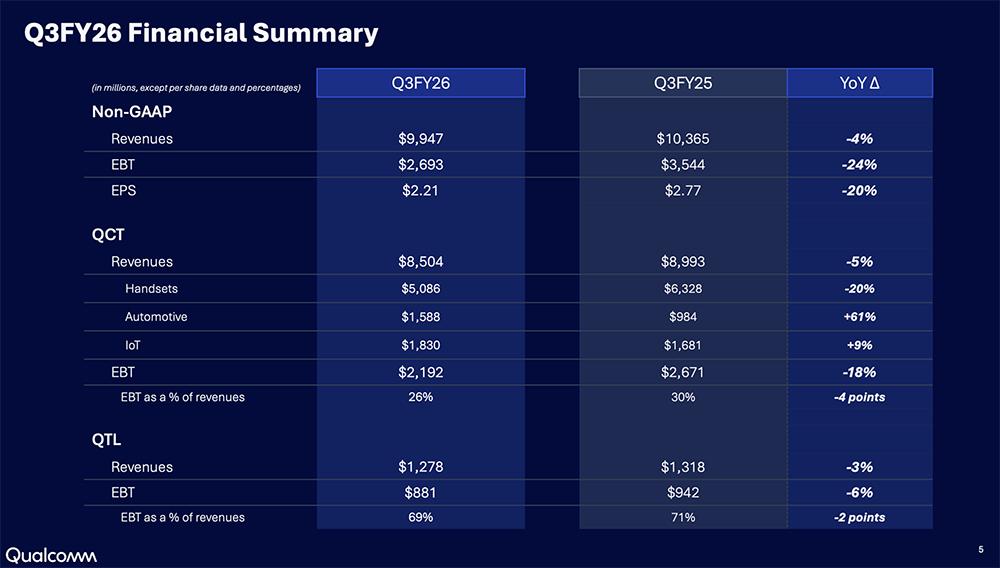
高通公布第三财季财报,营收99.5亿美元,同比下降4%;净利润20.0亿美元,同比下降25%。1 其中手机业务营收同比下降20%至50.9亿美元,内存价格上涨成为压制业绩的主要因素。1 为应对利润率承压,高通CEO克里斯蒂亚诺·安蒙宣布自9月1日起全面提高公司芯片的价格。1
苹果业务的前景转向悲观。1 高通预计为iPhone 18系列提供的调制解调器份额将远低于此前预估的20%,且来自苹果产品的收入将在截至12月的季度环比下降约50%。1 到2027财年,苹果产品营收预计将略低于此前预期的略高于20亿美元。1
面对手机市场的挑战,高通加速布局非手机业务。1 汽车业务销售额已达15.9亿美元,同比增长61%,2026财年目标上调至约70亿美元。1 高通预计2029财年非手机业务营收将增长至400亿美元,其中数据中心业务营收目标为150亿美元。1 目前高通已与超大规模数据中心客户签下两份定制芯片设计订单,单笔订单收入均超过10亿美元,晶圆生产已启动。1 财报发布后,高通股价盘后下跌4.4%,过去一个月累计下跌超过17.5%。1
Qualcomm reported third-quarter results showing significant headwinds from rising memory prices and weakening smartphone demand. 1 Revenue declined 4% year-over-year to $9.95 billion, while net profit dropped 25% to $2.0 billion. 1 The company's handset business revenue fell 20% to $5.09 billion, reflecting the challenging market conditions. 1
In response to margin pressures, Qualcomm CEO Cristiano Amon announced a comprehensive price increase across the company's chip portfolio effective September 1. 1 Qualcomm significantly lowered its Apple-related business forecasts, projecting that its modem share in the iPhone 18 lineup will fall well below the previously estimated 20%. 1 The company expects revenue from Apple products to decline approximately 50% in the December quarter and forecasts fiscal 2027 Apple revenue at slightly below the previously projected level exceeding $2 billion. 1
Beyond smartphones, Qualcomm is accelerating its pivot to non-phone businesses to drive growth. Automotive sales surged 61% year-over-year to $1.59 billion, with the company raising its fiscal 2026 automotive revenue target to approximately $7 billion. 1 Qualcomm targets non-phone business revenue of $40 billion by fiscal 2029, with data center operations projected to generate $15 billion in revenue by that year. 1 The company has already begun wafer production on two custom chip design orders worth over $1 billion each from hyperscale data center customers. 1 Following the earnings announcement, Qualcomm's stock fell 4.4% in after-hours trading, adding to a decline exceeding 17.5% over the preceding month. 1
评论
还没有评论,欢迎留下第一条。