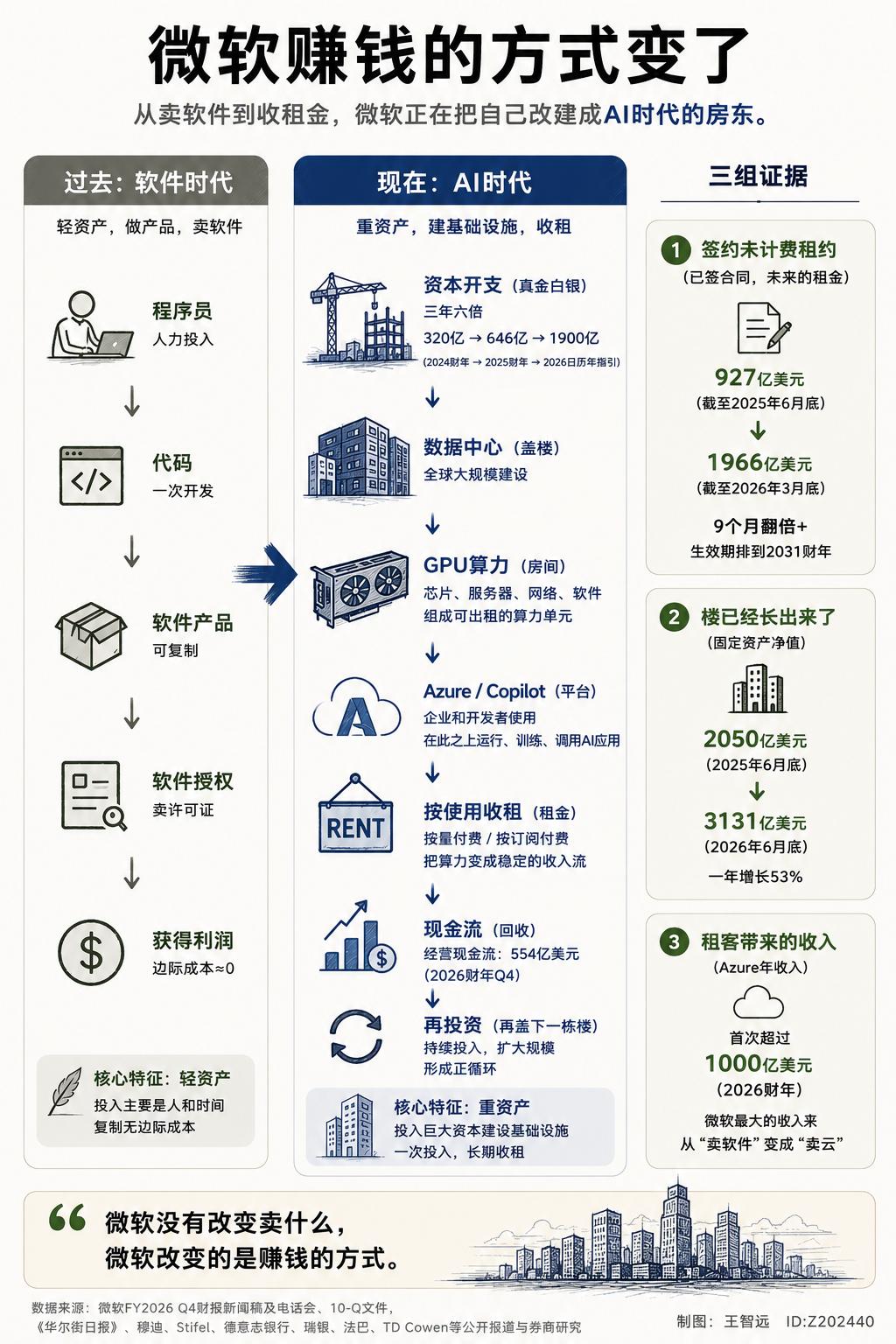
微软公布2026财年第四季度财报,营收达900亿美元超出预期1。公司正在从软件公司转变为AI时代的基础设施供应商,2026财年资本开支指引达1900亿美元,较三年前增长六倍1。本季度资本开支同比增长70%至410亿美元2,微软预计2027财年第一季度资本开支将超过500亿美元2。截至2026年3月底,微软已签署合同未计费的租赁承诺达1966亿美元,较2025年6月底的927亿美元翻倍多1。
在云服务方面,Azure年度营收首次突破1000亿美元,同比增长43%2,并首次超过Office所在的生产力分部成为微软最大业务1。Azure及其他云服务的毛利率从68%降至66%1。谷歌云增速已达82%,超过微软云增速1。此外,Azure AI Foundry客户达到10万家2。
在AI产品商业化方面,Microsoft 365 Copilot付费席位超过3000万个2。CEO萨提亚·纳德拉表示,拥有超过5万个Copilot席位的客户数量已增至去年同期的7倍以上2。商业剩余履约义务(RPO)达6780亿美元,同比增长84%,剔除OpenAI相关部分后增速为26%1。
财务数据显示,本季经营现金流554亿美元,自由现金流196亿美元1,自由现金流同比下降23%2。本季每股收益4.74美元,其中包含微软对Anthropic投资产生的32亿美元收益12,反映出公司在基础设施建设和战略投资上的巨大投入。
Microsoft reported fiscal year 2026 fourth-quarter earnings demonstrating its transformation from a software company into an artificial intelligence-era infrastructure supplier. 1 Total revenue reached $90 billion, exceeding expectations. 1 The company's capital expenditure guidance for fiscal 2026 climbed to $190 billion—a sixfold increase over three years—while signed but unbilled lease commitments reached $196.6 billion, more than double the $92.7 billion recorded in June 2025. 1
Azure cloud services emerged as Microsoft's largest business segment, surpassing the productivity division that houses Office. 12 Azure annual revenue exceeded $100 billion for the first time, reflecting 43% year-over-year growth. 12 Microsoft 365 Copilot paid seats surged past 30 million, with single-quarter additions approaching 10 million and a paid adoption rate of approximately 4.4%. 12 In fiscal 2027's first quarter, Microsoft projects capital expenditures will exceed $50 billion. 2
However, margin pressures are mounting as infrastructure investments intensify. 12 Cloud gross margins contracted from 68% to 65-66%, with further compression to 64% projected for the upcoming quarter. 2 Despite these headwinds, operating cash flow reached $55.4 billion with a 30% year-over-year increase, though free cash flow declined 23% to $19.6 billion due to elevated capital spending. 12 Competition from rivals like Google Cloud, which achieved 82% growth, adds pressure on Microsoft's market position. 1
A significant contributor to earnings was Microsoft's Anthropic investment, which generated $3.2 billion in gains this quarter. 12 CEO Satya Nadella noted that the number of customers with over 50,000 Copilot seats has grown more than sevenfold compared to the prior year. 2 Azure AI Foundry has attracted 100,000 customers, signaling broad commercialization of artificial intelligence tools. 2
评论
还没有评论,欢迎留下第一条。