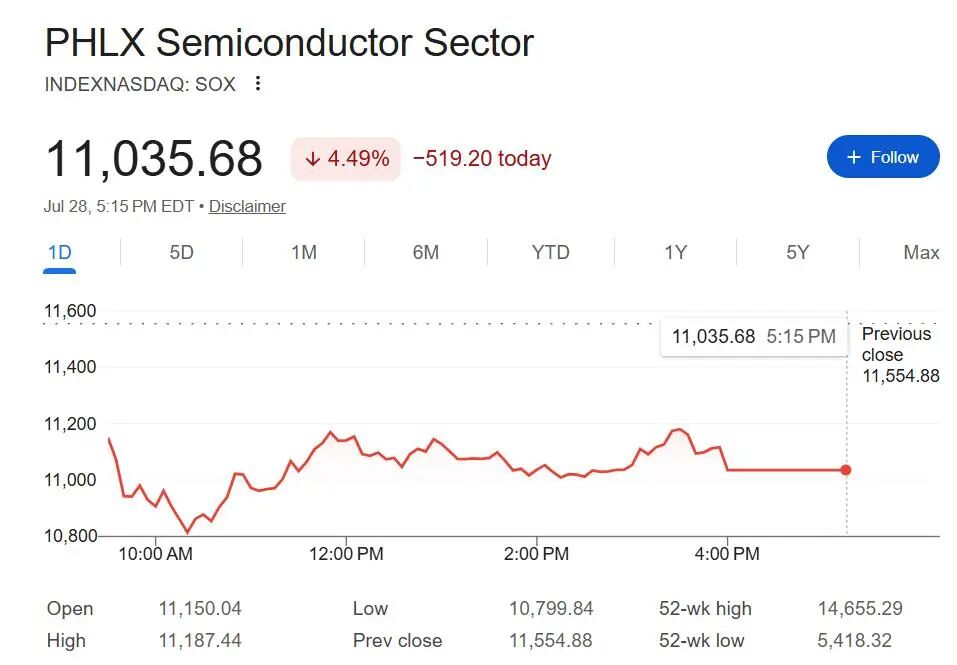
美股半导体板块(SOX指数)在周二大幅下挫,美东时间28日盘中跌幅一度超过6.5%、跌破10,800点,最终收跌约4.5%,失守11,200点这一关键支撑位1。存储芯片和芯片制造商股价普遍重创,其中闪迪盘中跌超10%,美光、SK海力士ADR、西部数据、希捷科技均曾跌超10%,AMD盘中也跌超10%1。
市场对AI资本支出循环性的担忧升温,成为这波下跌的主要驱动因素。巴克莱美国股票策略主管Venu Krishna指出,"围绕资金不确定性、资本支出增加以及大型科技公司自由现金流状况的担忧,已成为市场关注的焦点"1。State Street股票研究主管Marija Veitmane表示,"市场担心额外的举债和资本支出,以及这种投入的可持续性"1。技术面也显示出看跌信号,21日均线已下穿50日均线1。
若11,200点支撑继续失守,SOX指数下一道防线将是200日均线,市场可能面临较大幅度的回调1。不过,持仓出清和季节性因素为潜在反弹提供了支撑1。
The U.S. semiconductor sector experienced a sharp selloff, with the Philadelphia Semiconductor Index (SOX) breaking below its critical 11,200-point support level on Tuesday, July 28.1 The index plunged intraday by more than 6.5% to below 10,800 points before closing with a decline of approximately 4.5%.1 Memory chip stocks and chipmakers including AMD suffered particularly severe losses, with Sandisk, Micron, SK Hynix ADR, Western Digital, Seagate Technology, and AMD all dropping more than 10% during the session.1
Technical deterioration intensified the selloff, as the 21-day moving average fell below the 50-day moving average, signaling a bearish short-term trend.1 Should the index fail to hold at 11,200 points, the next support level rests at the 200-day moving average, which could expose the market to a more substantial pullback.1 The weakness reflects mounting concerns about the sustainability of AI-driven capital expenditure cycles. Venu Krishna, head of U.S. equity strategy at Barclays, noted that "uncertainties surrounding funding, increased capital expenditure, and the free cash flow situation of major technology companies have become a focal point for market attention."1 Marija Veitmane, head of equity research at State Street, echoed similar concerns, stating that "the market is worried about additional debt and capital expenditure, and the sustainability of such investments."1 Despite the technical damage, some analysts see potential support from position liquidation and seasonal factors that could trigger a rebound.1
评论
还没有评论,欢迎留下第一条。