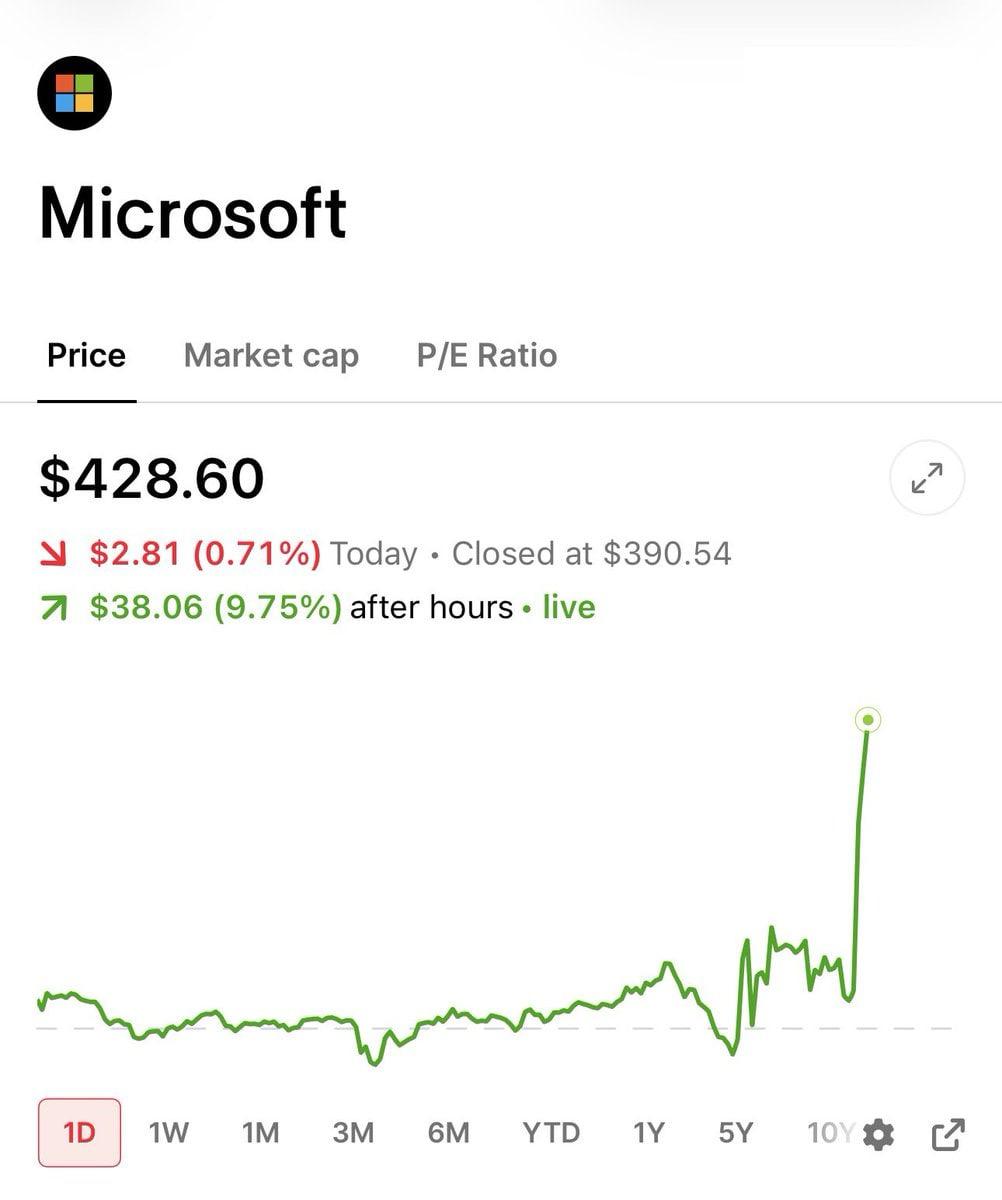
微软因云业务表现突出而获得市场青睐。Azure本季度增速达43%,下季指引更是达到45%,新增产能上线即被客户吸收1。这一业绩表现促使微软股价盘后涨幅达10%1。与此同时,微软全年资本开支从1900亿美元调整至1750亿美元,但长期租金承诺则从1970亿美元增至3290亿美元1。
相比之下,其他科技巨头虽然同样进行大额AI投资,却未能获得市场认可。Meta本季度收入增长28%,但成本费用增长高达55%,导致营业利润下降8%、每股收益下降13%1。该季度Meta资本开支高达311亿美元,自由现金流仅为7.84亿美元1。谷歌Cloud收入虽增长82%至248亿美元,但当季资本开支达449亿美元,自由现金流转为负59亿美元1。亚马逊AWS的状况更为严峻,过去12个月自由现金流从259亿美元骤降至12亿美元,同期AI设备投入增加593亿美元1。
市场现已不再单纯奖励投入规模,而只认可那些能证明AI投资快速转化为收入增长和正现金流的公司1。
Microsoft secured an after-hours stock surge of 10% following its earnings announcement, driven by Azure's outperformance and clear monetization of artificial intelligence investments 1. The cloud division's growth of 43% this quarter exceeded expectations, with management guiding for 45% growth in the coming quarter 1. Crucially, newly deployed capacity was absorbed by customers immediately upon launch, demonstrating tangible commercial demand 1. Wall Street's reaction underscores a fundamental shift in how the market evaluates technology spending: investors no longer reward massive capital outlays alone, but rather those demonstrating rapid conversion of investment into revenue and positive cash flow 1.
Microsoft did adjust its full-year capital expenditure downward from $190 billion to $175 billion, though it increased long-term lease commitments from $197 billion to $329 billion 1. In contrast, competitors investing heavily in AI infrastructure have struggled to demonstrate comparable returns. Meta reported revenue growth of 28% this quarter while operating costs surged 55%, resulting in an 8% decline in operating profit and a 13% drop in earnings per share 1. The company deployed $31.1 billion in capital expenditures during the quarter against only $784 million in free cash flow 1. Google Cloud revenues expanded 82% to $24.8 billion, yet the quarter saw $44.9 billion in capital spending and free cash flow swing negative by $5.9 billion 1. Amazon's AWS division experienced an even steeper deterioration, with free cash flow from the past twelve months plummeting from $25.9 billion to $1.2 billion, as AI equipment investments increased by $59.3 billion year-over-year 1.
评论
还没有评论,欢迎留下第一条。