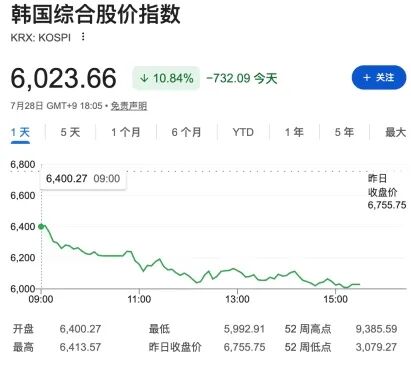
7月28日韩国股市遭遇重挫,KOSPI指数跌幅超过10%1,其中半导体类股票成为重灾区,SK海力士和三星电子分别下跌逾14%和13%1。散户投资者朴宇哲在这场市场震荡中遭受惨重损失,其投入50万元人民币(约1.07亿韩元)并配置5倍杠杆的ETF账户单日亏损超过30万元,随后被强制平仓1。
朴宇哲月薪高逾4.5万元人民币1,他原本计划通过这笔高杠杆投资为即将出生的二胎增加家庭资金保障,但这一策略在市场巨幅波动中付诸东流1。其妻子的预产期在9月底1,意味着这笔亏损发生在家庭财务压力最大的时刻。
此次股市风波再度引发韩国监管部门对杠杆投资风险的关注。韩国金融委员会委员长李亿远表示,若7月31日起实施的措施无效,将推出进一步监管举措1。监管部门正在考虑将杠杆投资金额控制在金融投资产品总规模的20%以内1,以防范类似风险事件再次发生。
On July 28, 2024, South Korea's stock market experienced a severe downturn, with the KOSPI index plummeting over 10% 1. The decline hit major semiconductor companies particularly hard, as SK Hynix dropped more than 14% and Samsung Electronics fell over 13% 1.
For Park Woo-chul, a retail investor, the market crash resulted in devastating personal consequences. Park had invested approximately 500,000 yuan with a 5-fold leverage through an ETF, only to suffer single-day losses exceeding 300,000 yuan and face forced liquidation of his position 1. Park's monthly salary stands at approximately 450,000 yuan, making the loss particularly significant 1. The timing of the financial disaster compounded the hardship—his wife's due date for their second child is scheduled for late September 1.
In response to the market volatility, South Korea's Financial Services Commission Chair Lee Euk-chul indicated that if measures implemented beginning July 31 prove ineffective, further regulatory action will be pursued 1. Regulatory authorities are considering restricting leveraged investment amounts to no more than 20% of total financial product holdings 1.
评论
还没有评论,欢迎留下第一条。