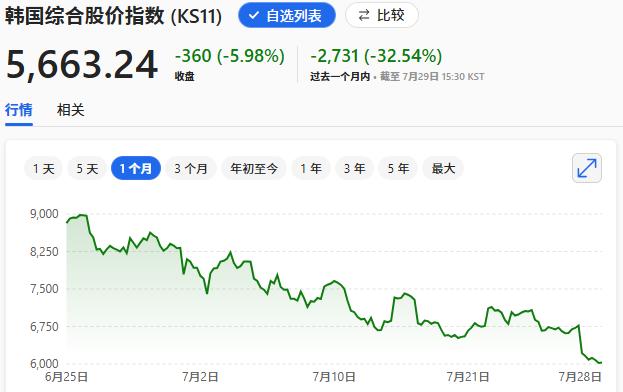
韩国股市在AI交易热潮退却中遭遇剧烈抛售。1KOSPI指数于7月28日重挫近11%,29日盘中一度下跌13%,最终收盘跌近6%。1自6月22日的高点以来,该指数累计跌幅已接近38%。1
半导体龙头股同步大幅下挫,引发市场对AI资产高估值重新定价的担忧。1SK海力士29日股价再跌超9%,近一月跌幅近47%;三星电子近一月重挫35%。1杠杆产品的投资者面临更为惨烈的损失,3倍做多韩国ETF KORU从6月高点约64美元跌至14美元,累计跌幅达78%。1
面对散户巨额亏损,韩国政府的回应未能安抚市场。1政府政策室室长金容范表示,目前还没有到启动股市平准基金的阶段。1这一态度引发投资者强烈反弹。与此同时,韩国金融服务委员会委员长Lee Eog-weon表示,正考虑将杠杆产品准入限制在专业投资者范围内,并研究下调杠杆倍数。1
South Korea's benchmark KOSPI index experienced severe selloffs amid a retreat in AI-driven trading activity, plummeting nearly 11% on July 28 and falling as much as 13% intraday on July 29 before closing down approximately 6% 1. Over the past month, the index has shed roughly one-third of its value, with cumulative losses reaching nearly 38% since peaking on June 22 1.
The collapse has devastated leveraged investment products, particularly those betting on Korean equities. A 3x leveraged Korean ETF, KORU, cratered from its June high of around $64 to $14, representing a cumulative loss of 78% 1. Semiconductor giants bearing the brunt of the selloff include SK Hynix, which fell more than 9% on July 29 alone and has plummeted nearly 47% over the past month, while Samsung Electronics declined roughly 35% in the same period 1. Market participants increasingly view this volatility as the beginning of a broad revaluation of inflated AI-related asset valuations.
Facing substantial retail investor losses, South Korean authorities have signaled restraint on intervention. Kim Yong-beom, director of the presidential policy office, stated that current market conditions do not yet warrant activation of the stock market stabilization fund 1. However, regulators are considering structural reforms: Lee Eog-weon, chairman of the Financial Services Commission, indicated that the government is examining restrictions that would limit leveraged product access to professional investors and is studying reductions in leverage multiples 1.
评论
还没有评论,欢迎留下第一条。