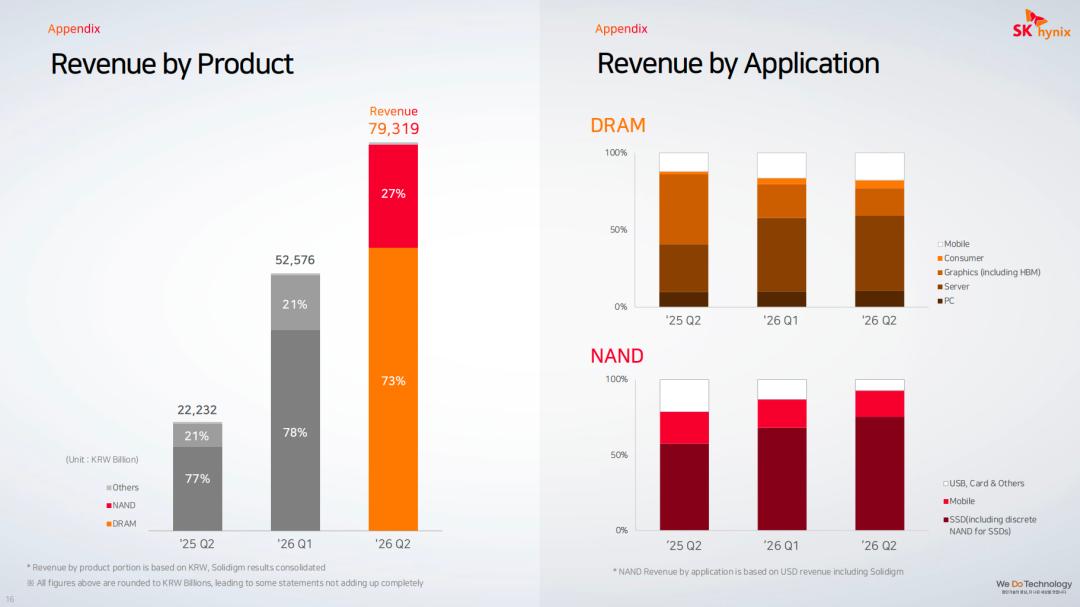
SK海力士公布2026年第二季度财报,营业利润同比增长557%至60.54万亿韩元,收入同比增长257%至79.32万亿韩元,营业利润率升至76%创新高13。然而,这份亮眼的成绩单未能完全满足市场预期——营业利润和收入分别低于分析师预期的64.22万亿韩元和84万亿韩元13。财报发布后,海力士股价大幅下跌超6%,市值自6月高点累计蒸发近6000亿美元3。
利润的强劲增长得益于芯片市场的供不应求。海力士在HBM市场的收入份额约56.4%,领先三星和美光1。DRAM业务贡献了73%的收入,NAND占27%1。该公司已与约10家核心客户锁定长期供货协议3,并计划2026年资本支出提高至40万亿韩元以上(约合275亿美元以上),用于HBM4产能扩张3。现金及现金等价物单季度净增33.6万亿韩元,净现金头寸扩大至69.4万亿韩元,完全消除债务压力3。
市场的担忧在于,尽管存储芯片需求旺盛,AI产业链上游云厂商的资本开支可持续性仍存疑虑1。Alphabet第二季度资本支出同比翻倍至449亿美元,自由现金流已转为负数-58.55亿美元1,投资者担心这种高支出难以为继,从而影响对存储芯片的长期需求。
SK Hynix, South Korea's memory chip giant, released its second-quarter 2026 financial results showing exceptional growth that paradoxically triggered a sharp market sell-off. The company reported operating profit surging 557% year-over-year to 60.54 trillion Korean won (approximately 416 billion US dollars), though this fell short of analyst expectations of 64.22 trillion won 1. Revenue reached 79 trillion won, representing 257% year-over-year growth, also below the forecasted 84 trillion won 1. Despite these misses, the operating profit margin expanded to a record-high 76%, with EBITDA profit margin reaching 81% 1.
The disappointing earnings guidance relative to market anticipation triggered an immediate market reaction, with SK Hynix's stock price plummeting over 9% following the announcement 3. Investor concerns center on the sustainability of capital expenditure among cloud providers upstream in the artificial intelligence supply chain and whether the memory storage cycle can sustain its upward trajectory 1.
Looking ahead, SK Hynix has secured long-term supply agreements with approximately 10 core customers 3. The company has elevated its 2026 capital expenditure guidance to exceed 40 trillion won (over 275 billion US dollars), significantly higher than 2025's 30.173 trillion won, to expand HBM4 production capacity 3. The company's HBM4 products have reached customer-required operating speeds and entered mass production in the second quarter 3, with HBM4E samples already shipped during the first half of the year 3. SK Hynix commands approximately 56.4% of the HBM market, leading competitors Samsung and Micron 1.
评论
还没有评论,欢迎留下第一条。