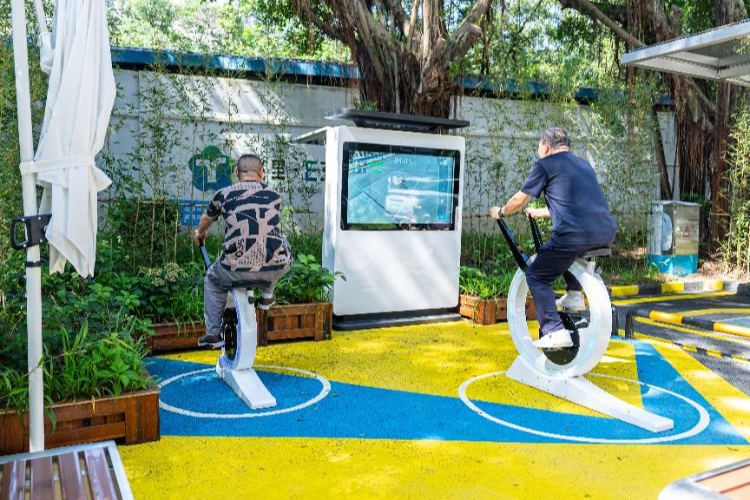
深圳南山桃源街道在陶然居小区推出"桃里·E充"智能充电项目,将长期闲置堆放杂物的边角地通过微更新改造,打造集充电、休闲、健身功能为一体的多功能空间1。该项目针对老旧小区电动车充电难题,陶然居小区常住人口超过1800人,电动自行车数量超过400辆1。
项目采用"街道统筹+国企投资+小区共治+收益反哺"的共建共管模式运营1。在技术配置上,遮雨棚搭载柔性薄膜太阳能电池,并配置由南方科技大学研发的"小储能"系统1。项目建立了充电收益反哺机制,将智能充电桩的运营收益用于补贴居民电费和服务费1,形成长效可持续的运营机制。
Shenzhen's Taoyuan Street in Nanshan District has introduced the "Tao Li E-Charging" intelligent charging initiative, transforming underutilized corner spaces in the Taoranju residential community into a multifunctional hub that addresses the pressing need for electric bicycle charging infrastructure 1. The project converts previously cluttered marginal land into a space integrating charging facilities, leisure areas, and fitness amenities to serve the community's more than 1,800 residents and over 400 electric bicycles 1.
The initiative employs a "street coordination plus state-owned enterprise investment plus community governance plus revenue reinvestment" collaborative management model 1. The charging canopy is equipped with flexible thin-film solar batteries, paired with a "small energy storage" system developed by Southern University of Science and Technology 1. Operating revenues from the charging stations are channeled back to residents through subsidies for electricity fees and service charges, establishing a sustainable long-term operational mechanism 1.
评论
还没有评论,欢迎留下第一条。