2026年7月,法国西南部和西班牙遭遇有记录以来最严重的野火灾难1。至少3人在火灾中丧生,包括2名消防员1,约33万人被迫离开家园和度假地2。法国当局在大西洋沿岸度假村累计撤离22万人23,西班牙则正在与该国历史上最大的野火作战3。
本轮野火规模之大前所未有。法国烧毁面积已经超过历史记录年份的40%1,仅吉隆德地区的火势面积就相当于巴黎的四倍2。根据美国宇航局卫星测量,法国7月的火灾能量输出比历史最高记录翻倍1。三个欧盟记录中最大的15场野火中有3场在过去一个月内发生1。专家表示,这些极端野火由气温异常高导致,法国西南部和西班牙地区气温比平均水平高4至5摄氏度1。随着热浪持续,气温预计升至40摄氏度以上,风力随之加强,火势面临重燃的危险2。
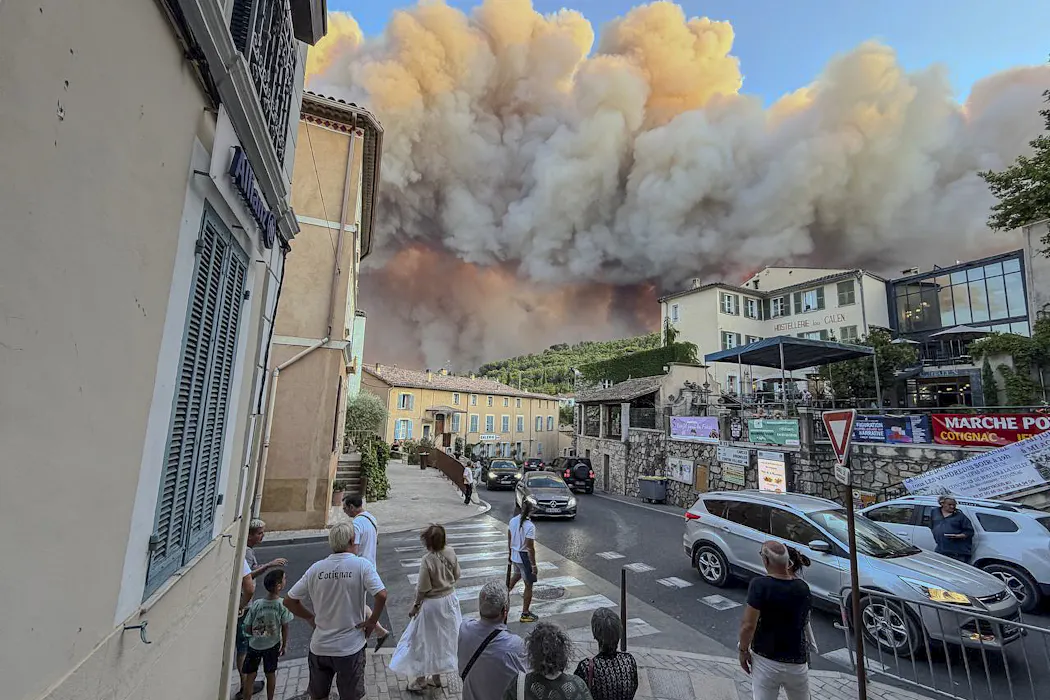
法国历史上首次在野火上空形成火灾风暴现象12,西班牙阿维拉地区也观测到火焰生成的积雨云3。法国总统马克龙称这些火灾为"前所未有的"1。当地官员和消防员对火势的凶猛程度表达了担忧,西班牙消防员指出"火势太猛烈,无论如何都无法扑灭"1。法国已部署23架飞机和直升机参与灭火3。
科学家警告,全球变暖已在过去三年达到比工业前水平高1.5摄氏度1,气候变化正在加速极端野火的频率3。欧盟呼吁加大森林管理和野火预防投资3,并正在购买自己的永久消防车队3。
Record-breaking wildfires are ravaging southwestern France and Spain in July 2026, marking the most severe fire season ever recorded in the region.1 At least three people have died, including two firefighters, while approximately 330,000 residents across both countries have been forced to evacuate their homes.12 The scale of destruction is extraordinary: France's burned area has already exceeded 40 percent of the previous record year's total,1 and the energy output from July fires measured by NASA satellites is double the historical maximum.1 Three of the European Union's fifteen largest fires on record have occurred within the past month alone.1
The fire near Bordeaux, France presents a particularly alarming situation. The blaze covers an area four times the size of Paris and threatens 220,000 people's homes.2 French authorities have ordered the evacuation of 4,000 additional residents as temperatures are forecast to exceed 40 degrees Celsius, with strengthening winds creating conditions for the fire to reignite.2 France has deployed 23 aircraft and helicopters to combat the blazes.3 In Spain, the country is battling what officials describe as a historic record-breaking wildfire while facing its fourth heat wave of the summer, with temperatures also expected to surpass 40 degrees Celsius.3
Scientists attribute these catastrophic fires to extreme heat and drought conditions driven by climate change.1 Temperatures in the affected regions are 4 to 5 degrees Celsius above average levels.1 France has recorded its first-ever pyrocumulonimbus—a fire-induced storm cloud—forming above the flames.1 Global warming has already reached 1.5 degrees Celsius above pre-industrial levels over the past three years.1 Firefighters on the ground express the severity of their struggle: Spanish emergency responders stated that the fire intensity is such that "no matter what we do, we cannot extinguish it."1 French official Sophie Brocas warned that "the situation remains complex. We have not yet escaped the crisis."3 In response, the European Union is investing in greater forest management and wildfire prevention efforts, and is purchasing its own permanent firefighting fleet.3
评论
还没有评论,欢迎留下第一条。