微软近日推出了KMS Hardware-Secured新规则,要求企业批量授权环境中的KMS服务器必须借助TPM进行硬件级身份验证,此举一度引发市场猜测微软欲对个人盗版用户采取行动1。然而实际上,该政策的真实目标是加强企业内部授权体系的安全防护,防止攻击者伪造授权服务器,并非针对个人用户电脑1。
微软官方表示不会追究普通个人用户的盗版问题1。该机制的实施时间表也相对宽松,微软计划从2026年8月开始让Windows Server 2025显示KMS硬件安全功能的准备状态,现有KMS部署仍可继续正常工作1。此外,当前常见的个人盗版激活方式包括HWID激活和TSforge等,均不依赖KMS服务器,因此此次政策调整对这些渠道几无影响1。
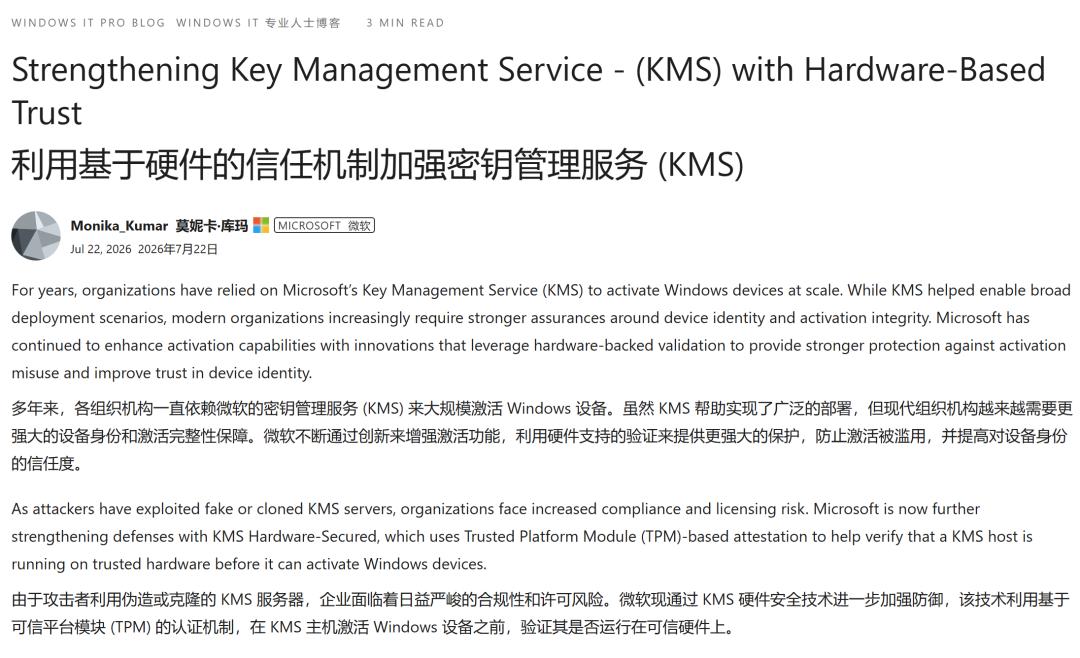
Microsoft has introduced a new KMS Hardware-Secured mechanism that requires Key Management Service servers in enterprise volume licensing environments to utilize Trusted Platform Module (TPM) technology for hardware-level identity verification 1. The announcement sparked concerns among users about potential crackdowns on Windows 11 piracy, but the company has clarified that the policy targets enterprise infrastructure security rather than individual consumers 1.
The new requirement is designed to prevent attackers from spoofing authorization servers within corporate licensing deployments 1. Microsoft plans to begin displaying the KMS hardware security feature's readiness status starting in August 2026 through Windows Server 2025, while existing KMS deployments will continue to function normally 1. The company has explicitly stated it has no intention of pursuing individual users over unauthorized Windows installations 1.
Industry observers note that Microsoft's current revenue model extends well beyond Windows licensing fees, incorporating Microsoft 365 subscriptions, OneDrive storage services, and Copilot AI features 1. Additionally, prevalent piracy activation methods such as HWID activation and TSforge operate independently of KMS servers and therefore remain unaffected by this policy change 1.
评论
还没有评论,欢迎留下第一条。