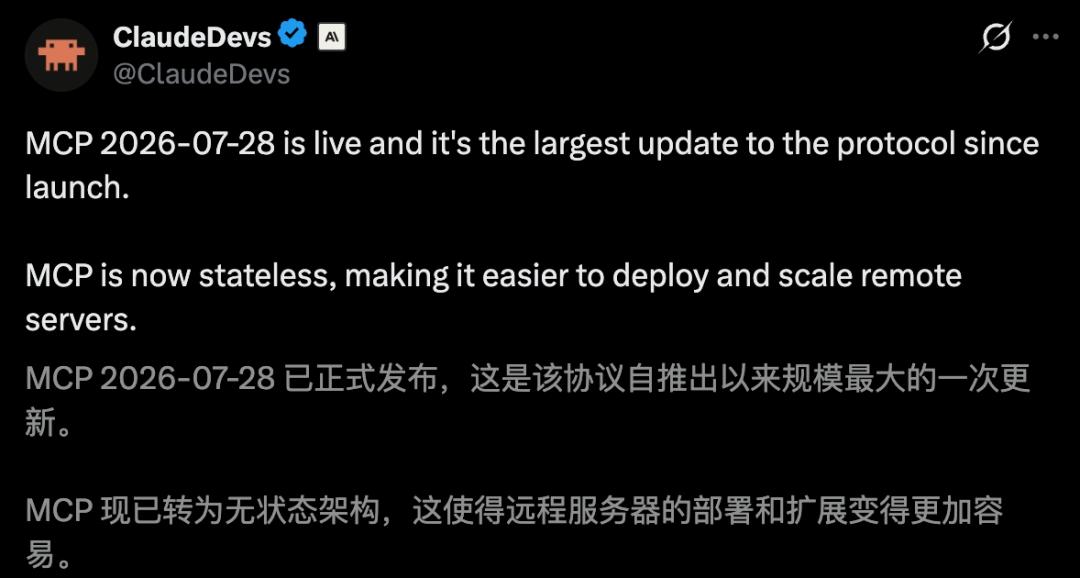
Anthropic发布了MCP(模型上下文协议)2026-07-28版本的重大更新1。其中最显著的成果是月度SDK下载量突破4亿大关,实现了今年4倍增长1。TypeScript和Python两大Tier 1 SDK的累计下载量均已超过10亿次1,Claude应用商店内的MCP服务器数量也超过950个1。
本次更新在架构设计上进行了根本性改革,将核心架构从有状态改为无状态设计,支持纯请求/响应模式1。新版本引入了Multi Round-Trip Requests (MRTR)技术替代长连接1,以及基于请求头的路由功能1。同时新增了MCP Apps(UI直接渲染到对话框)、Tasks(异步操作)和企业级管理认证(EMA)三大功能1。列表结果现已支持缓存,包含ttlMs和cacheScope提示1。
在安全认证方面,新版本全面对齐OAuth 2.0和OIDC标准,并废弃了DCR转向CIMD1。此外,Anthropic还提供了MCP Tunnels研究预览版,支持通过安全隧道连接企业内网1。为了保障兼容性,官方提供了12个月的弃用政策,确保旧版本继续得到支持1。目前TypeScript、Python、Go、C# SDK已全面同步更新,Rust SDK处于Beta阶段1。这一升级得到了Figma、Intuit、Netlify、Zoom等行业巨头的支持1。
Anthropic has released a major update to its Model Context Protocol (MCP), fundamentally transforming the architecture into a stateless design while achieving unprecedented adoption metrics 1. The monthly SDK download volume has surpassed 400 million, representing a fourfold increase over the year 1. TypeScript and Python, the two Tier 1 SDKs, have each accumulated over 1 billion cumulative downloads 1. The Claude app store now hosts more than 950 MCP servers 1.
The 2026-07-28 version introduces three significant features: MCP Apps, which render user interfaces directly within chat conversations; Tasks, enabling asynchronous operations; and Enterprise Managed Authentication (EMA) for enterprise-grade access control 1. The protocol replaces long-lived connections with Multi Round-Trip Requests (MRTR) technology and introduces header-based routing capabilities 1. List results now support caching with ttlMs and cacheScope hints, while security authentication has been realigned with OAuth 2.0 and OpenID Connect standards, phasing out Dynamic Client Registration in favor of Client-Initiated Metadata Discovery (CIMD) 1.
The update enables Serverless deployment and unlimited horizontal scaling 1, supported by industry leaders including Figma, Intuit, Netlify, and Zoom 1. Anthropic offers MCP Tunnels as a research preview, allowing secure connections to enterprise networks 1. The TypeScript, Python, Go, and C# SDKs have been fully synchronized with the update, while the Rust SDK remains in Beta 1. A 12-month deprecation policy ensures backward compatibility for legacy versions 1.
评论
还没有评论,欢迎留下第一条。