第31届联合国气候变化大会(COP31)在土耳其安塔利亚经过延期后宣告破裂,未能达成名为《安塔利亚协定》的核心政治协议 258。谈判失败的主要原因是最终草案文本未提及“逐步淘汰化石燃料”或包含相关关键措辞,导致欧盟、英国、巴拿马、瓦努阿图及马绍尔群岛等近40个国家正式反对并拒绝批准由土耳其和澳大利亚提出的盖帽文本 1246。这是自17年前以来首次未能达成关键气候协议,也是历史上持续时间最长且规模最大的气候峰会之一 715。尽管会议通过了部分关于碳信用资金用于适应气候变化及公正转型框架的次要议程,但各方在减排资金、电气化目标及化石燃料退出路线图上的根本分歧无法弥合 35。
沙特阿拉伯和俄罗斯被指控联手阻止任何关于化石燃料退出的内容进入最终文本,而约130个缔约方曾要求重新引入该措辞但未被采纳 2813。欧盟代表Darragh O'Brien指责谈判被某些石油国家“劫持”,认为忽略化石燃料退出的气候协议是“不可接受的” 15。德国气候部长Carsten Schneider评价该协议是“倒退”,爱尔兰环境部长也指出其“failed to meet the moment” 46。与此同时,中国代表团团长李高对未达成共识表示“深感失望”,但强调坚持多边主义是中国应对气候变化的出路 310。美国缺席了此次谈判,且接近退出《联合国气候变化框架公约》,这进一步加剧了地缘政治分裂对多边气候合作的冲击 81316。
尽管官方协议未正式通过“到2035年将全球电力消费占比提高至35%”的目标,但超过90个国家以及包括欧盟和中国在内的众多经济体在场外承诺独立推进这一电气化议程 12813。然而,原计划将每年适应资金增至1200亿美元的目标落空,后续版本删除了具体数字,基线计算被推迟至COP32讨论 13。太平洋岛国对此表示强烈绝望,图瓦卢气候部长Maina Talia表示不会让不作为削弱决心,并宣布将联合爱尔兰于2027年举办第二届“脱离化石燃料公正转型”会议以建立新的气候联盟 418。此次失败暴露了现行“协商一致”决策机制的效率缺陷,前美国副总统戈尔等多方人士呼吁对联合国气候峰会进行紧急改革 79。
The 31st UN Climate Change Conference (COP31) ended in failure after nearly 40 countries, including the European Union and the United Kingdom, rejected the final draft agreement for omitting any mention of transitioning away from fossil fuels 126. Held in Antalya, Turkey, the summit concluded on November 23 without a consensus on the proposed "Antalya Pact," marking the first time in 17 years that a key climate deal collapsed at the last minute 815. While approximately 130 nations had demanded the inclusion of explicit language regarding coal, oil, and gas, opposition from Saudi Arabia and Russia prevented its adoption 81316. The rejection highlights a deep geopolitical divide, with EU representatives describing the absence of fossil fuel references as "unconscionable" 16.
Diplomatic Stalemate and Regional Opposition
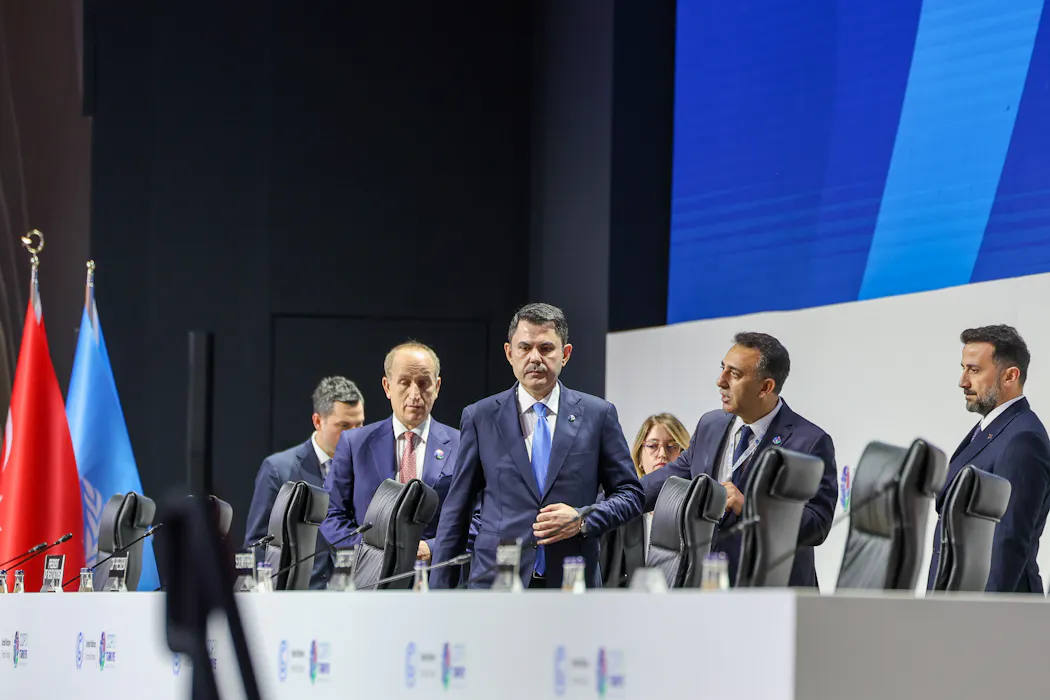
Turkish Environment Minister Murat Kurum, who co-chaired the talks with Australian Energy Minister Chris Bowen, formally announced that no decisions were adopted due to the lack of agreement 813. Germany’s Climate Minister Carsten Schneider labeled the resulting text a "step back," leading to immediate refusals from Panama, the Marshall Islands, Vanuatu, and Belize 47. Ireland's Environment Minister Darragh O'Brien stated the deal "failed to meet the moment," while other sources note formal opposition from small island states and the UK 67. Russia and Saudi Arabia argued that mentioning fossil fuels undermines national sovereignty and energy security, with Russian delegate Sergei Kononuchenko warning that cutting supplies would lead to shortages and high prices 516. Conversely, Mohammad Ayoub, representing 22 Arab League nations, stated that their historical emissions account for less than 2% of the global total, rejecting uniform standards imposed on them 16.
Funding Disputes and Alternative Commitments
A significant point of contention was the removal of specific financial targets from the draft; earlier versions included a goal to increase adaptation finance to $120 billion annually by 2035, but these figures were deleted in later iterations 13. Global South nations estimate their annual adaptation needs at around $500 billion, creating a massive gap between requests and commitments 1. Additionally, negotiations were strained by delays in the release of the IPCC Seventh Assessment Report, which some countries accused of being pushed back until 2029 by major polluters like Saudi Arabia, India, and Russia 1. Despite the diplomatic collapse, more than 75 countries and 180 companies signed onto an independent "35 by 35" initiative, pledging to raise the share of electricity in final energy consumption to 35% by 2035, up from current levels of about 23% 245. China expressed deep disappointment over the lack of political consensus but reaffirmed its commitment to multilateralism, noting that it participated in consultations on 165 agenda items 310.
Aftermath and Calls for Reform
The failure has triggered urgent calls to reform the UN’s consensus-based decision-making process, which critics argue allows a minority of nations to block progress favored by the majority 79. Former US Vice President Al Gore described the outcome as "outrageous," demanding structural changes to ensure accountability 7. Pacific Island nations, particularly those facing existential threats from rising sea levels, expressed profound despair; Tuvalu Climate Minister Maina Talia declared that inaction and obstruction would not weaken their resolve 41112. Following the summit, Pacific nations are forming new alliances, with Tuvalu and Ireland planning to host a second conference on just transition away from fossil fuels in July 2027 81318. Meanwhile, the US delegation was absent, and President Donald Trump joined leaders from China and Russia in a joint statement emphasizing increased refined petroleum production, further complicating global climate diplomacy 16.
评论
还没有评论,欢迎留下第一条。