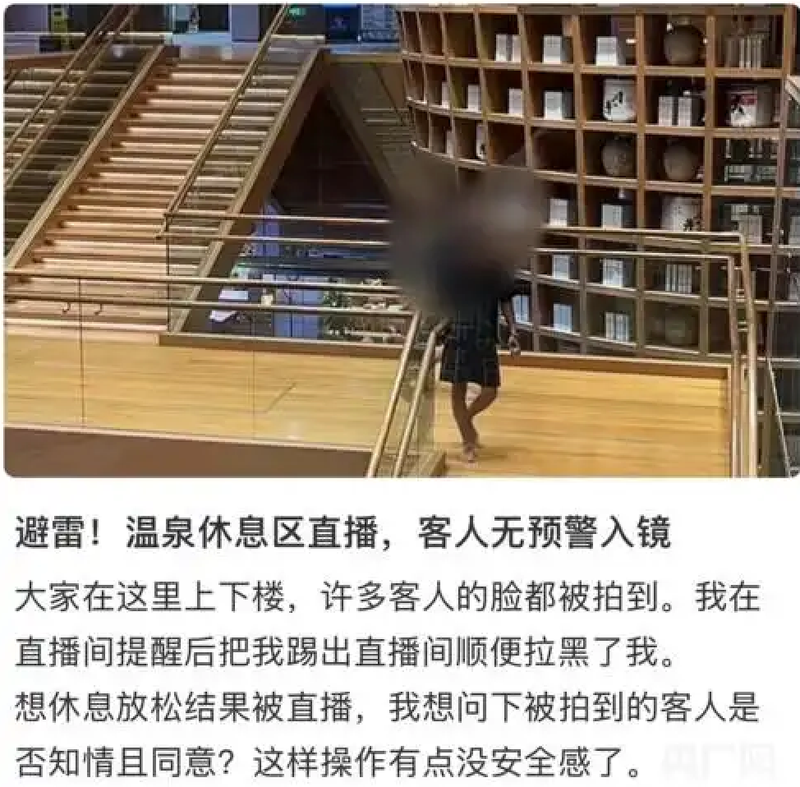
随着网络直播规模的持续扩张,消费者在理发店、台球馆等消费场景中被擅自拍摄并上传的现象日益普遍,由此引发的隐私与肖像权纠纷已成为社会关注焦点 1。数据显示,2024年底至2025年底期间,我国短视频用户数量增加3450万,总量达到约10.74亿;网络直播用户规模约为8.14亿,占网民总数的72.3% 1。公众对于公共空间被拍摄的容忍度较低,2023年的一项调查显示,近七成受访者明确拒绝在公共空间被拍摄并要求删除相关内容,超过半数的受访者在遭遇此类情况时会选择取证并报警 1。
然而,即时性的传播特点使得受害者面临严峻的取证难题,且现有的平台投诉机制尚不完善,导致维权成本高昂 1。《民法典》第1195条规定,权利人在发出侵权通知时必须提供初步证据及真实身份信息,这一门槛在实际操作中加剧了直播维权的难度 1。尽管《民法典》第1020条允许为实施新闻报道或展示特定公共环境而合理使用他人肖像,无需经过同意,例如2023年11月重庆电视台新闻采访居民入镜案最终被法院认定不构成侵权,但商业性质的直播行为则受到更严格的限制 1。近期多起判例表明,商家未经同意拍摄顾客可能构成侵权:2024年10月,南京建邺区法院在一起餐厅直播顾客小王的案件中判决商家公开道歉并赔偿500元;杭州日报报道的一起武汉台球馆案件,法院亦判令赔偿800元 1。
具体案例揭示了商家整改不力与平台监管缺失的现状。2024年2月,广西贵港的李女士在理发时被直播,即便她明确要求停止拍摄,相关影像仍在一个月后被发布到短视频平台上 1。类似地,2025年8月,化名胡军的当事人在台球馆被拍摄后,视频在另一平台持续传播了一个多月,显示出跨平台侵权内容的难以清除 1。针对此类乱象,舆论呼吁平台优化治理流程,以降低消费者的维权成本,同时司法机关通过个案裁判明确了商业直播中未经同意拍摄顾客的侵权责任边界 1。
The phenomenon of individuals being livestreamed in public spaces and commercial venues without their permission has triggered widespread concerns over privacy and portrait rights across China 1. Data indicates that short-video users in the country grew by 34.5 million between late 2024 and late 2025, reaching approximately 1.074 billion, while livestreaming users totaled around 814 million, accounting for 72.3% of all internet users 1. Despite this massive user base, a 2023 survey revealed that nearly 70% of respondents rejected being filmed in public spaces and demanded deletion of such content, with more than half stating they would gather evidence and report to the police 1.
Legal recourse for victims remains challenging due to the instant nature of livestreaming, which complicates evidence collection, alongside imperfect complaint mechanisms on platforms 1. According to Article 1195 of the Civil Code, rights holders must provide preliminary evidence and true identity information when issuing infringement notices, creating barriers for effective legal action 1. In one instance involving Ms. Li from Guigang, Guangxi, in February 2024, she requested that her haircut session not be broadcast, yet the footage was still published on a short-video platform a month later 1. Similarly, a case involving an individual named Hu Jun (pseudonym) at a billiard hall in August 2025 saw video footage circulated on another platform for over a month after filming 1.
Courts have established varying precedents regarding the balance between public interest and individual rights. Under Article 1020 of the Civil Code, using another person's likeness is permitted without consent if it serves news reporting or showcases specific public environments 1. For example, in November 2023, Chongqing Television filmed residents during a news interview, and the court ruled that this did not constitute infringement 1. However, commercial exploitation faces stricter scrutiny; in October 2024, the Nanjing Jianye District Court ordered a restaurant to apologize publicly and pay 500 yuan in damages for livestreaming a customer identified as Xiao Wang 1. Additionally, a court in Wuhan awarded 800 yuan in compensation for a similar case involving a billiard hall, as reported by Hangzhou Daily 1.
评论
还没有评论,欢迎留下第一条。