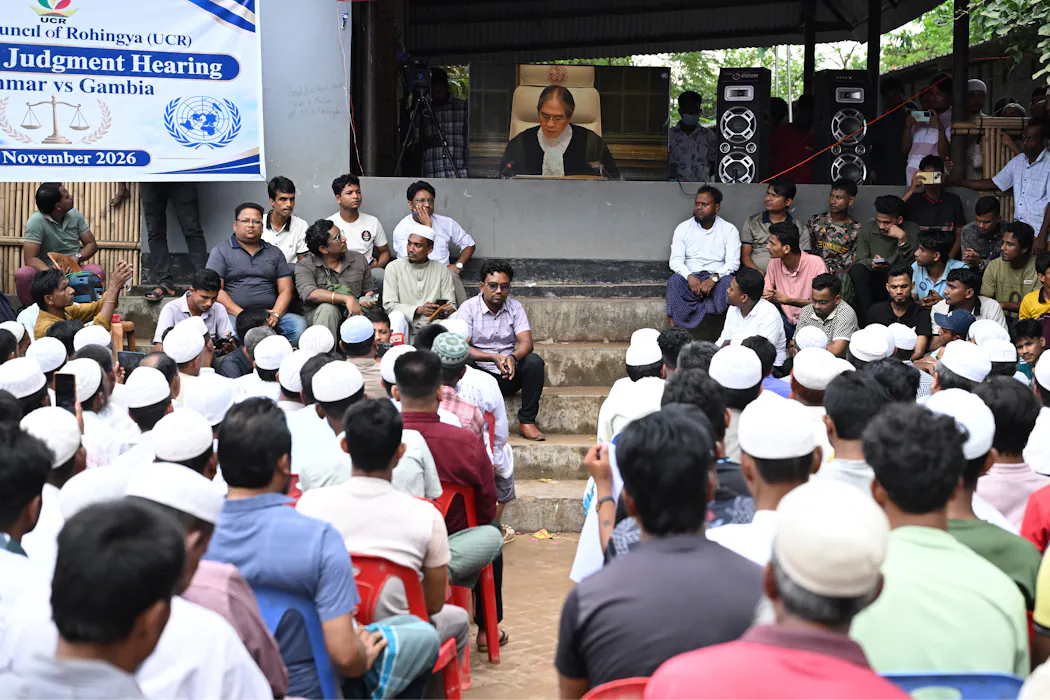
国际法院以九票对六票的表决结果,认定缅甸对2017年针对罗兴亚人实施的种族灭绝行为负有法律责任 1。这一判决是自1948年《联合国防止及惩治灭绝种族罪公约》通过以来,国际法院首次判定国家有责任实施种族灭绝 1。案件由冈比亚于2019年提起,开创了非直接受害国可提起诉讼的先例 1。
此次裁决涉及的事件背景为2017年在若开邦发生的“清理行动”,该行动导致74万人逃往孟加拉国 1。法院命令缅甸进行调查、起诉责任人、提供赔偿、归还财产并允许难民返回 1。尽管判决最终且具有约束力,但国际法院无执法权,其执行依赖安理会配合 1。此外,中国、俄罗斯、美国及部分东南亚国家近期与缅甸军政府保持接触或接纳其领导人敏昂莱,使得判决的实际施压和落实面临巨大挑战 1。
The International Court of Justice (ICJ) has ruled that Myanmar is responsible for committing genocide against the Rohingya people, a decision delivered by a vote of nine to six 1. This judgment represents the first time since the adoption of the 1948 Convention on the Prevention and Punishment of the Crime of Genocide that the court has found a state liable for such acts 1. The ruling stems from a case brought by Gambia in 2019, which established a precedent allowing nations not directly affected by the violence to initiate legal proceedings 1.
The legal battle centered on the "clearance operations" conducted in Rakhine State in 2017, during which approximately 740,000 Rohingya fled to neighboring Bangladesh 1. In response, the court ordered Myanmar to investigate the incidents, prosecute those responsible, provide compensation to victims, restore seized property, and allow refugees to return 1. While the verdict is final and legally binding, its practical implementation remains uncertain because the ICJ lacks its own enforcement mechanism and relies on the UN Security Council to execute its decisions 1.
Significant challenges loom over the enforcement of this historic ruling due to the current geopolitical landscape. China, Russia, the United States, and several Southeast Asian nations have recently maintained diplomatic contacts with Myanmar’s military junta or accepted visits from its leader, Min Aung Hlaing 1. Given that Myanmar is currently controlled by this military government, the international community faces substantial hurdles in applying pressure to ensure compliance with the court's orders 1.
评论
还没有评论,欢迎留下第一条。