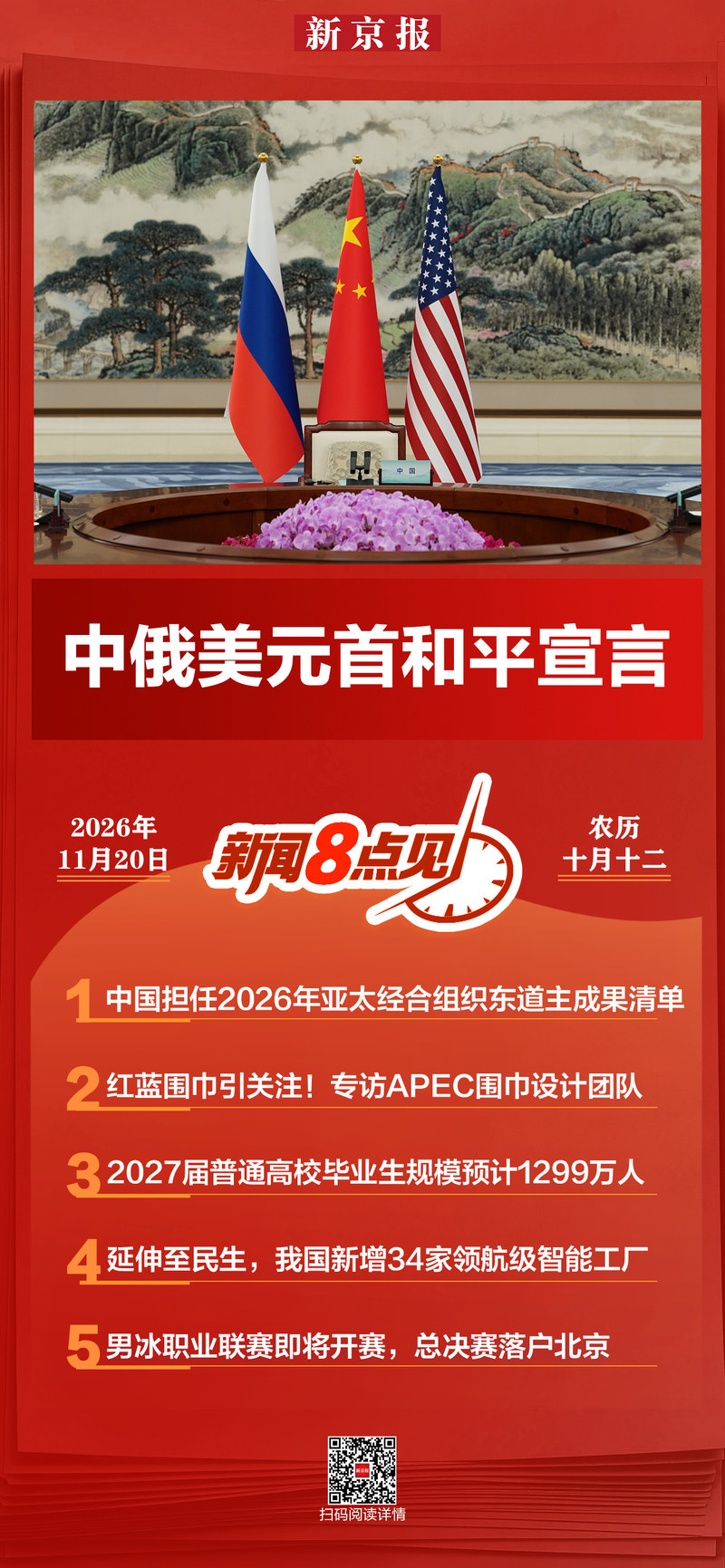
2026年11月19日,中国国家主席习近平、美国总统特朗普与俄罗斯总统普京在中国深圳举行的亚太经合组织(APEC)峰会期间,完成了三国领导人的首次三方会晤 41114。此次会谈历时约1小时20分钟(亦有报道指为90分钟),随后发布了《中俄美元首和平宣言》 123411。尽管各方对会议成果的评价存在分歧,但联合声明涵盖了推动联合国改革、增加精炼石油产品供应、限制国际刑事法院(ICC)管辖权以及重申核裁军承诺等四个主要议题 12491011。
声明内容与关键缺失
这份被俄方称为书写了外交史新篇章的声明,核心内容包括确认“核战争不能赢也不能打”,并同意就降低核风险进行对话 1211。三国还一致呼吁改革联合国以更有效应对全球挑战,同意增加能源供应,并对国际刑事法院及其他类似机构滥用管辖权表示反对 12491011。然而,该声明未提及乌克兰战争或伊朗冲突,也未提出具体的无核化框架或停火协议 2411。分析人士指出,这种回避具体地缘政治细节的做法使得会议更像是一种象征性姿态,而非实质性转折点 125。
在核武器问题上,虽然三方达成了对话意向,但并未签署具有约束力的新条约 211。背景数据显示,中国拥有约500枚核弹头,而俄罗斯和美国各拥有超过5000枚,且《新削减战略武器条约》已于2026年2月到期 4。专家观点认为,中国不愿接受严格的核限制部分原因在于库存差距过大 4。此外,特朗普在会后表示美国有4000枚核弹头,俄罗斯有3800枚,中国现有四五百枚,并强调三国处于讨论减少核武器数量的独特地位 11。
领导人表态与外交礼仪
三位领导人对此次会晤给出了截然不同的定性描述。特朗普称正在“创造历史”并将峰会评价为“难以置信”,但他同时承认和平协议仍未达成 613。他在直接引语中表示:“美国、俄罗斯和中国处于独特地位,可以讨论如何减少地球上的核武器数量。” 11 此外,特朗普还表达了对全球主义监管的反对立场:“我们反对任何形式的全球主义监管……我们不会允许这种情况发生。” 11
普京将此次谈话形容为“开诚布公”,并在其他场合声称欧亚地区已成为全球经济中心,欧洲处于“屈辱性衰落”中 1612。他邀请欧洲官员赴莫斯科讨论乌克兰问题架构 11。习近平则形容会谈“富有成效”,并强调大国和平则世界安全 16。在礼宾安排上,出现了打破常规的细节:习近平亲自在机场迎接特朗普,甚至有报道指其拥抱了特朗普,这一举动被视为罕见的高规格待遇 111215。特朗普亦私下称呼普京为“朋友” 211。
国际反应与分析评论
外界对此次峰会的实质成果持怀疑态度。前英国外交大臣杰里米·亨特评论称,特朗普不再被视为自由世界的领袖 1。Politico报道称,盟友对这次会晤感到担忧,将其形容为“绝对噩梦” 15。学者Patricia Kim认为这是象征性胜利,因为中国不愿卷入调停具体冲突;William Hurst则指出会晤主要是为了展示俄罗斯和普京的持续相关性 2。亚洲协会政策研究所的Emma Chanlett-Avery认为普京获益最大 4。
在美国国内,参议院多数党领袖查克·舒默批评特朗普此次行程为“历史性的尴尬” 13。相比之下,中方官方媒体强调了中国作为2026年APEC东道主共达成75项成果,并指出王毅外长介绍了会晤情况及APEC第三十三次领导人非正式会议的相关成果 14。尽管有观点认为此次会议可能形成“G3俱乐部”,甚至被比作二战后的雅尔塔会议,但多方事实表明,其在战后秩序规划上的深度远不及1943年德黑兰会议和1945年雅尔塔会议 1415。
On Thursday, November 19, 2026, Chinese President Xi Jinping, U.S. President Donald Trump, and Russian President Vladimir Putin convened for the first-ever trilateral summit in Shenzhen during the Asia-Pacific Economic Cooperation (APEC) leaders’ informal meeting 41114. The gathering lasted approximately 90 minutes, with the three heads of state issuing a joint "peace declaration" that outlined four discrete themes: increasing refined petroleum product supplies, promoting United Nations reform, restricting the jurisdiction of the International Criminal Court (ICC), and discussing nuclear disarmament and non-proliferation 12411. Despite Putin’s claim that the event wrote a "new page in diplomatic history," analysts characterized the outcome as lacking substantive action plans, serving more as a symbolic gesture of geopolitical positioning than a transformative moment akin to the Tehran or Yalta conferences 1513.
The declaration reaffirmed the principle that "a nuclear war cannot be won and must not be fought" and called for dialogue to reduce nuclear risks, though it failed to propose specific disarmament steps or address ongoing conflicts in Ukraine and Iran 2411. In his remarks, Trump stated, "The United States, Russia and China are in a unique position to discuss how to reduce the number of nuclear weapons on the planet," while also noting U.S. concerns about globalist regulations on artificial intelligence 11. Xi emphasized that peace among great powers ensures global security, and Putin asserted that Eurasia has become the center of the global economy, describing the talks as "open and candid" 16. Xi personally greeted Trump at the airport with an embrace, a rare diplomatic courtesy, while Trump referred to Putin as a "friend" and described the summit as "unbelievable" and "making history" 611121315.
Experts remain divided on the strategic value of the meeting, with many noting the significant disparity in nuclear arsenals—Russia and the U.S. each possess over 5,000 warheads compared to China’s estimated 500—which complicates trilateral arms control frameworks 411. Emma Chanlett-Avery from the Asia Society Policy Institute suggested Putin benefited most by showcasing Russia’s continued relevance, while Patricia Kim noted the summit was a symbolic victory for China without involving direct mediation in specific conflicts 24. Conversely, some critics, including Senate Majority Leader Chuck Schumer, dismissed the trip as a "historical embarrassment," arguing no breakthroughs were achieved 13. Ukrainian President Volodymyr Zelenskyy had previously warned against the formation of a "G3 club" resembling a second Yalta conference, reflecting allied anxieties about the shifting balance of global power 415. While the leaders condemned Western sanctions and protectionism, the absence of concrete mechanisms to halt wars in Ukraine or manage tensions with Iran underscored the limits of this high-profile diplomatic display 7811.
评论
还没有评论,欢迎留下第一条。