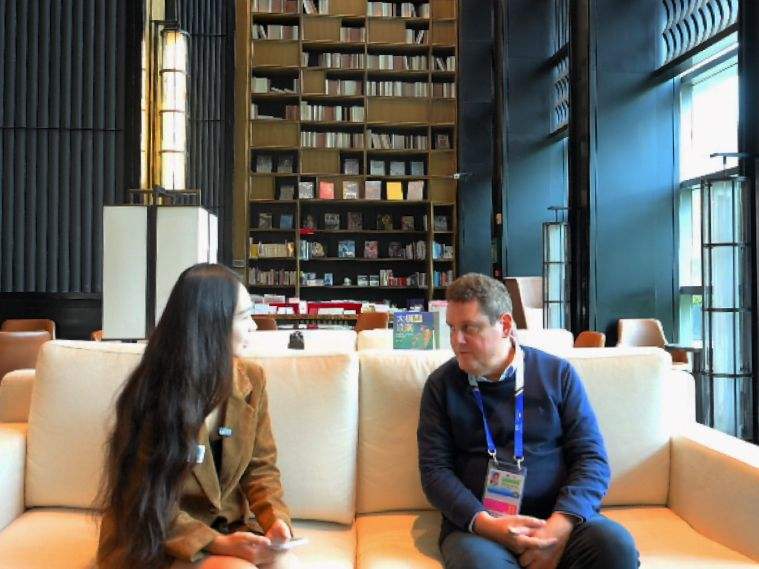
2026年11月19日,在APEC领导人会议周期间,中欧数字协会创始主席、意大利经济学家鲁乙己(Luigi Gambardella)在深圳接受专访 1。他指出,人工智能正带动一轮比旧形式更深刻、包容且可持续的全球化进程 1。他强调,开放、创新、合作及他提出的“数字连续性”原则对亚太一体化至关重要 1。
针对中国科技企业出海战略,鲁乙己建议从单纯出口转向与欧洲产业生态“共创” 1。以机器人领域为例,他主张通过成立合资公司并利用本地数据训练来深化合作 1。他表示,制造业是中欧合作的核心赛道 1。
鲁乙己提出建立“数字连续性”作为第四个原则,建议探讨自愿加入的条约以确保关键数字技术服务持续开放可用,以此弥合全球AI鸿沟 1。他观察到AI显著降低了内容创作门槛,直言“连我自己都能制作电影” 1。数据显示,深圳目前汇聚约2800家人工智能企业和1000家机器人企业 1。
Luigi Gambardella, founding chairman of the China-Europe Digital Association and an Italian economist, stated during the 2026 APEC Leaders’ Meeting Week in Shenzhen that artificial intelligence is ushering in a new wave of globalization characterized by greater depth, inclusivity, and sustainability compared to previous forms. 1 Speaking on November 19, 2026, he highlighted the technological hub status of Shenzhen, noting that the city currently hosts approximately 2,800 AI companies and 1,000 robotics firms. 1
Gambardella argued that Chinese technology enterprises expanding overseas must shift from merely exporting products to co-creating value with local industrial ecosystems. 1 He specifically recommended establishing joint ventures in the robotics sector and utilizing local data for model training as key strategies for this transition. 1 Furthermore, he emphasized that manufacturing remains the core track for China-Europe cooperation, while AI significantly lowers barriers to content creation, remarking that even non-professionals can now produce films. 1
To address the global digital divide, Gambardella proposed “digital continuity” as a fourth essential principle alongside openness, innovation, and cooperation. 1 He suggested exploring voluntary treaties to ensure the continuous availability and openness of critical digital technology services, stressing that these principles are vital for Asia-Pacific integration. 1
评论
还没有评论,欢迎留下第一条。